- Saigon Horeca, commercial kitchen Equipment, News
10 common errors when using industrial refrigerators and how to fix them
Industrial refrigerators are not simply food preservation equipment but also the “heart” of every professional kitchen. However, like any other device, industrial refrigerators cannot avoid errors that arise during use. Seemingly small problems such as unstable temperatures, unusual noises, or poor cooling systems can have big consequences: interrupting work, wasting materials and even increasing operating costs.
In this article, we will learn about the most common errors when using industrial refrigerators, their causes and effective solutions to fix them. This is not only a way to protect your equipment but also a secret to optimizing performance in the kitchen. Let’s start with Saigon Horeca!
Article content
Common errors when using industrial refrigerators
The refrigerator is not cold enough or not cooling at all
Industrial refrigerators that are not cold enough or even lose their cooling ability are one of the serious errors that directly affect the quality of food preservation. This phenomenon not only disrupts kitchen operations but also causes food waste and increases operating costs. So, where is the real cause?
Common causes
- Gas leak or lack of gas
Refrigerant gas is the “fuel” for the cooling system to operate. When there is a leak or deficiency, the cooling performance will be significantly reduced, causing the temperature in the refrigerator to not meet the requirements.
- There is a problem with the fan or compressor
The fan and compressor are the two “brain” parts of the cooling system. If either one has a problem, the refrigerator will not be able to cool effectively.
- The cabinet door is not closed tightly
A cabinet door that is open, due to broken or dirty door gaskets, will allow cold air to escape, leading to heat loss and causing the cabinet to operate less effectively.
How to fix
- Call a professional technician to check the amount of gas in the system and replenish or repair if a leak is detected. This not only ensures cooling capacity but also prolongs equipment life.
- Icing is a sign of lack of regular maintenance. Cleaning the condenser regularly and removing accumulated snow will help improve airflow and optimize cooling performance.
- If the fan or compressor is damaged, replace it with genuine parts to ensure stable operation. This should be done by a team of qualified technicians.
- Don’t underestimate the door gasket – this is the protective part that helps keep the temperature stable inside the cabinet. Clean gaskets periodically and replace them when damaged or lose elasticity to ensure the cabinet door is always closed.
Fixing the situation of a refrigerator that is not cold enough or not cooling is not only a solution to the immediate problem but also helps protect the long-term performance of the device. An industrial refrigerator that operates stably is the foundation for you to maintain service quality and save operating costs. Therefore, always pay attention to regular maintenance and take immediate action when detecting unusual signs!
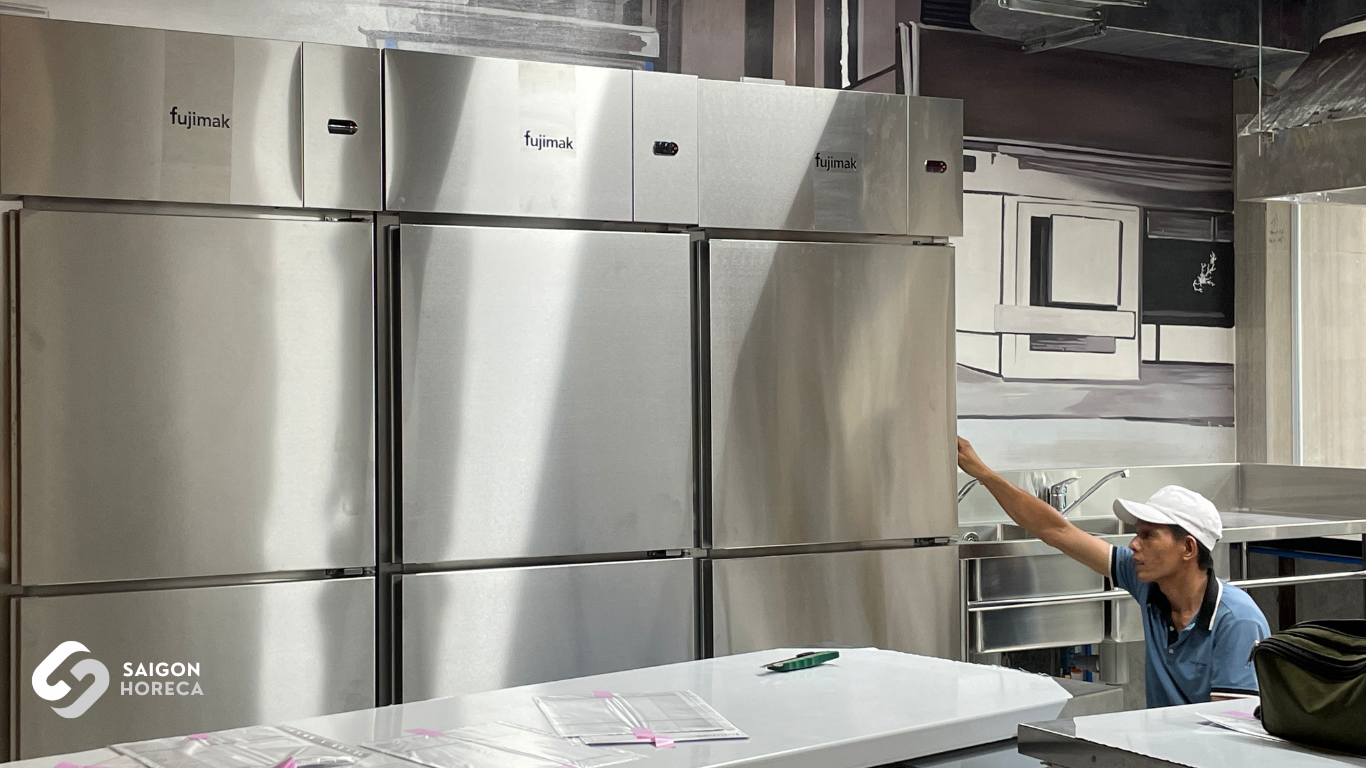
The condenser has a problem
The condenser is one of the important parts in the refrigeration system, playing the role of converting cold gas from a high pressure state to a liquid state and radiating heat to the outside environment. However, when the condenser has a problem, not only is cooling performance affected, but it can also cause damage to the entire system. Below are common problems and detailed solutions.
- Condenser is leaking
Cause:
Even though it is made from heat- and high-pressure resistant materials such as steel pipes or thick copper pipes, the condenser can still leak due to wear and tear over time, mechanical impact, or manufacturing errors. When a leak occurs, cold air escapes, making it impossible for the system to maintain the pressure and temperature necessary for effective cooling.
How to handle:
- Visually check: Look closely from the cyclone’s push tube to the dryer filter, focusing on areas with oil spills or moisture.
- Using soap bubbles: This is an accurate and effective way to test. Spray soap bubbles on joints or suspect areas. If air bubbles appear, that is the location of the leak.
- Check under operating conditions: When the cyclone is operating, high pressure will make the leak more obvious. Once located, call a technician to repair or replace the condenser if necessary.
- The condenser is hotter than usual
Cause:
- Insufficient condenser area: When the capacity of the condenser is not commensurate with the system’s cooling capacity, the heat is not fully dissipated, causing the condenser to become hot.
- Dust on the condenser surface: Dust and dirt accumulated on the condenser surface will reduce the heat dissipation ability, causing the system to overheat.
- Poor air circulation: If air does not circulate well around the condenser, heat will be trapped, causing abnormal heating.
How to handle:
- Check the condenser area: Make sure the condenser has an area large enough to meet the heat demand. If not, it needs to be upgraded or replaced with a suitable system.
- Clean the condenser surface: Regularly clean the condenser to remove dirt, residue and grease. This not only improves performance but also prolongs the life of the device.
- Ensure ventilation: Place the cabinet in a well-ventilated place, avoid placing it too close to walls or other obstructions. Check the cooling fan and make sure air circulates easily through the condenser.
To ensure that industrial refrigerators operate stably, you should periodically check and maintain them, and take immediate action when detecting unusual signs. Taking timely action not only saves repair costs but also helps optimize cooling performance and prolong equipment life.
 Facebook
 Zalo
Zalo