Common errors in industrial induction cookers and effective solutions
Are you struggling with your industrial induction cooker when it suddenly “goes wrong” – sometimes it won’t turn on, sometimes it beeps non-stop? Don’t panic! These are common errors that almost any induction cooker can encounter after a period of use. But the good news is that most of these problems have simple fixes, as long as you know the cause and handle it properly.
In this article, Saigon Horeca will help you identify common errors in industrial induction stoves, instruct how to quickly repair and share maintenance secrets to keep the stove running smoothly. Read on to avoid unnecessary problems and ensure your induction cooker is durable over time!
1. Common errors in industrial induction cookers and how to fix them
Industrial induction cookers help improve cooking efficiency and save fuel, but after a period of use, technical errors are inevitable. If not handled promptly, these problems can affect food quality, service progress and even cause danger. Below are common errors and effective solutions:
Induction cooker does not turn on
This error often occurs because the power cord is loose, broken or the fuse is burned out. First, check the cord to make sure there are no signs of looseness or damage. If the stove still does not work, check the fuse and replace if necessary. In case the stove completely loses power, the internal circuit board may have a problem – at this point, you need to contact a technician to check and repair promptly.
The induction cooker works intermittently and turns off automatically in the middle
The induction cooker may stop working suddenly due to overheating, the cooling fan is clogged with dust, or the power source is unstable. To fix it, clean the radiator fan periodically to ensure cooling airflow is not obstructed. If the stove is often overloaded, it is necessary to limit continuous use at maximum capacity and let the stove rest between cooking sessions. In addition, if the power source is unstable, install a voltage stabilizer to ensure a stable current flow, avoiding affecting the stove’s lifespan.
Induction cooker does not recognize pot, beeps continuously
The main cause is due to improper use of the pot or a faulty pot recognition sensor. To fix it, check the bottom of the pot with a magnet: if the magnet is firmly attached, the pot can be used with an induction cooker. If not, you need to replace it with a pot with a magnetic bottom. Also, clean the stove surface and sensor to ensure the pot recognition system operates correctly.
The induction cooker has a short circuit and has a burning smell
This error is very dangerous, often caused by short-circuited electrical wires or damaged internal components. When you detect a burning smell or spark, turn off the power immediately to avoid the risk of fire and explosion. Then, check the power cord for signs of leaks or scorching. If the power cord is good but the stove still does not work, contact a specialist to check and replace damaged components.
The induction cooker makes a loud, unusually loud noise
Induction cookers often make sounds when operating, but if the noise is too loud, it may be because the cooling fan is dirty or the magnetic coil has a problem. You should clean the fan periodically to ensure good air circulation. If the noise still does not decrease, there is a high possibility that the magnetic coil is faulty and needs to be replaced for the stove to operate more stably.
2. Reasons why industrial induction cookers quickly fail
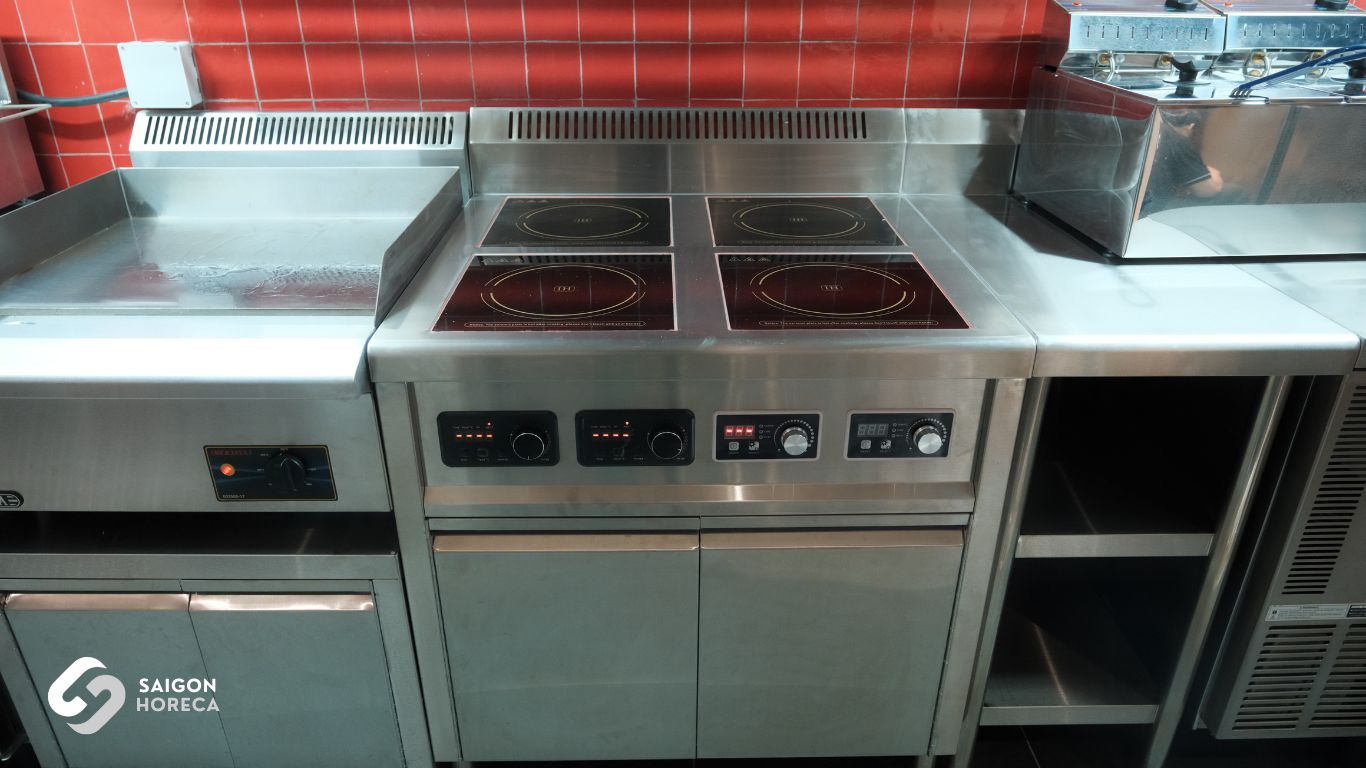
Industrial induction cookers are modern kitchen equipment, powerful and durable, but if not used and maintained properly, the lifespan of the cooker can be significantly reduced. Below are common reasons why the stove breaks down quickly and how to prevent it to ensure long-term stable operation of the device.
Continuous overloading – Components wear out quickly
Industrial induction cookers are designed to operate at high capacity, but if continuously operated at maximum capacity without a break, internal components such as magnetic coils, circuit boards and cooling systems will be overloaded and quickly degrade. Maintaining the stove at continuously high power can cause the induction coil to overheat, reducing heat transfer efficiency and increasing the risk of damage.
Solution: To prolong the life of the stove, allocate reasonable usage time, avoid letting the stove operate non-stop for a long time. If continuous cooking is needed, multiple stoves can be used in parallel to reduce the load on each appliance.
Not cleaning regularly – Reduces fan and sensor performance
Dust accumulation is one of the leading causes of reduced performance of industrial induction cookers. When the radiator fan becomes clogged with dust, its cooling ability will decrease, leading to overheating, causing the stove to shut off or operate less stably. In addition, dust and dirt clinging to the stove surface and sensor can prevent the stove from recognizing the pot correctly, causing errors during operation.
Solution: Clean the stove surface, sensor and radiator fan regularly with a soft cloth, alcohol or specialized solution. Periodically open the stove lid to clean the internal components, ensuring the stove always operates smoothly.
Poor voltage quality – Easy to damage the circuit board
Industrial induction cookers operate on the principle of electromagnetic induction, requiring a stable power source to maintain performance. If the voltage is too low or fluctuates constantly, the circuit board will have to constantly adjust to compensate for the power shortage, increasing the risk of damage. In addition, unexpected electric shocks can cause electronic components in the kitchen to short-circuit, significantly reducing equipment life.
Solution: Use a voltage stabilizer to maintain a stable power source, avoiding affecting components inside the kitchen. In addition, you should periodically check the kitchen’s electrical system to detect and handle voltage problems early.
Using non-genuine components – Reduces stove life, easily causes technical errors
When replacing broken components, many people choose non-genuine products to save costs. However, these components often do not meet standards for quality and durability, leading to ineffective operation of the stove, prone to technical errors or rapid failure.
Solution: Always use genuine parts from reputable manufacturers or distributors. Investing in quality components not only helps the stove operate stably but also minimizes the risk of future damage.
3. How to maintain industrial induction cookers to limit errors
Proper maintenance of industrial induction cookers not only helps prolong the life of the equipment but also ensures cooking performance is always at optimal levels. Below are important methods to help the stove operate durably, minimizing problems during use.
Clean the kitchen periodically – Keep equipment clean and running smoothly
Cleaning the stove does not stop at the glass surface but also includes internal parts such as radiator fans, temperature sensors and electronic components. If the stove is clogged with dust for a long time, the cooling fan will work less effectively, leading to overheating, reducing component life.
How to do it:
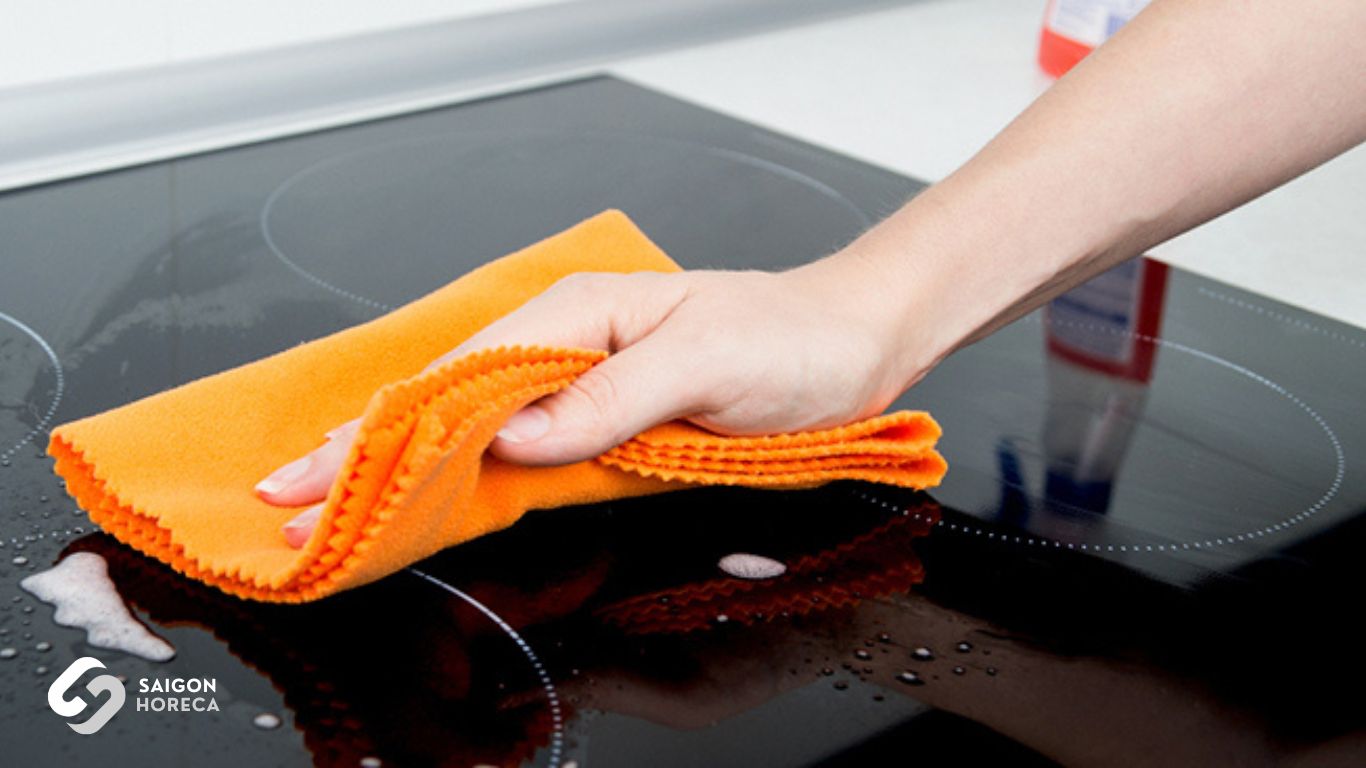
- Wipe the kitchen surface with a soft cloth and specialized solution to remove grease and food residue.
- Check and clean the radiator fan to avoid dust and dirt that reduces cooling performance.
- Periodically open the stove lid to check the internal components, making sure there is no grease or dust stuck to the electrical circuit.
Ensures stable voltage – Reduces the risk of circuit board damage
An unstable power source can cause serious problems such as short circuits, damaged electronic components or reduced operating capacity of the stove. If the stove has a constant pressure drop, the heating performance will be poor, slowing down the cooking process and putting pressure on the electrical circuit system.
Solution:
- Use a voltage stabilizer to maintain a stable power source, especially important for large capacity induction cookers.
- Check the electrical system regularly to promptly detect power supply problems.
- Do not plug too many high-power devices into the same power source to avoid overload.
Check components and regular maintenance – Prevent problems before they happen
Regular inspection helps detect early signs of damage to components such as magnetic coils, temperature sensors or electronic circuit boards. If you detect technical errors in time, you can repair or replace components before the stove has serious problems.
Recommended maintenance schedule:
- Check the entire kitchen every 3-6 months to ensure all components are operating normally.
- Clean and maintain the cooling system at least once a month.
- If the stove shows signs of abnormal operation (flickering, loud noise, no power), it should be checked immediately to avoid more serious errors.
Use the right type of specialized pot – Ensure cooking performance
Not all pots are suitable for industrial induction cookers. If you use a non-magnetic pot or a bottom that is too thin, the heating efficiency will decrease, causing the stove to have to work harder to maintain the temperature, increasing the risk of component damage.
Notes when choosing a pot:
- Use a pot with a magnetic bottom, you can check by using a magnet.
- Prioritize pots with thick bottoms for better heat transfer and more durability when used at high power.
- Avoid using aluminum pots and glass pots because the induction cooker cannot recognize these types.

How to Maintain industrial induction cookers to limit errors
Industrial induction cookers are modern cooking equipment, helping to optimize performance and save energy. However, without proper maintenance, the stove can quickly malfunction, affecting the operation of the industrial kitchen. Regular maintenance not only helps the stove operate stably but also prolongs the life of the device. Below are important maintenance methods to help limit errors when using industrial induction cookers.
1. Clean the kitchen periodically – Keep the kitchen always in the best condition
Dust, grease and food residue can stick to the stove surface, radiator fan, and temperature sensor, hindering the operation of the device. If not cleaned periodically, the heating efficiency will decrease, the stove will easily overheat or encounter pot recognition errors.
How to clean industrial induction cookers effectively:
- Kitchen surface: Use a soft cloth and specialized solution to clean grease, avoid using sharp objects that scratch the glass surface.
- Radiator fan: Periodically clean the fan with a soft brush or compressed air to remove dust and dirt, helping the cooling system operate effectively.
- Internal components: If possible, remove the stove lid to check and clean the circuit board, making sure there is no dirt or grease sticking to it, causing a short circuit.
2. Ensures stable voltage – Reduces the risk of component damage
An unstable power source can cause the stove to operate intermittently, reduce heating efficiency, and even cause circuit board damage or component fires.
Solutions to protect the kitchen:
- Use a voltage stabilizer: A voltage stabilizer helps maintain a stable current, avoiding overload or sudden voltage drops.
- Check the electrical system: Periodically check the power cord and plug to ensure there are no signs of fire or looseness.
- Do not use too many devices on the same power source: If the power source is overloaded, the induction cooker may not operate properly or may be easily damaged.
3. Check components and regular maintenance – Detect technical errors early
Even though industrial induction cookers are highly durable, over time, internal components can still wear out, affecting performance. If you detect unusual signs early, you can repair or replace components before the stove is seriously damaged.
Recommended maintenance schedule:
- Inspect the entire kitchen every 3-6 months to ensure the components are operating normally.
- Maintain the radiator fan, thermal sensor and circuit board once a month.
- If the stove shows signs of flickering, making loud noises or does not recognize the pot, it should be checked immediately to avoid more serious damage.
4. Use the correct type of specialized pot – Ensure optimal performance
Not all pots are suitable for industrial induction cookers. If you use a non-magnetic pot or a bottom that is too thin, it will be difficult for the stove to detect, reducing cooking efficiency and consuming more electricity.
Notes when choosing a pot:
- Use a pot with a magnetic bottom, check by placing a magnet in the bottom of the pot.
- Prefer pots with thick bottoms to transfer heat well and reduce the risk of deformation when heating at high temperatures.
- Avoid using aluminum pots, glass pots or pots with rough bottoms, because induction cookers cannot recognize these types.
When do you need to call a professional repairman?
Even though industrial induction cookers are durable devices with few breakdowns, there are still situations where self-checking and on-site maintenance are not enough to fix problems. When encountering the serious signs below, do not try to repair it yourself without expertise – seek a professional repairman to ensure safety and maintain the stove’s performance.
1. The stove does not work even though the power source has been checked
One of the most common errors is that the induction cooker suddenly does not turn on, even though the power source is still normal. If you have checked the plug wire, fuse, and circuit board but the stove still does not respond, the problem may lie deep inside the circuit board system.
The control circuit board is a complex part. If damaged, expertise is needed to check and replace appropriate components. If the stove shows signs of flickering or losing power for unknown reasons, there may be a problem with the electronic components inside.
2. There is a burning smell or an electrical short circuit
If the stove suddenly emits a burning smell, sparks or shows signs of fire, this is a danger warning that needs to be handled immediately. The stove’s electrical system may be overloaded or damaged due to high temperature, causing a risk of fire and explosion.
These parts need to be checked with specialized tools and should not be repaired without experience. When you detect a burning smell or signs of fire, disconnect the power immediately and contact a repairman to avoid the risk of fire and explosion.
3. The screen shows an error that cannot be corrected
Modern industrial induction cookers often have LED screens that display error codes when problems occur. Some simple errors such as E0, E1, E2 (related to the cooking pot or overheating) can be fixed by checking the device. However, if the stove continuously reports complex errors such as E5, E6, E9, there may be a problem with the temperature sensor, control board or internal components.
- Professional workers have the equipment to check and determine the exact cause of the error.
- If the temperature sensor or controller is defective, an experienced technician is required to replace it without affecting other components.
4. The stove’s performance is reduced despite cleaning and maintenance
If your induction cooker operates weakly, cooks slower or does not reach the desired heat level despite cleaning the radiator fan and checking the voltage, the cooker may have a more serious internal problem. If the magnetic coil is burned or partially damaged, the heating capacity will decrease, causing the stove to operate unstable.
Capacitors, temperature sensors or control panels can wear out over time, reducing stove performance. In these cases, continuing to use the stove can cause the error to become more serious, even causing complete damage. To ensure the stove operates smoothly, let a repairman check and replace components when necessary.
Choose a reputable address to repair and buy industrial induction cookers career
Industrial induction cookers are indispensable equipment in restaurants, hotels, and collective kitchens, requiring high performance and long-term durability. Therefore, choosing a reputable induction cooker supplier and repairer not only helps ensure equipment quality but also optimizes operating costs and minimizes the risk of failure.
Saigon Horeca is proud to be a unit specializing in providing genuine industrial induction cookers and specialized repair services , giving you peace of mind during use.
Contact Saigon Horeca today!
If you are looking for a reputable unit to supply or repair industrial induction cookers, Saigon Horeca will be a reliable choice. With guaranteed product quality, quick service, and professional technical team, we are committed to providing the most optimal solution for your industrial kitchen.
 Facebook
 Zalo
Zalo