So Compare open and closed kitchen designs – Advantages, disadvantages and practical application suggestions
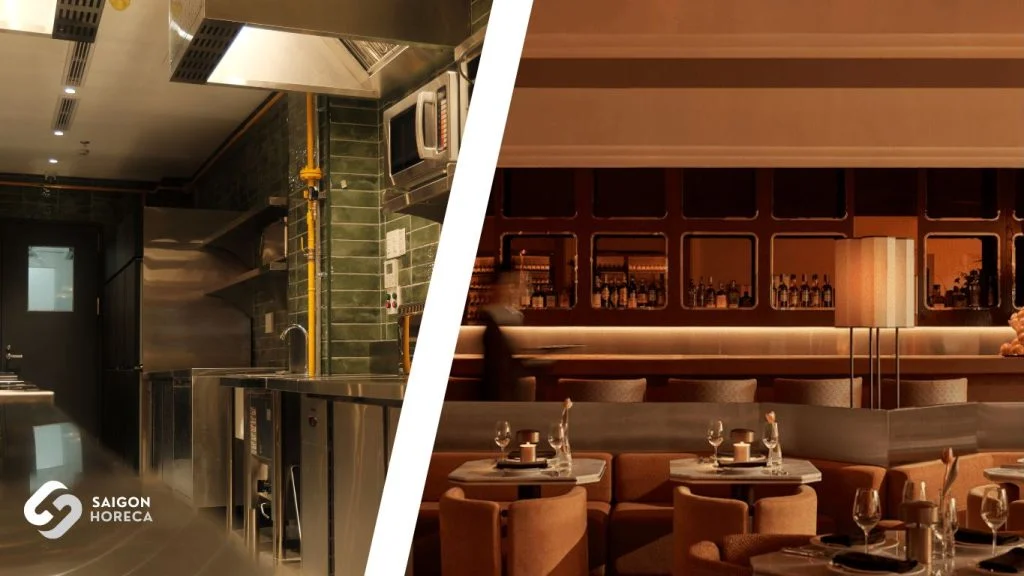
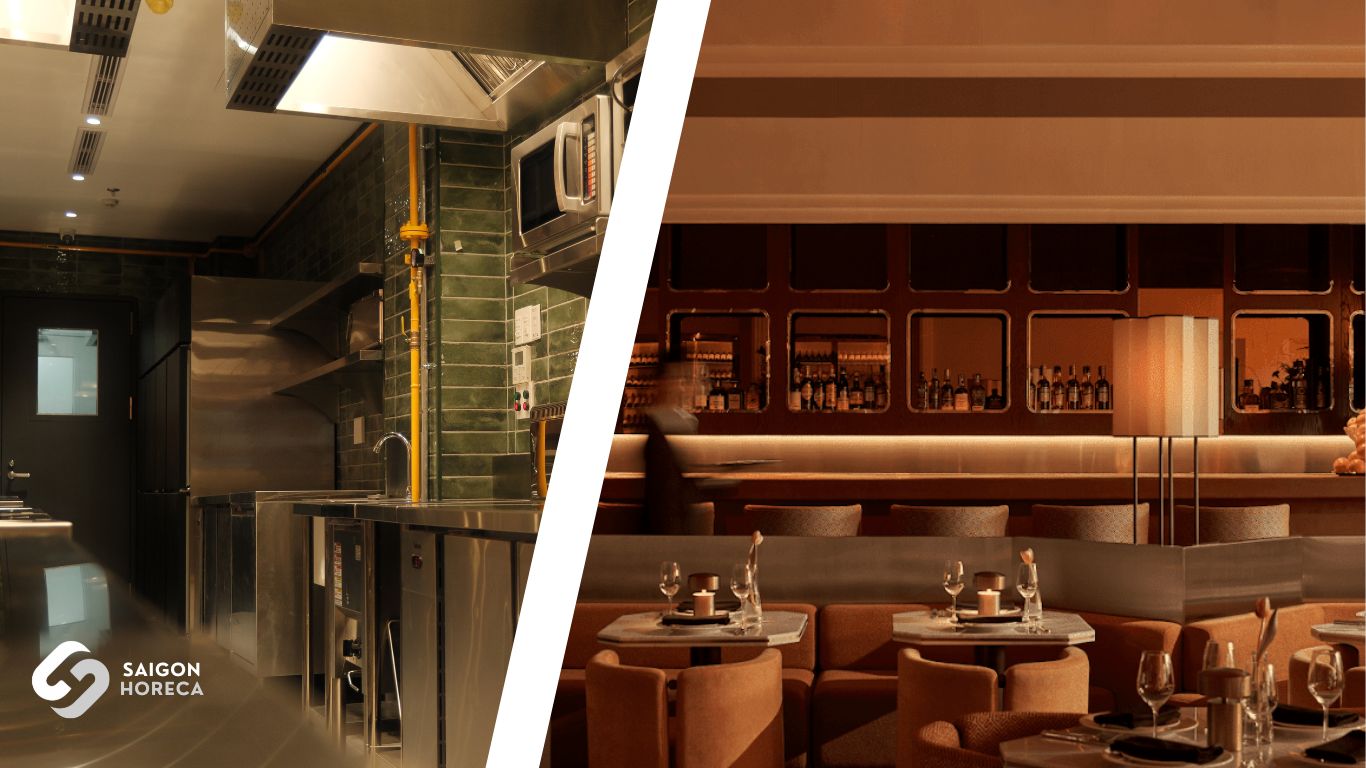
With the increasing trend of promoting customer experience and transparency, the open kitchen model is gradually becoming the preferred choice of many high-end restaurant chains in Vietnam such as Mam Mam Eatery & Lounge, Sol & Bar Kitchen or “Chef’s Table” models. Meanwhile, closed kitchen still maintains an important role, especially in large-scale restaurants that need to process many orders at the same time or require strict control of food safety.
With more than 10 years of accompanying large and small restaurant and hotel chains, Saigon Horeca understands that: when choosing a kitchen model, there is no right or wrong answer – there is only a choice that suits the business orientation and service style.
The difference in modern restaurant kitchen design philosophy
When it comes to modern restaurant kitchen design, many people often think simply of a place to cook. But in reality, the kitchen is the heart of the restaurant – the place that determines operational performance, food quality and diners’ feelings.
A properly designed kitchen will help the workflow from preparation, processing to serving go smoothly, minimizing overlap or collision between parts. More importantly, a scientific kitchen space is the foundation for employees to work effectively, maintain spirit and professionalism in every step.
- In recent years, the open kitchen model has become increasingly popular with many European restaurants and high-end chains.
Open kitchen represents transparency, interaction and customer experience. This design philosophy puts customers at the center, where they can observe the processing process, creating a feeling of trust and connection with the chef. This is also a trend that is suitable for modern restaurant styles, where the experience and story of the food play an important role.
- Meanwhile, the closed kitchen model is still the preferred choice of many traditional restaurants or places with a large serving volume.
The closed kitchen helps strictly control temperature, cleanliness and aroma, creating optimal conditions for preparing dishes according to industrial processes, while keeping the customer area always in the most comfortable state. Closed kitchen designs are often divided into clear areas such as hot areas, cold areas, and preparation areas, helping to minimize errors and maximize productivity.

Open kitchen design – Honoring transparency and experience experience
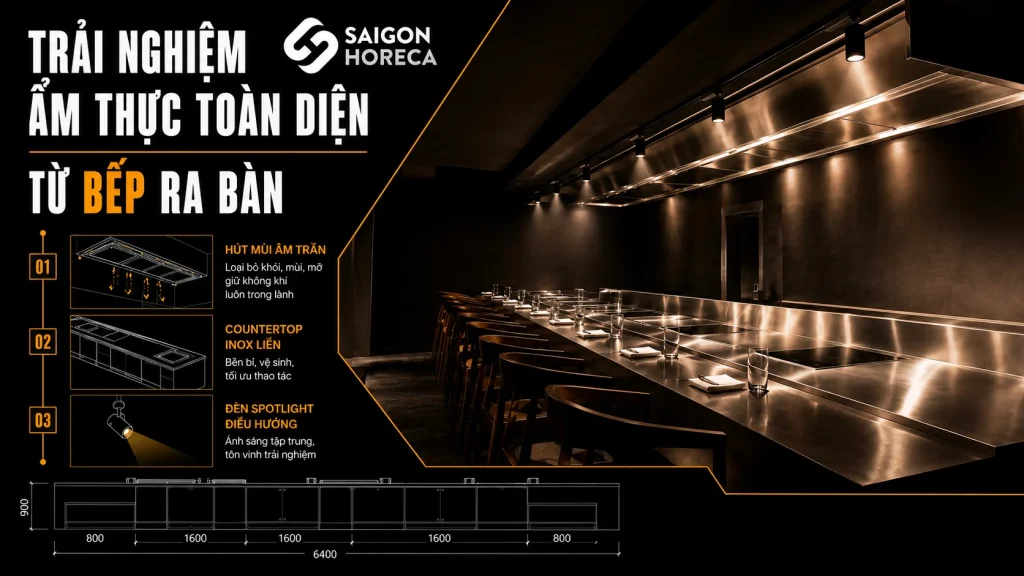
If in the past the kitchen was just a “backstage”, today, many restaurants have turned this space into the main “stage” – where culinary art is performed right before the eyes of diners. That is the core philosophy of open kitchen design – a trend that is strongly popular in high-end restaurants, creative F&B chains, or modern fusion models.
Outstanding advantages of open kitchen:
- Increase customer experience – build trust from the most honest things
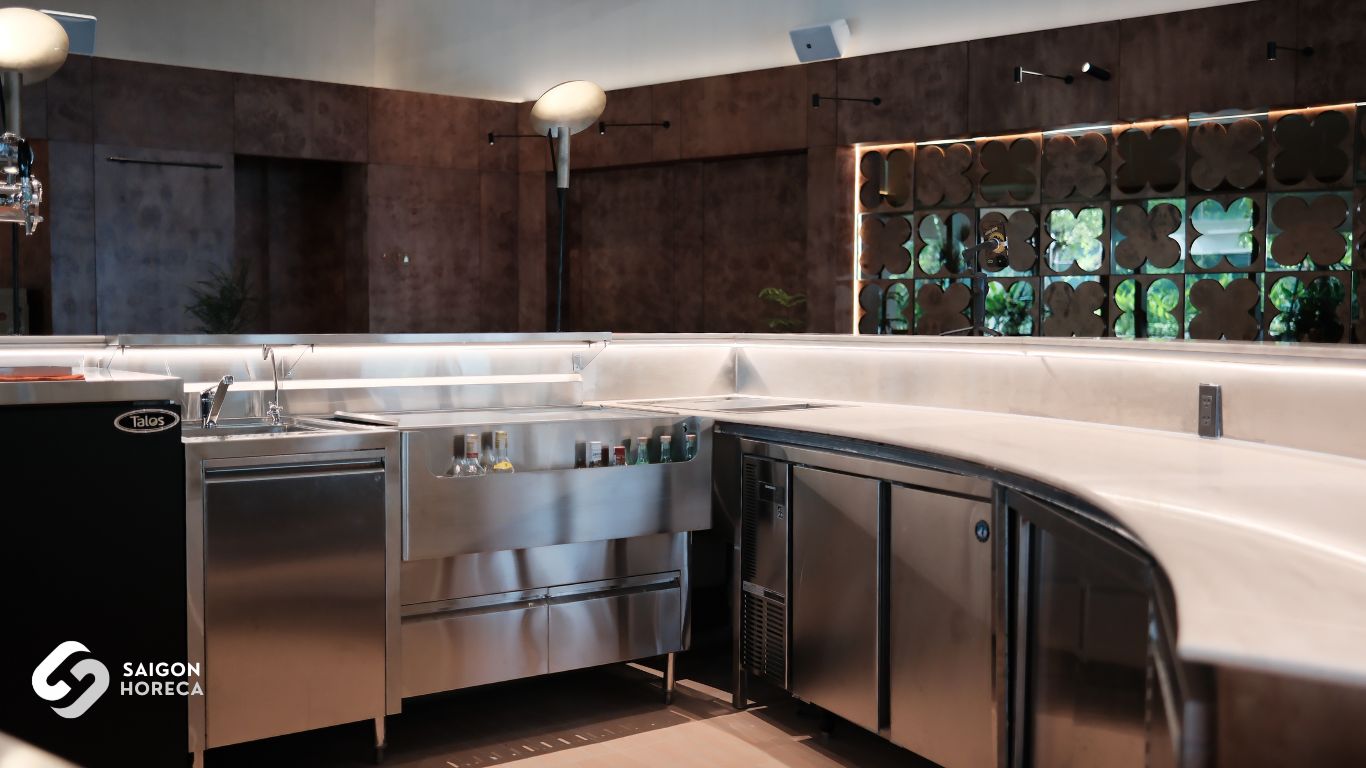
Customers not only come to the restaurant to eat delicious food, but also to “see how the food is created”. With an open kitchen, every processing process – from preparation, cooking to presentation – is openly shown, creating a feeling of peace of mind, excitement and connection. This is a big plus in terms of transparency, especially in an era where diners are increasingly concerned about hygiene and food quality.
- Create an aesthetic highlight – turn the kitchen into a part of the brand
This will be the area that can make a strong impression on customers, helping the restaurant make its mark. From lighting, appliances, colors to the layout of the cooking area – everything can be designed to be part of the brand story. With the support of aesthetic kitchen solutions from Saigon Horeca, many of our customers have enhanced their kitchen space into an unforgettable feature in the hearts of diners.
- Promote professional working spirit and standard hygiene
When all activities of the kitchen are “exposed”, the chefs and staff will also have a sense of hygiene, more professional behavior and attitude. This helps improve service quality naturally and sustainably.
However, open kitchens are not without challenges consciousness:
- High requirements for skills and attitudes of personnel
Working in an open space, every action is “on air”. This requires the kitchen team to have a stable level of skills, good communication skills and control emotions in all situations. It’s not easy to maintain a constant professional image throughout many rush hours.
- Initial investment costs are higher
Compared to a closed kitchen, an open kitchen needs to be invested more carefully in terms of aesthetics and technology: the exhaust system must be strong and quiet, the equipment needs to be streamlined but beautiful, the finishing materials need to be heat-resistant and easy to clean but still ensure a luxurious appearance. Initial investment costs can therefore be 20–30% higher depending on the scale.
- Difficulty handling internal situations
During a work shift, situations such as minor negligence, internal communication or emergency handling are difficult to avoid. With an open kitchen, everything is displayed to the diners – this requires extremely smooth coordination to avoid losing points in the eyes of customers.
Therefore, when choosing an open kitchen design, restaurant owners not only need to invest in equipment – but also need to train the team, build scientific operating procedures and choose a design partner with real-life experience. At Saigon Horeca, in addition to providing equipment – we also accompany you from ideation, design to implementing the solution that best suits your restaurant style.

Closed kitchen design – Optimal solution for performance and control
Different from the openness and generosity of an open kitchen, the closed kitchen model carries with it the spirit of discreetness, stability and comprehensive control. This is still the most popular choice in large restaurants, hotels, industrial kitchens, and collective kitchens – where speed, productivity, and standardized processes are highly required.
Outstanding advantages of closed kitchens:
- Optimize performance – effectively allocate operating streams
With a separate kitchen space, the division of preparation – cooking – dish preparation areas can be done more clearly and in-depth. Thanks to that, chefs and kitchen staff can easily focus on work, limiting distractions from outside space. This is an important factor to ensure high productivity during peak hours.
- Easy to control food safety and hygiene
A closed kitchen allows for better control of temperature, humidity, floor hygiene and air quality. This is especially important for models that serve large quantities, regularly testing according to HACCP standards or international food safety standards.
- Reduce noise and odor – providing a quiet enjoyment space for guests
A big advantage of a closed kitchen is that it helps the restaurant maintain a quiet, private space for diners. The smell of food, the sound of knives and cutting boards, and the sound of pots and pans will be retained in the kitchen area, avoiding affecting the experience in the dining area.
A few limitations to consider:
- Not taking advantage of the visual value of the cooking process
With a closed kitchen, diners will not be able to observe the chef’s creativity and skills – something that can cause the restaurant to miss out on the opportunity to create a visual impression and enhance brand value. In the context of today’s thriving culinary media, this factor is increasingly being considered by many restaurants.
- Difficult to create connection between customers and processing
When everything happens behind closed doors, customers only receive the food without “seeing” the journey of its creation. This can reduce the experience factor – especially with models that aim to personalize services.
- Need specialized ventilation and cooling systems
Closed kitchens often have to operate at high capacity in limited spaces. Therefore, smoke extraction, cooling and lighting systems must be carefully calculated to avoid affecting employee health and work efficiency. This is the reason why investors often turn to experienced units like Saigon Horeca for synchronous design and construction, saving long-term operating costs.
With more than 500+ closed kitchen projects implemented across Vietnam, Saigon Horeca understands that: each business model is a different “problem”. Closed kitchen space needs to be designed based on actual operating needs – from the number of meals per day, personnel structure, to working habits and long-term development orientation.

Practical application suggestions – Choose the right design for your business model
There is no general formula for choosing an open or closed kitchen. It is important tounderstand your business direction, service style and the experience you want to bring to customers. Below are some suggestions from Saigon Horeca’s team of experts:
Open kitchen – suitable for:
- Fine-diningrestaurant, chef’s table or cuisine show
- Modern F&B chains aim for transparency, trust and high personalization.
- The integrated coffee shop – restaurant model wants to create a close, dynamic, and inspiring atmosphere for customers.
Closed kitchen – safe choice for:
- Large hotels, resorts, convention centers: need to serve large quantities, many time frames, absolutely ensuring process and quality.
- Buffet restaurants, industrial catering kitchens, hospital and school kitchens: promote stability, hygiene control and food safety.
- Restaurants have a luxurious, private style, where guests want to enjoy a quiet space and quality cuisine.
Hybrid kitchen – combines both open and closed kitchen
This is a flexible and gradually popular option in medium – large scale restaurant models. The demonstration part (grilling, making salad, decorating dishes) can take place in an open kitchen, while the main preparation and cooking steps still take place in a closed kitchen.
Saigon Horeca – The unit that has accompanied hundreds of high-end restaurant, hotel, and resort models nationwide
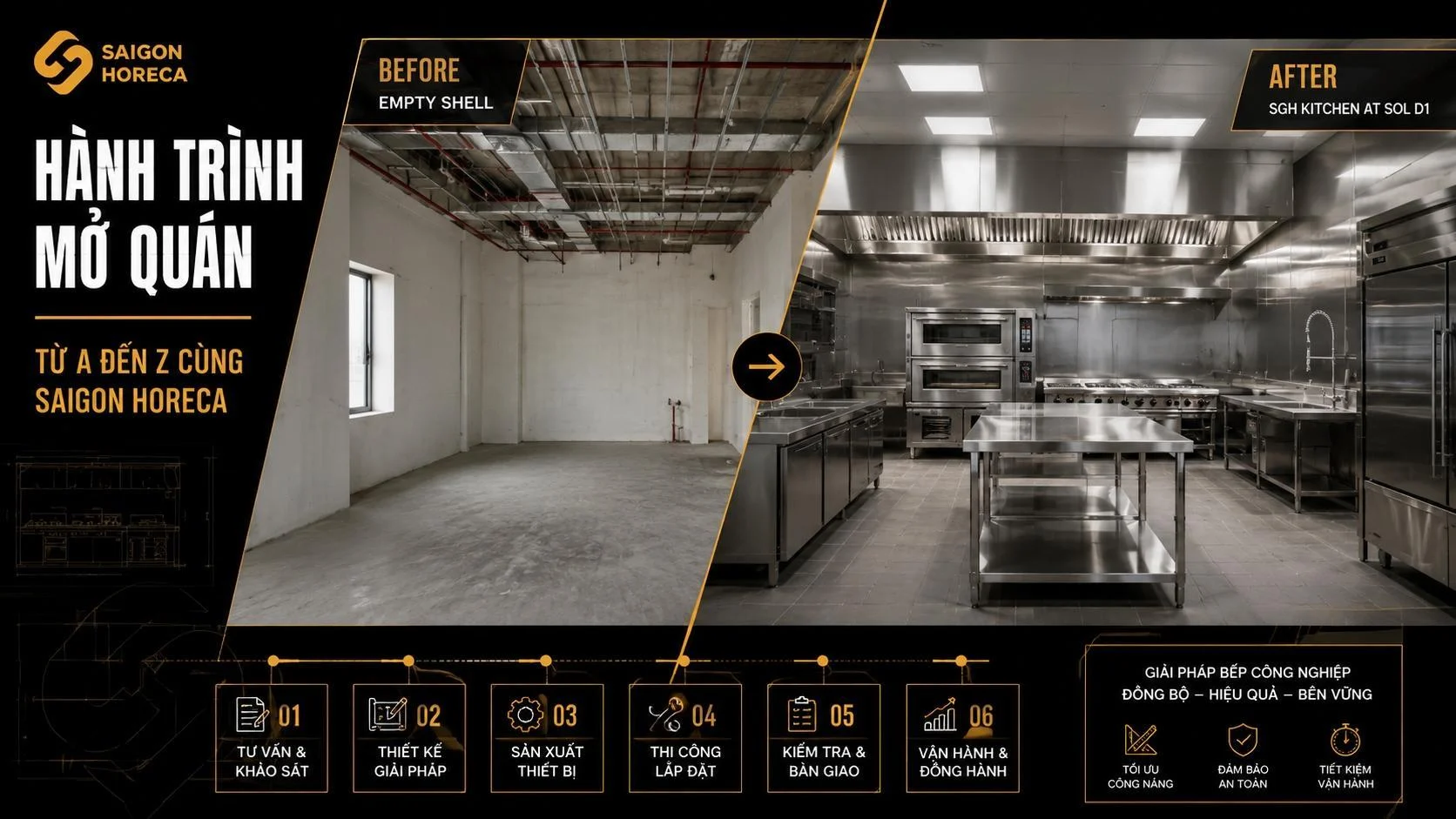
We not only provide high quality industrial kitchen equipment, but also consult – design – construct a complete optimal kitchen solution according to each actual operating need. With real-world experience and a team of dedicated experts, Saigon Horeca is committed to providing professional, sustainable and inspiring kitchen spaces for both cooks and diners.
 Facebook
 Zalo
Zalo