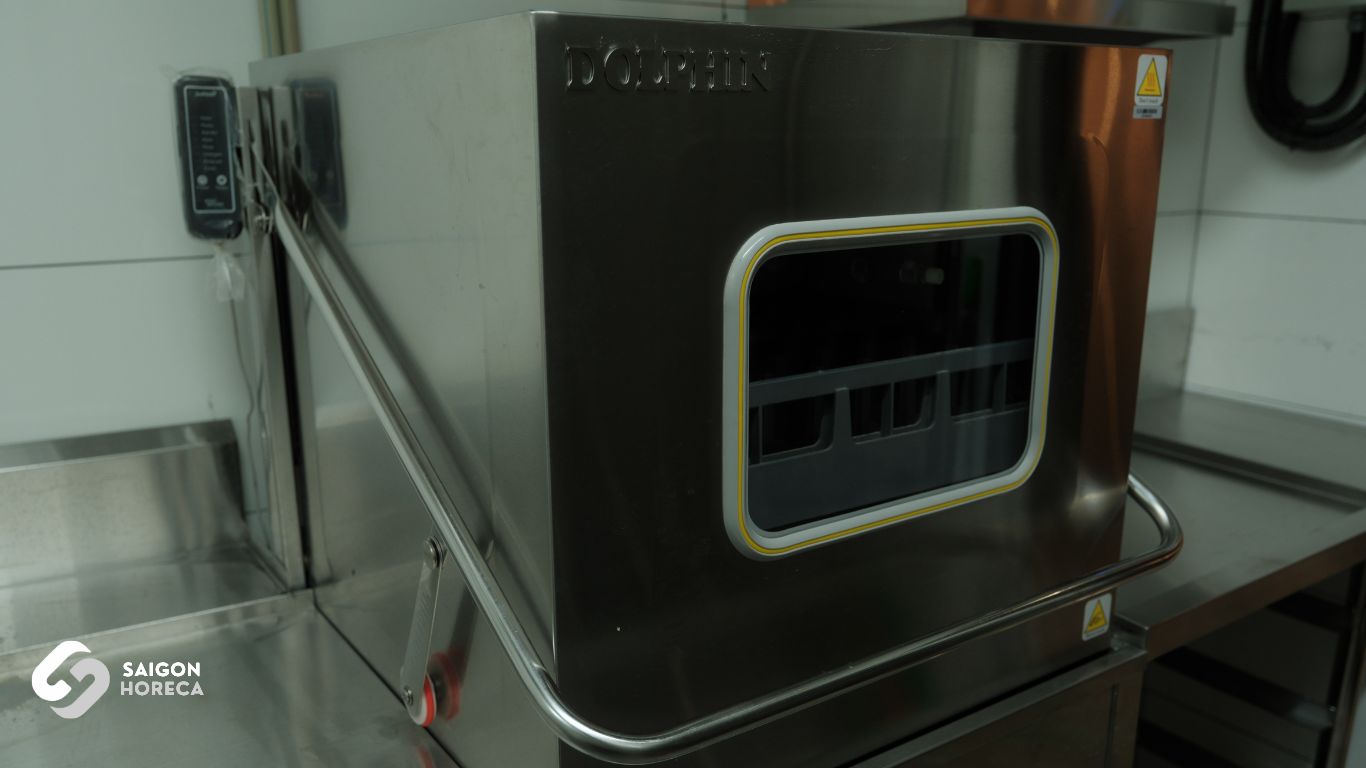
- Saigon Horeca, commercial kitchen Equipment, News
7 benefits industrial dishwashers bring to commercial kitchens
In any restaurant, hotel or eatery, the dishwashing area is always an important part but is often overlooked. When the number of customers increases during peak hours, hundreds of dishes, pots, and trays need to be cleaned quickly to serve the next round of customers. If you still maintain manual washing, it not only takes a lot of labor but is also prone to delays, unhygienic conditions and affects the entire kitchen operating process.
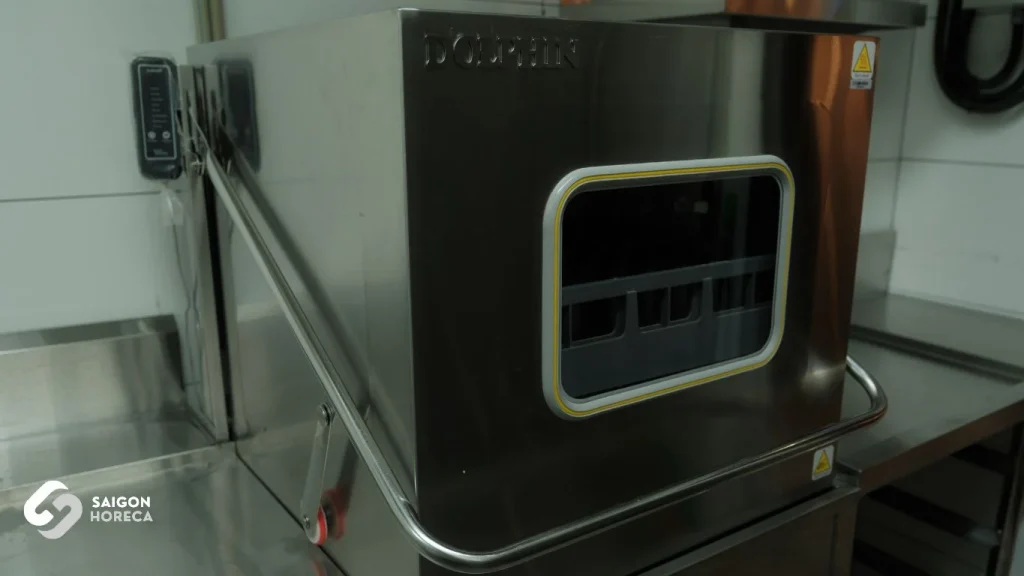
This is when industrial dishwashers demonstrate their outstanding role. With the ability to clean hundreds of utensils in a short time, this device not only helps save personnel costs, but also improves hygiene standards and professionalizes kitchen processes.
In this article, Saigon Horeca will explore with you the 7 most outstanding benefits that industrial dishwashers bring to the kitchens of restaurants, hotels, and eateries – from the perspective of operational efficiency, cost savings to enhancing brand image.
Article content
7 benefits industrial dishwashers bring to commercial kitchens
1. Save time, increase work efficiency
In an commercial kitchen environment, especially in restaurants and eateries with a large number of customers, time is always a “vital” factor. An industrial dishwasher can handle 3–5 times more dishes than manual hand washing, and more importantly maintains this speed consistently throughout the day.
Thanks to the fast washing speed, the tool rotation process becomes smoother. Plates that have just been used by customers can be cleaned and returned to the service counter in just a few minutes. This is especially important during peak hours, when every minute of waiting can affect customer experience and restaurant revenue.
In addition, by reducing the time spent washing dishes, staff can focus more on main tasks such as preparing dishes, cleaning the kitchen or taking care of customers. The overall operating performance of the kitchen is significantly improved, helping the whole system operate more flexibly, professionally and efficiently.
2. Save labor costs
Manual dishwashing often requires a separate team of staff, especially during peak hours or when the number of customers increases suddenly. Not only does it take time, this process also consumes a lot of costs in terms of salaries, insurance and costs related to human resource management.
Industrial dishwashers help completely automate the dish cleaning process, significantly reducing the need to hire many unskilled workers for this job. With a machine of suitable capacity, only one operator is enough to handle the entire washing process for the entire restaurant kitchen.
Not only that, using the machine also helps minimize the situation where employees have to work overtime or work in humid, heavy environments – which often causes fatigue, boredom or sudden quitting. Reducing pressure on employees also means maintaining stability within the team, thereby optimizing long-term operating costs for the business.
3. Improve hygiene and food safety standards
In the F&B industry, hygiene is not only a mandatory requirement, but also a core factor to build trust and retain customers. Just a small mistake in cleaning dishes can lead to serious consequences such as food poisoning, directly affecting the reputation of the restaurant, eatery or hotel.
Industrial dishwashers are designed with high temperature washing mode from 80–90°C, which helps kill bacteria and completely remove residue that is difficult to clean by regular hand washing. In addition, the closed and uniform process helps avoid not washing thoroughly, leaving behind grease, leftover food or cleaning chemicals.
Another big plus is that the machine uses the correct amount of water and detergent according to the cycle, ensuring the tools are free of chemical residue, both clean and safe for the user’s health.
Investing in an industrial dishwasher also means upgrading the kitchen operating system to a more professional standard, meeting food safety inspection requirements from authorities and reassuring both diners and investors.
4. Reduce tool loss and damage
When using the traditional hand washing method, it is inevitable that dishes will be broken, chipped or scratched – especially in an commercial kitchen environment, where all operations need to be done quickly to serve customers. This not only wastes replacement costs but also affects the restaurant’s professional image in the eyes of customers.
Industrial dishwashers are designed with specialized trays and stable operating procedures, helping to minimize collisions between utensils during the washing process. Thanks to that, items such as glass cups, ceramic plates, stainless steel spoons and forks… are better protected, extending their lifespan.
In addition, using water at the right temperature and pressure also helps clean effectively without having to scrub vigorously like washing by hand – a common cause of scratches and deterioration of tool surfaces.
Reducing the rate of damage means reducing periodic replacement costs, while ensuring the kitchen always has enough utensils to serve customers without worrying about shortages during peak hours.

5. Save electricity and water thanks to modern technology
Many people often think that industrial dishwashers will consume more electricity and water than hand washing. However, the reality is that today’s modern dishwashers are optimally designed to save energy, helping restaurants and hotels not only operate efficiently but also save money in the long run.
The machine uses a closed washing cycle, accurately controlling the amount of water and temperature needed, avoiding waste. On average, a standard industrial dishwasher can clean hundreds of sets of dishes with only about 2-3 liters of water per cycle – much lower than manual washing.
In addition, drying technology using heat or hot wind also helps tools dry quickly without using a towel – saving more time and reducing the risk of cross-infection.
In terms of electricity, many machines also integrate the feature to automatically shut off when inactive, or quickly heat up and maintain a stable temperature, minimizing unnecessary electricity waste.
Thereby, investing in a dishwasher not only improves operating efficiency but is also a smart step to reduce long-term operating costs – something that any commercial kitchen owner needs to consider carefully.
6. Reduce personnel and operating costs
In an commercial kitchen environment, especially restaurants – eateries that serve a large number of customers every day, personnel problems are always one of the biggest challenges. Recruiting, training, and retaining dishwashers is not easy – especially during peak times or labor shortages.
Industrial dishwashers help directly solve this problem by automating the entire cleaning process of utensils, dishes, cups…, significantly reducing the number of personnel needed for the cleaning area. Instead of needing 2–3 people to wash and arrange dishes manually, a dishwasher can take on this workload with just 1 simple operator.
Not only save monthly labor costs, businesses also reduce indirect costs such as uniforms, insurance, or periodic training. At the same time, the remaining personnel can be reasonably allocated to more necessary areas – such as preparing ingredients, serving, or coordinating the kitchen during peak hours.
More importantly, when reducing the pressure of heavy work on employees, the atmosphere in the kitchen also becomes more professional and comfortable, thereby improving the overall quality of operations.
7. Increase professionalism and hygiene in the kitchen
In the F&B industry, especially at high-end restaurants, eateries or hotels, hygiene and a professional image in the kitchen are vital factors. Not only to comply with food safety regulations, but also to demonstrate class and commitment to service quality of the business.
Industrial dishwashers, with a closed and standardized process, help ensure dishes are always cleaned and disinfected at high temperatures – something that is difficult to achieve with conventional hand washing methods, especially in busy and high-pressure environments.
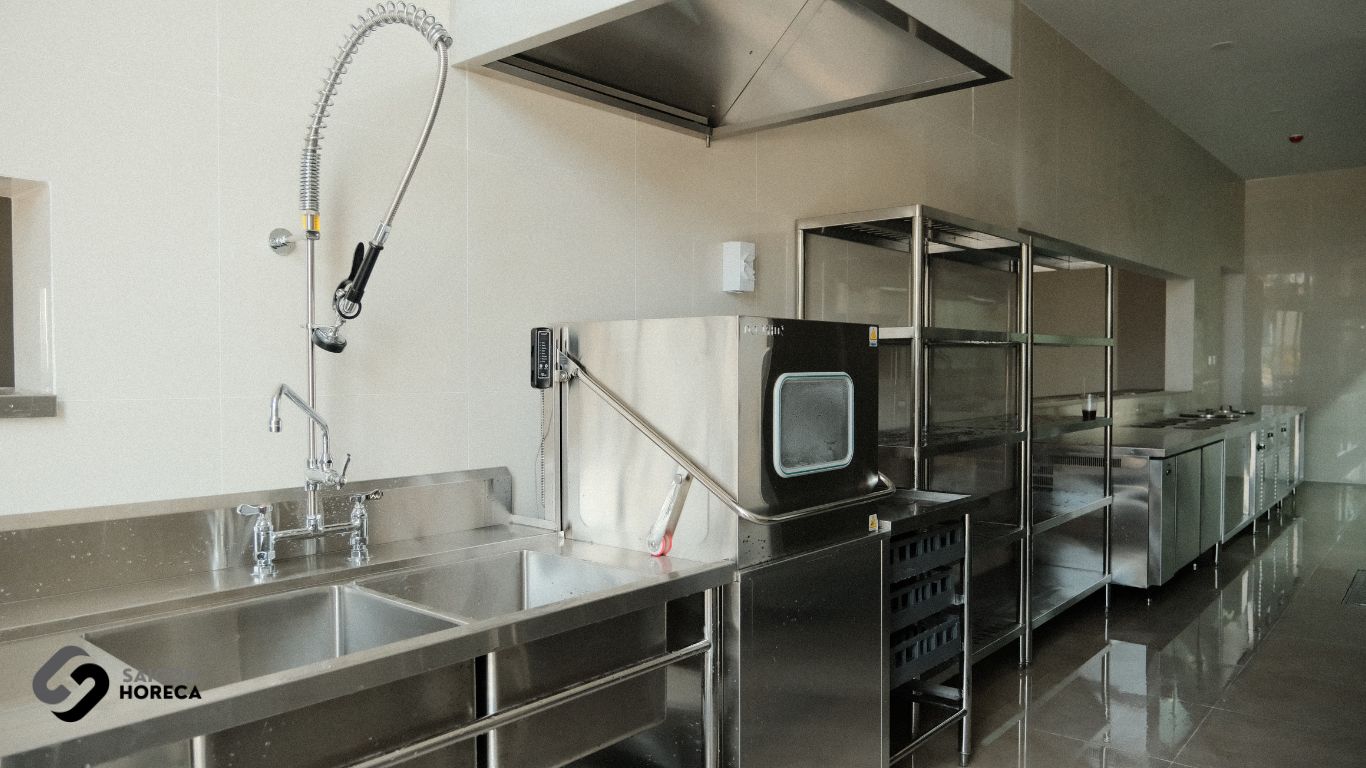
In addition, eliminating the manual dishwashing area also helps the kitchen space become neater, drier and less humid, minimizing the risk of slipping and occupational accidents. The machine is also often designed with high-quality stainless steel, easy to clean and retains its shine over time, contributing toenhancing the overall image of the kitchen.
With the automatic washing – rinsing – drying process, dishes when served to customers are always clean, dry and free of soap smell – creating a feeling of trust and satisfaction for diners.
Automation not only helps increase efficiency, but is also a step forward to affirm professionalism in the modern kitchen operating model.
 Facebook
 Zalo
Zalo