Solutions to reduce industrial kitchen operating costs while still ensuring performance
In industrial kitchen operations, cost savings are often simply understood as cutting back on electricity, water, gas or personnel. But in reality, that is just the tip of the iceberg. The cost of operating a restaurant, hotel or central kitchen does not only come from monthly bills, but also from equipment layout, machine life cycle, operating procedures and staff usage habits.
The difference between a kitchen that consumes a lot of resources and a kitchen that operates optimally lies in design thinking and life cycle cost management. This is the modern approach that many major F&B brands in the world have applied: invest correctly from the beginning, use measurement and automation technology, and continuously refine the process to achieve maximum performance with minimum cost.
This article will not stop at familiar tips such as turning off the stove when not in use or cleaning it periodically. Instead, let’s delve into the practical solutions that Saigon Horeca has applied in many projects – from an Izakaya restaurant of a few tens of square meters to a 5-star hotel kitchen – to prove that: reducing operating costs does not mean reducing service quality, but can completely become a competitive advantage.
Solutions to reduce industrial kitchen operating costs
Solution 1: Equipment life cycle management (Life Cycle cost)
When investing in industrial kitchens, many restaurants and hotels often focus on the initial purchase price of the equipment. However, if you only look at the numbers on the quote, it is easy to ignore a more important factor: total equipment life cycle costs – including electricity, gas, water, maintenance, repair and service life.
In fact, a Fujimak imported European stove can cost 15–20% more than popular models. But when operated continuously for 5 years, this device consumes less energy, has fewer breakdowns, and has almost zero downtime. The result is a significantly lower cost per hour of operation compared to “cheap” stoves – which often incur twice as much repair and energy consumption.
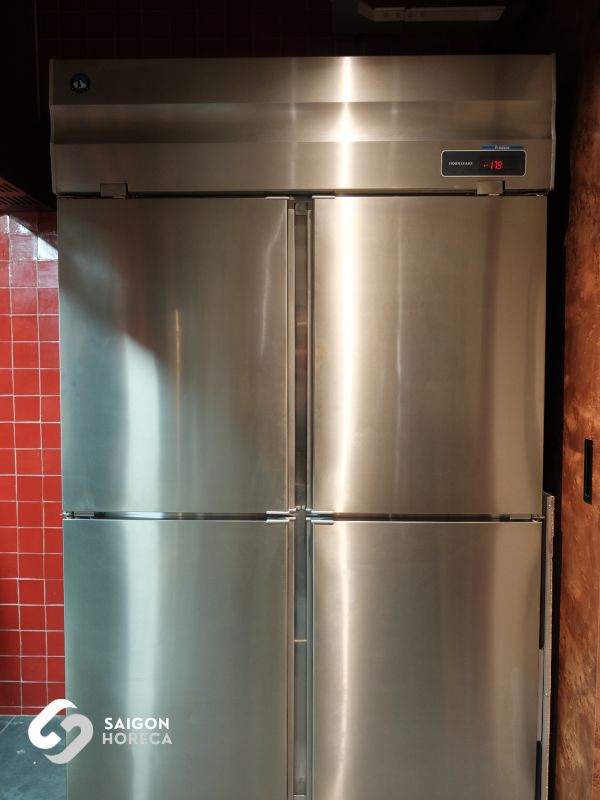
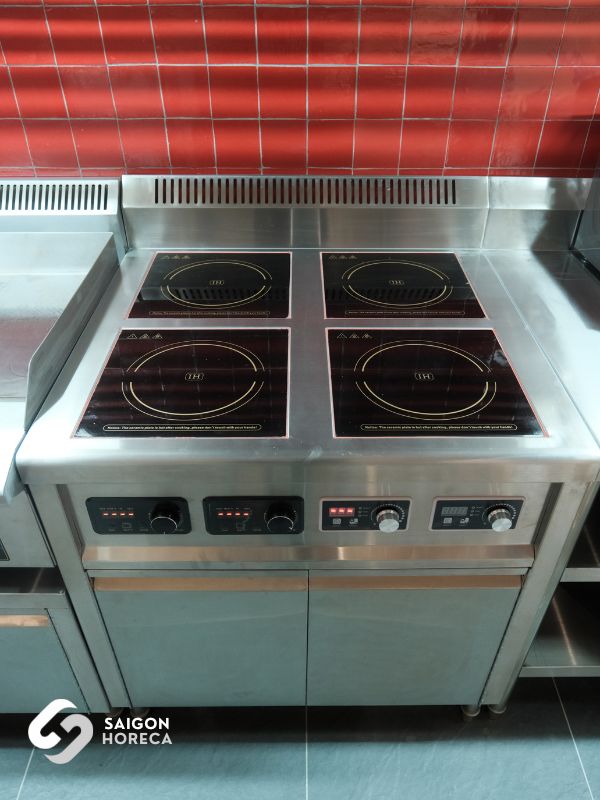
A real example from the 4-star hotel kitchen project that Saigon Horeca implemented: by simply replacing old gas appliances with Fujimak industrial induction cooker systems, this hotel has reduced energy costs by 12% in the first year, while shortening the payback period to 2.5 years. This is a clear demonstration of the principle: smart investment from the beginning helps save big later.
Solution 2: Optimize kitchen process & layout
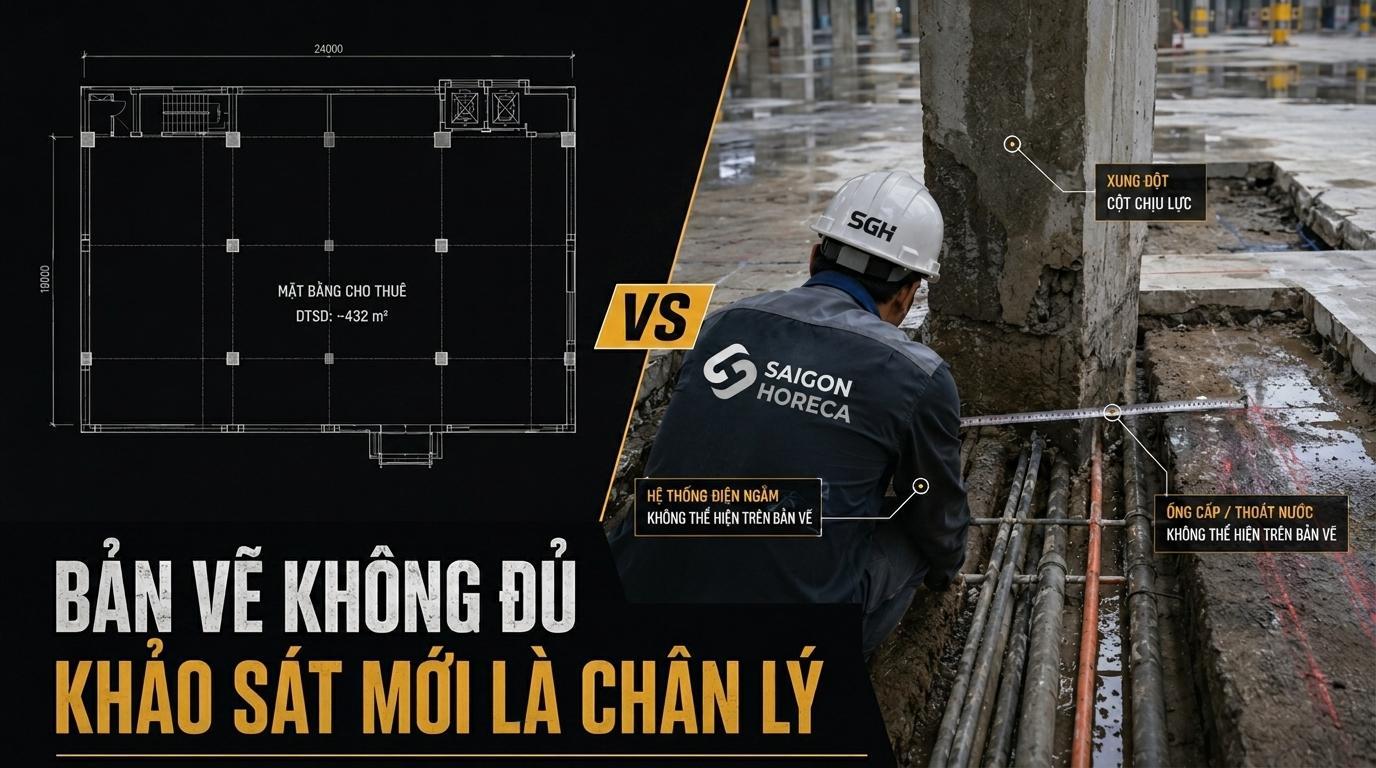
One of the biggest “cost-consuming” causes in industrial kitchens lies not in the equipment, but in the layout and operation of the process. When the flow of employees is unreasonable, equipment is located far from the working location, or the refrigerator – freezer opens and closes continuously… electricity, water, gas and labor time are all wasted.
In Saigon Horeca’s projects, the solution applied is to design the kitchen according to the one-way flow principle: ingredients → preparation → processing → dish. When all equipment is placed in the right position, employees almost do not need to “run around” during rush hours, both saving energy and increasing service speed.
Practical example from an Izakaya restaurant in Ho Chi Minh City: initially, the cooler was placed nearly 5 meters away from the grill line. Just the fact that employees have to move back and forth dozens of times during a shift makes the cabinet temperature unstable, the compressor has to work harder, leading to an 18% increase in power consumption. After Saigon Horeca advised on adjusting the layout, placing the cooler close to the grill line and clearly separating the pre-processing and processing areas, the amount of electricity wasted was reduced, and the speed of food production increased by nearly 20%.
This shows that: cost savings lie not only in energy-saving equipment, but also in smart operational design.

Solution 3: Choose equipment suitable for your business model
A common mistake in investing in industrial kitchens is choosing equipment based on general standards or by brand, instead of basing it on the actual business model. As a result, the device either has too much capacity, causing waste, or is too small, causing it to operate continuously, quickly breaking down, wasting electricity and repair costs.
Optimal method:
- Clearly define menu & output before investing in equipment.
- Prioritize multi-function devices (for example: oven combined with steamer, high-capacity induction cooker) to save space and reduce the number of devices.
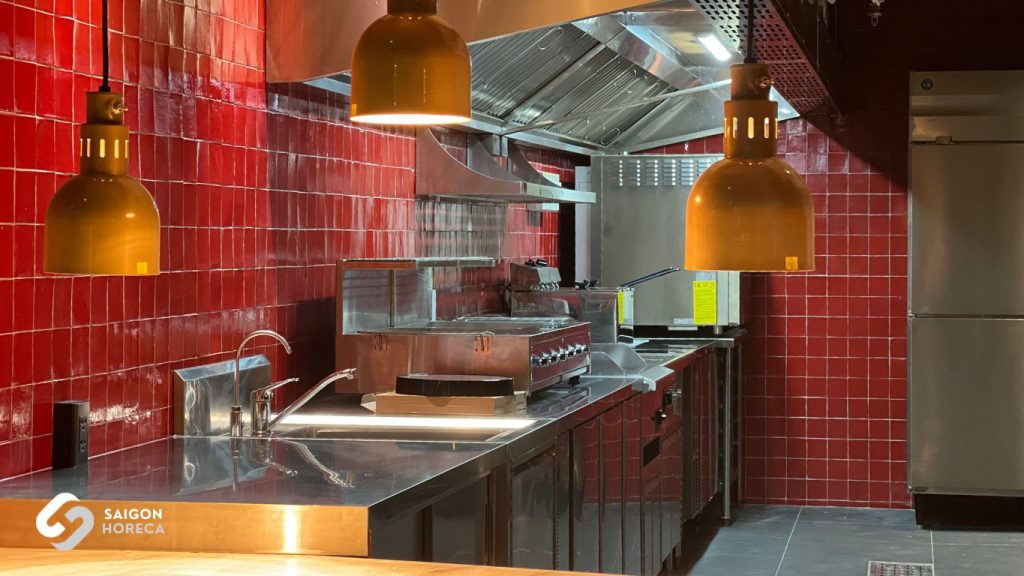
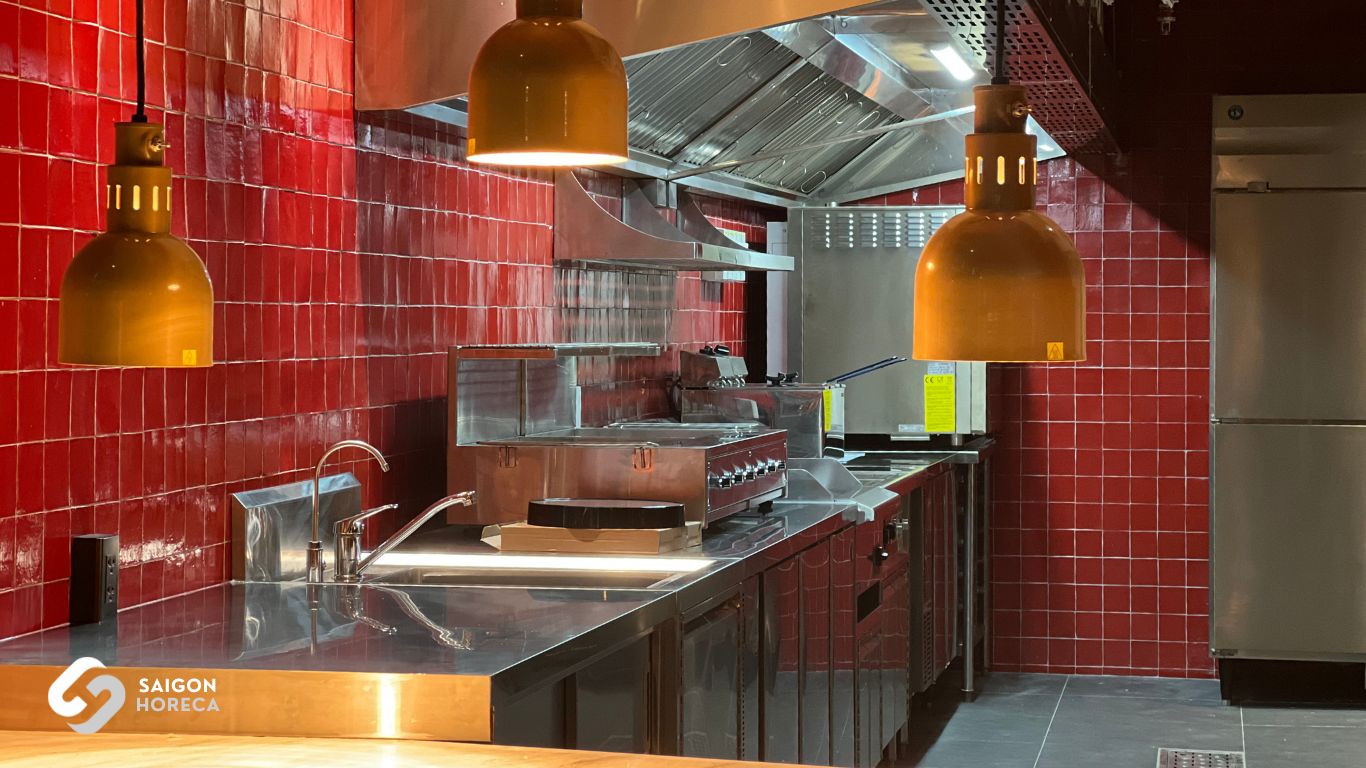
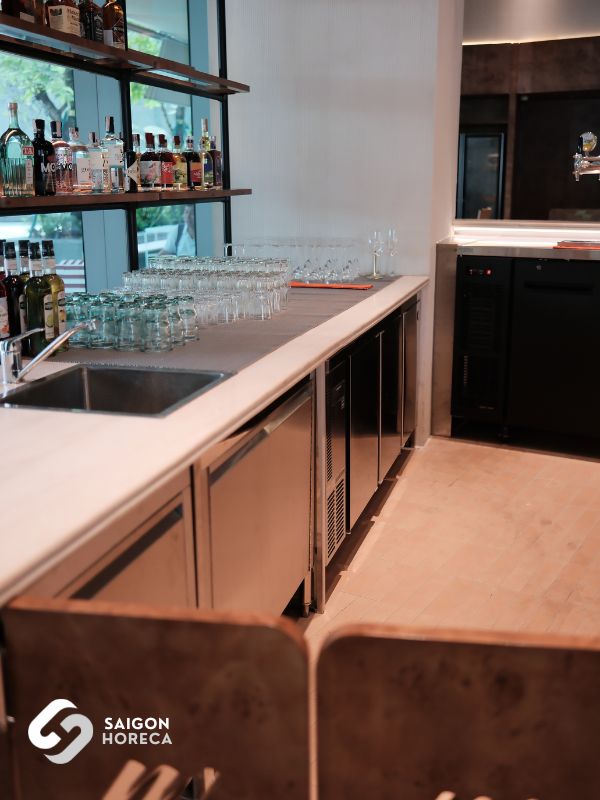
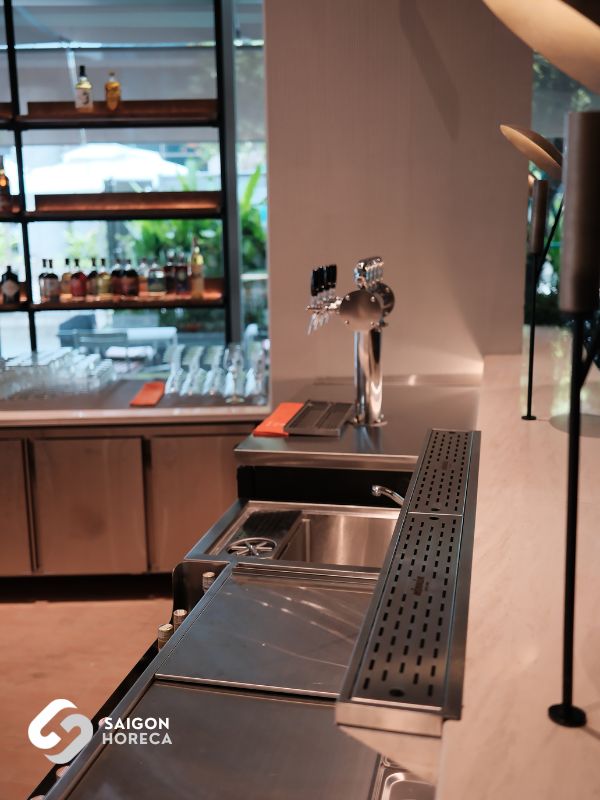
- Combination of import and internal production: import core equipment (Hoshizaki chiller, ATA European oven…), the rest Saigon Horeca produces its own stainless steel (sinks, bars, kitchen shelves) to optimize costs while still ensuring quality.
Practical example from the Saigon Horeca project:
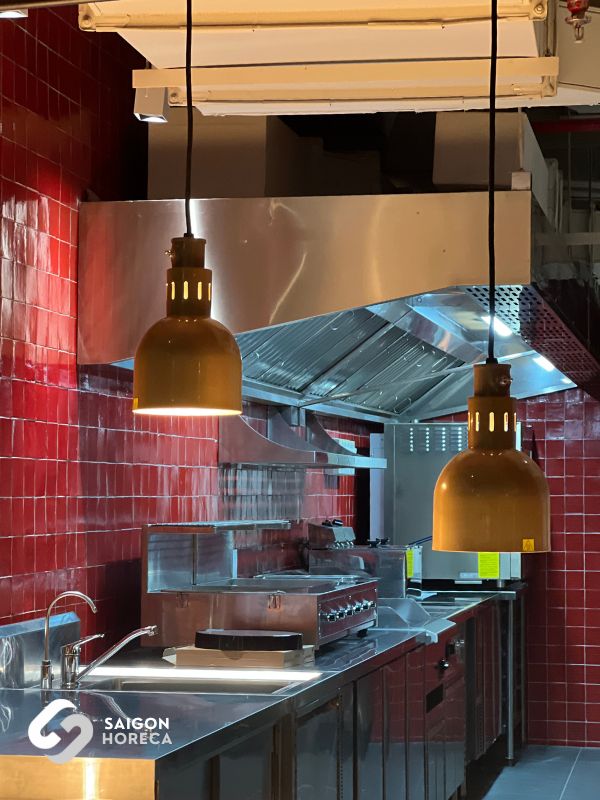
GodMother Friendship: combines European equipment (fryer, salamander) with stainless steel equipment processed by Saigon Horeca, both meeting international operating standards and significantly saving custom costs. Bambino SuperClub: choose the right Fujizaki refrigeration equipment and high-end kitchen equipment (Italy) instead of buying widely, helping to operate stably in a bar area of only 23 m².
The bottom line: the most expensive equipment is not necessarily the most effective. Equipment suitable for the new menu and business scale is the solution to help optimize long-term operating costs.
Solution 4: Proactive maintenance
In industrial kitchens, many investors often fall into a “vicious cycle”: only repairing when the equipment breaks down. This approach leads to two big problems: repair costs are many times higher than regular maintenance, and more dangerous, the operation process can be interrupted in the middle of peak hours. With the restaurant-hotel model, just one hour of kitchen downtime is enough to cause huge losses in revenue and customer experience.
Proactive maintenance is a more optimal solution:
- Schedule regular inspections for all equipment, from fryers, ovens, dishwashers to gas systems.
- Monitor equipment performance based on measurement data to predict failures before they occur.
- Standardize cleaning & maintenance processes: from cleaning smoke pipes to replacing worn components at the right time.
Practical example:
At projects, Saigon Horeca implements a periodic maintenance program immediately after handing over the system. Thanks to that, after more than a year of use, the entire device still operates stably, without any serious problems occurring. The investor recorded a 30% lower maintenance cost compared to the wait-for-failure-to-repair model they used before.
In the Amdang Typhoon project, more than 75% of the equipment is designed and produced internally by Saigon Horeca. This advantage not only reduces initial investment costs but also makes maintenance and component replacement faster and more economical, minimizing operational interruptions.
The bottom line: proactive maintenance is not a cost, but along-term profitable investment. Because each appliance that is properly cared for prolongs its lifespan, reduces the risk of kitchen downtime, and optimizes energy efficiency.

Economy without sacrificing quality
Reducing industrial kitchen operating costs does not mean cutting quality or sacrificing performance. Instead, it is a combination of right investment from the beginning, application of measurement technology, proactive maintenance, process optimization – layout. When these solutions are applied synchronously, businesses not only save significant long-term costs, but also create a stable, safe, and sustainable kitchen system – the foundation for improving customer experience and increasing profits.
With experience in implementing hundreds of projects from Sol Kitchen & Bar, Spice World Hot Pot, GodMother Friendship to Elephant Mountain Pine Forest Resort, Saigon Horeca has proven that a smartly designed and scientifically managed kitchen system can help F&B businesses reduce operating costs by 20–30% while still ensuring maximum efficiency.
If you are looking for a solution to reduce costs but still operate the kitchen effectively, let Saigon Horeca accompany you from consulting – design – equipment supply to periodic maintenance. We not only sell equipment, but also provide comprehensive solutions for the long-term success of restaurants, hotels and industrial kitchens.
 Facebook
 Zalo
Zalo