- Saigon Horeca, commercial kitchen Equipment, News
Open Kitchen: 5 Advantages & Disadvantages when applied in restaurants
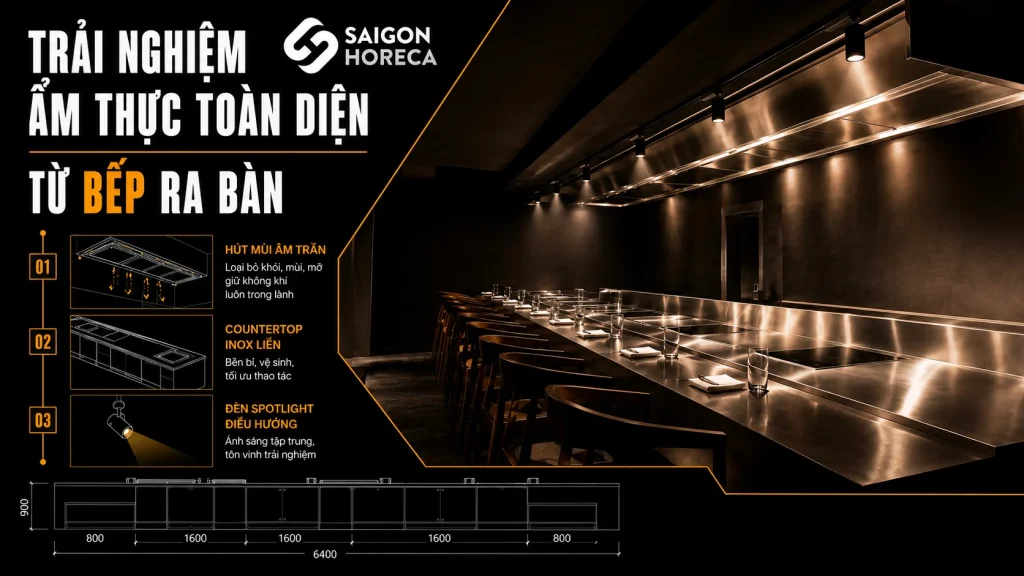
If you’ve ever been to a Japanese restaurant specializing in Teppanyaki or a high-end steakhouse, you’ve probably been attracted by the open kitchen space – where the chef prepares dishes right before the guests’ eyes. The flames blazing on the cast iron pan, the attractive sizzling sound of the cooked meat, and the skillful slicing technique not only create a delicious meal but also bring an impressive performance.
Not only stopping at entertainment, open kitchens are also a smart business strategy, helping restaurants increase transparency, enhance customer experience and optimize operations. However, this model also comes with many challenges: from controlling hygiene, noise, and food odor to strict requirements on design and human resource skills.
So, is an open kitchen really the ideal choice for every restaurant? Let’s join Saigon Horeca in analyzing 5 important advantages and disadvantages of the open kitchen model so you can make the most accurate decision!
Article content
What is Show Kitchen or Open Kitchen?
Open kitchen (Show Kitchen) is a design model where the food preparation area is placed right in front of diners. Instead of hiding behind the kitchen door as is traditional, chefs work in an open space, allowing customers to follow the entire cooking process – from preparing ingredients, to cooking, to dish presentation.
This model is not only popular in high-end restaurants or 5-star hotels, but is also applied by many modern eateries to create highlights. An open kitchen is often fully equipped with commercial kitchen equipment such as European stoves, Asian stoves, ovens, freezers, smoke extraction systems, even industrial dishwashers… but the biggest difference is that all are displayed in front of diners.
This transparency helps create trust and stimulate taste buds – because there’s nothing more appealing than seeing your food being professionally prepared. However, not all restaurants are suitable for the open kitchen model. Along with the benefits of experience and branding, this model also poses many challenges in hygiene, space design and operational management.
 Facebook
 Zalo
Zalo