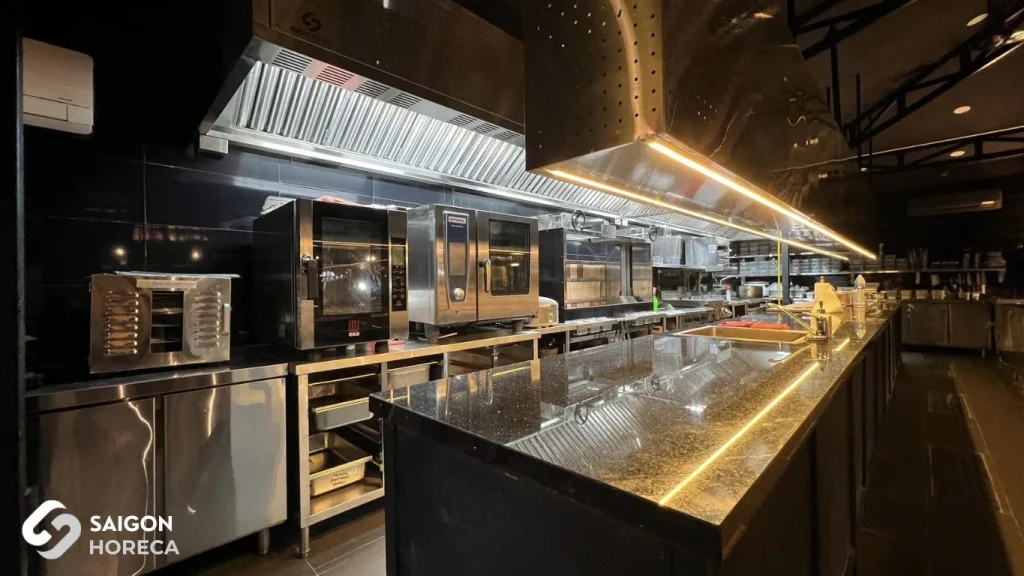
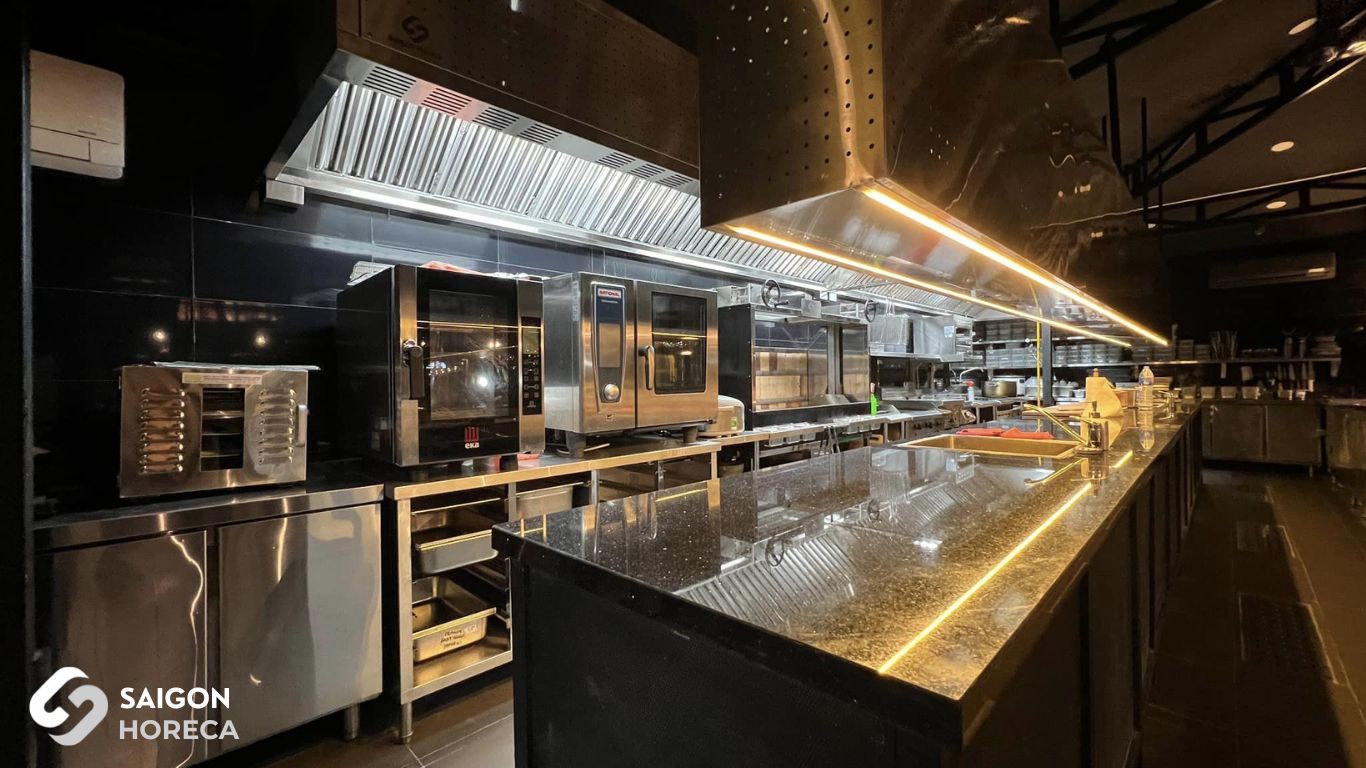
What is needed in a fire suppression system in an industrial kitchen?
In industrial kitchens – where fire, grease and high temperatures are constantly operating, the risk of fire and explosion is always a constant threat. According to statistics from the International Fire Protection Association (NFPA), up to 61% of fires in restaurants originate in the kitchen area, the main cause being grease catching fire or cooking equipment malfunctioning.
Just imagine: in just a few minutes, a small fire from a boiling oil pan can spread, causing great damage not only to property but also threatening the lives of employees and customers. Such an incident not only causes you economic loss but also destroys the reputation and trust built over many years of business.
So how to protect your industrial kitchen from these risks? The answer lies in equipping a professional fire suppression system that fully meets safety standards. In this article, Saigon Horeca will find out with you.
Why do industrial kitchens need a fire suppression system?
1. The risk of fire and explosion is always lurking in the industrial kitchen environment
Industrial kitchens are not like regular family kitchens. This is where continuous, high-intensity cooking activities take place, using large heat-generating devices such as gas stoves, electric stoves, ovens, and deep oil fryers. Factors such as splashing grease, high temperatures, or just a small spark from a gas stove are enough to trigger a large fire in an instant.
In particular, grease, when accumulated in gaps, exhaust pipes or on equipment surfaces, can become a dangerous “detonator”. A study shows that grease when exposed to temperatures of 315°C or higher can spontaneously combust, making the risk of fire in industrial kitchens more serious than ever.
2. Legal requirements on fire prevention
According to regulations in TCVN 7336:2003, all establishments with high risk of fire and explosion, including restaurants, hotels, and industrial kitchens, must be equipped with standard fire extinguishing systems. Some key points in the regulations include:
- Automatic fire suppression system: Required to be installed in areas with high fire risk, such as kitchens or warehouses storing flammable materials.
- Fire alarm equipment: Must be integrated to detect risks early and warn employees.
- Personnel training: All employees must be trained to use firefighting equipment and handle emergency situations.
Complying with these regulations is not only a legal responsibility but also helps businesses avoid financial risks and heavy penalties when violated.

3. Benefits of automatic fire suppression systems
- Early detection of fire and explosion risks:
The automatic fire suppression system is equipped with heat and smoke sensors, allowing immediate detection of any abnormal signs. This helps warn and activate the fire suppression system promptly, before the fire spreads.
- Minimize property damage:
A large fire can destroy the entire kitchen, causing serious damage to equipment and infrastructure. The automatic fire suppression system helps extinguish fires on the spot, limiting damage to a minimum.
- Ensuring human safety:
In an industrial kitchen environment, the safety of employees and customers is always the top priority. The automatic fire suppression system not only protects property but also acts as a “shield” to protect human life in dangerous situations.
It can be said that equipping an industrial kitchen with a fire suppression system is not only a safety solution but also a foundation for building reputation and sustainable development for businesses. Therefore, never skip this investment step – it is the key to protecting all the value you are building.
What is needed for a fire suppression system in an industrial kitchen?
In an industrial kitchen environment, equipping a standard fire extinguishing system is not only a mandatory requirement but also a measure to ensure optimal safety. To build an effective fire suppression system, it is necessary to ensure the following components:
1. Fire detection system
These are the “eyes” of the fire fighting system, helping to recognize risks as soon as they appear.
- Heat detector or smoke detector: Installed in high-risk areas such as cooking areas and smoke chimneys. The heat detector will activate when it detects that the temperature exceeds the allowable threshold, and the smoke detector will warn when it detects abnormal smoke.
- Integration with automatic fire alarm system: When a fire risk is detected, the system will issue warnings via speakers, signal lights and activate automatic fire-fighting measures.
2. Fire suppression system
This is the most important ingredient to control and extinguish the fire as soon as it breaks out.
- Specialized fire extinguisher for oil and grease (class K):
Grease is the main cause of fire in industrial kitchens, so it is necessary to use a fire extinguisher containing a wet chemical solution. This type of tank not only extinguishes the fire but also creates a protective coating, preventing fire from recurring.
- Automatic fire suppression system (Ansul, Fire Suppression):
This is a fire extinguishing system designed specifically for industrial kitchens. When the temperature reaches the dangerous threshold, the system will automatically activate the nozzle to spray fire extinguishing solution on the kitchen area and cooking equipment, extinguishing the fire immediately.
- Foam Fire Extinguishing System (Foam System)
Foam fire extinguishing system is one of the modern and effective solutions, especially suitable for areas prone to fires caused by flammable liquids such as grease in industrial kitchens.
- CO2 Fire Extinguisher
CO2 (Carbon Dioxide) fire extinguisher is an indispensable fire extinguisher in industrial kitchens, especially effective against electrical fires and fires in high-tech equipment.
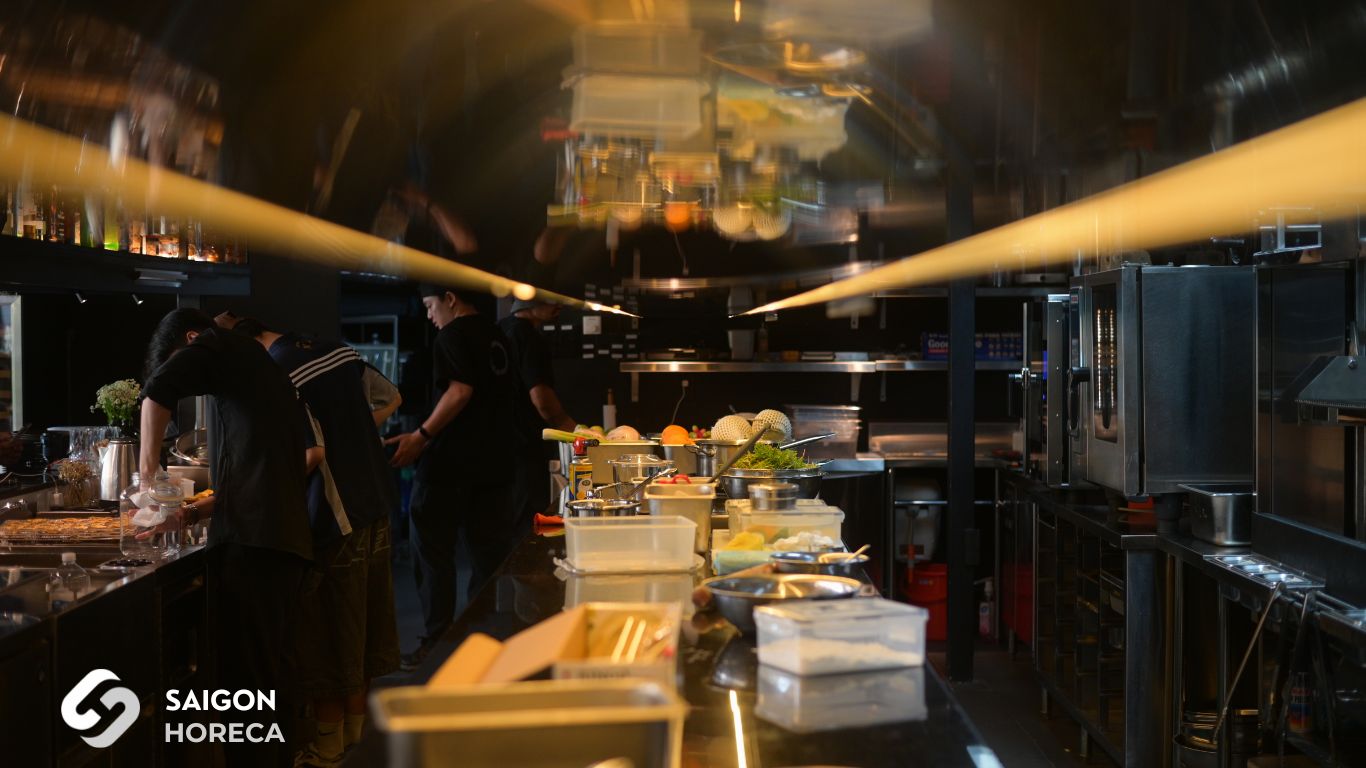
3. Other important components
For the fire suppression system to operate effectively, the following components are indispensable:
- Dedicated fire hoses and nozzles: Designed to withstand high heat and ensure the fire extinguishing solution is sprayed accurately into the required area.
- Control cabinet and alarm display panel: Allows monitoring system status and activating manual fire suppression in case of necessity.
- Automatic gas shut-off valve: This is the “final shield” to prevent the fire source from spreading. When the system detects a fire risk, the gas shutoff valve will automatically close to ensure maximum safety.
4. Smoke extraction system
An effective smoke extraction system not only helps keep the air clean but also reduces the risk of fire and explosion caused by grease buildup in ducts. The system needs to be designed to remove grease accumulated in the exhaust pipes, minimizing the risk of fire. Regular cleaning of the chimney is vital to keeping the kitchen safe.
5. Periodic maintenance process
A fire suppression system, no matter how modern, needs regular maintenance to ensure effective operation.
- Should be checked and maintained periodically at least every 6 months or according to the manufacturer’s instructions.
- Make sure detectors, fire extinguishers, nozzles, and smoke extraction systems are all in good working order.
- Periodically instruct employees on how to use the fire extinguishing system to ensure timely response in emergency situations.
The fire extinguishing system is not only a mandatory part of industrial kitchens but also a guarantee for the safety of people and property. Proper investment and maintenance will help you feel secure in operating your industrial kitchen effectively and safely.
Notes when installing fire extinguishing systems
Installing a fire suppression system for industrial kitchens is not only a mandatory requirement but also a decisive factor in the safety of both people and property. To ensure the system operates effectively, choosing a reputable supplier is an important first step. A supplier needs to fully meet fire prevention and fighting standards according to national regulations, ensuring the quality and reliability of equipment.
In addition, the fire extinguishing system must be designed to suit the scale and characteristics of the industrial kitchen. This requires detailed calculations of location, area, and potential hazards in the cooking space. A suitable system not only helps detect and handle fires promptly but also optimizes investment costs and avoids unnecessary waste of resources.
Finally, employee training in the use of fire-fighting equipment is a factor that cannot be overlooked. No matter how modern the system is, the initiative and knowledge of employees still play a decisive role in emergency situations. They need to be instructed on how to operate fire extinguishers, activate automatic systems, as well as handle unexpected situations to ensure maximum safety for everyone.
 Facebook
 Zalo
Zalo