Common problems in industrial gas stoves career
In an industrial kitchen, everything often operates smoothly like a machine.
But with just a small “hiss” from the gas system, the whole kitchen can immediately fall into chaos: the chef is forced to stop cooking, the staff runs everywhere, and the smell of gas spreads quickly throughout the enclosed space.
If you have ever operated an industrial kitchen, you must understand how “chilling” that feeling is. Every minute the kitchen stops, dozens of meals are delayed, orders are backlogged, and customers wait for a long time. But more dangerous, a small problem in the gas system can lead to consequences that no one wants to talk about.
As a unit specializing in designing and maintaining industrial kitchens, Saigon Horeca has witnessed many such “half-funny” situations – from the kitchen burning red due to lack of oxygen, to the gas line “slightly leaking” that forced the whole team to evacuate urgently. And most of those incidents, actually can be prevented, if you clearly understand the cause and handle it properly from the beginning.
In this article, Saigon Horeca will dissect each “symptom” of industrial gas stoves, to know when to calmly handle yourself – when to call a technician immediately. A little knowledge at the right time can save your kitchen (and your maintenance budget).
Common problems and early warning signs
In fact, industrial gas stoves have “temperaments” just like humans. When we’re tired or overloaded, it sends signals — it’s just that we often ignore it because… the chef is busy cooking.
Below are the familiar “help signals” that a kitchen operator should know to avoid making small things big.
1. Gas leak
The most recognizable sign is a strong gas smell or a small hissing sound in the pipeline area.
Don’t try turning on the stove to “check to see if it’s burning” – because that’s the most dangerous time! The cause is usually loose connections, old gas lines or leaky valves.
Pro tip: Use a weak soap solution to sweep around the joint – if you see bubbles appear, there is definitely a leak.
2. The stove does not ignite or ignites weakly
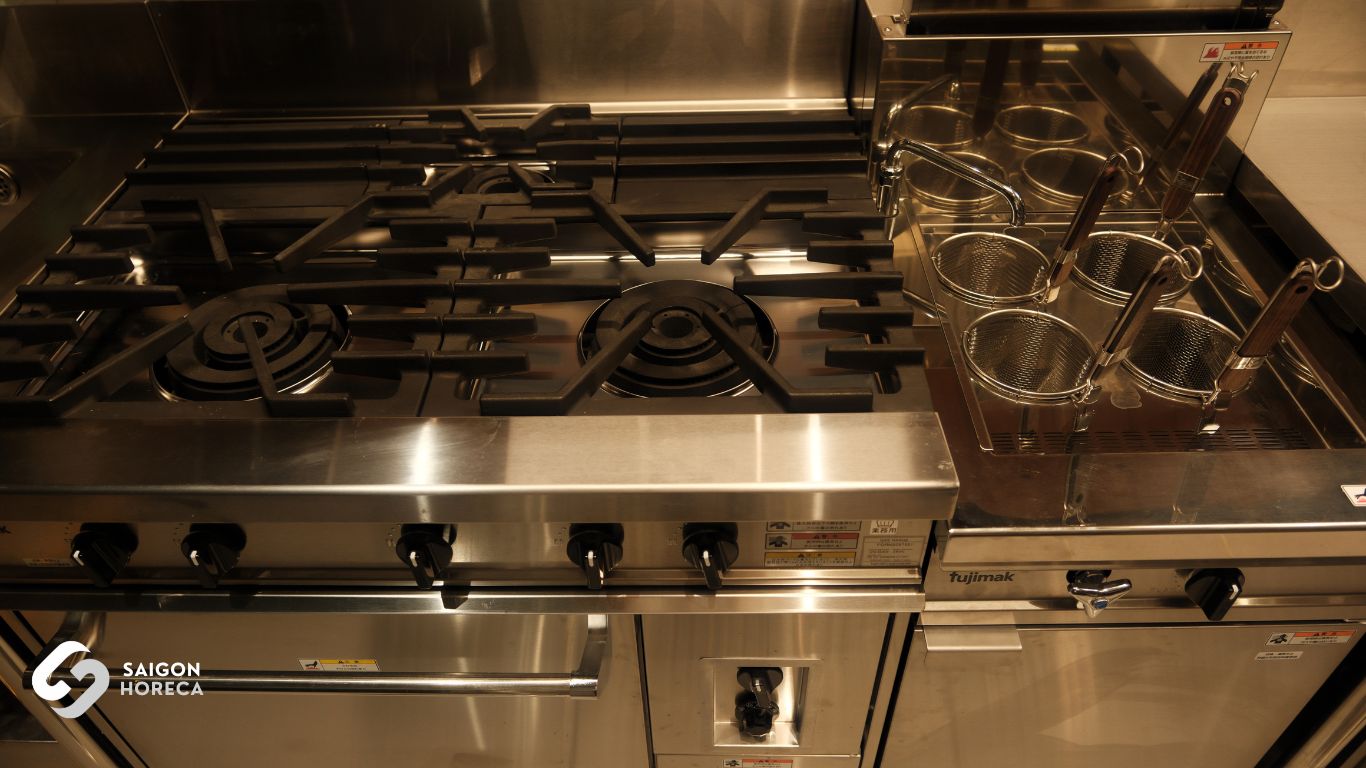
The stove turns on all the time but only hears a “clicking” sound, the fire flickers and then goes out – that’s a sign that the burner is dirty, low gas pressure, or the wind in the stove is too strong.
Don’t bang the stove – the fault isn’t yours, it’s the grease dust stuck in the burner slot.
Temporary solution: Remove the burner, clean lightly with a soft brush, but do not open the gas system yourself without a technical certificate.
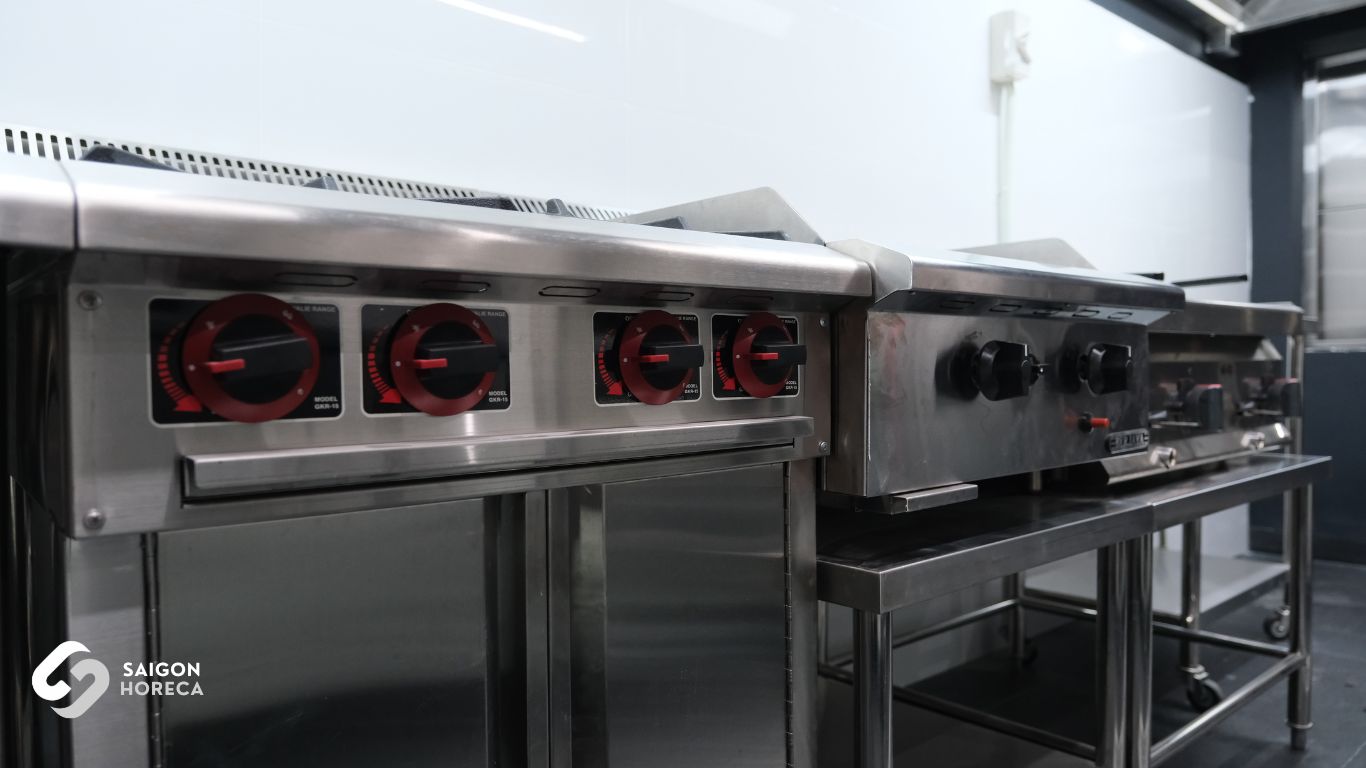
3. Red flame – “danger light” in the kitchen
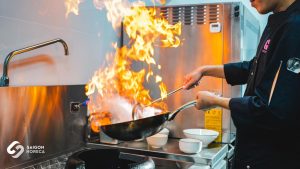
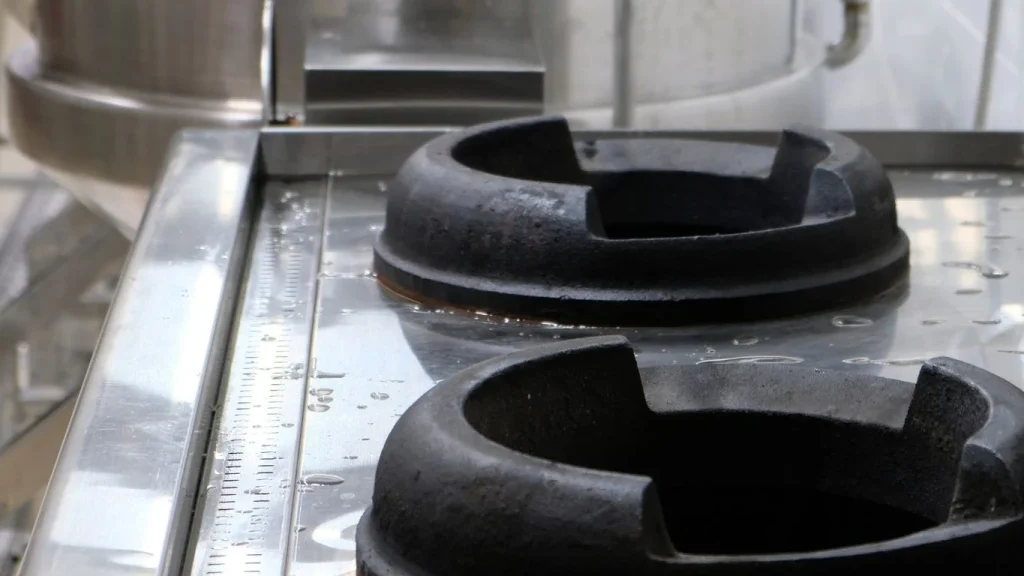
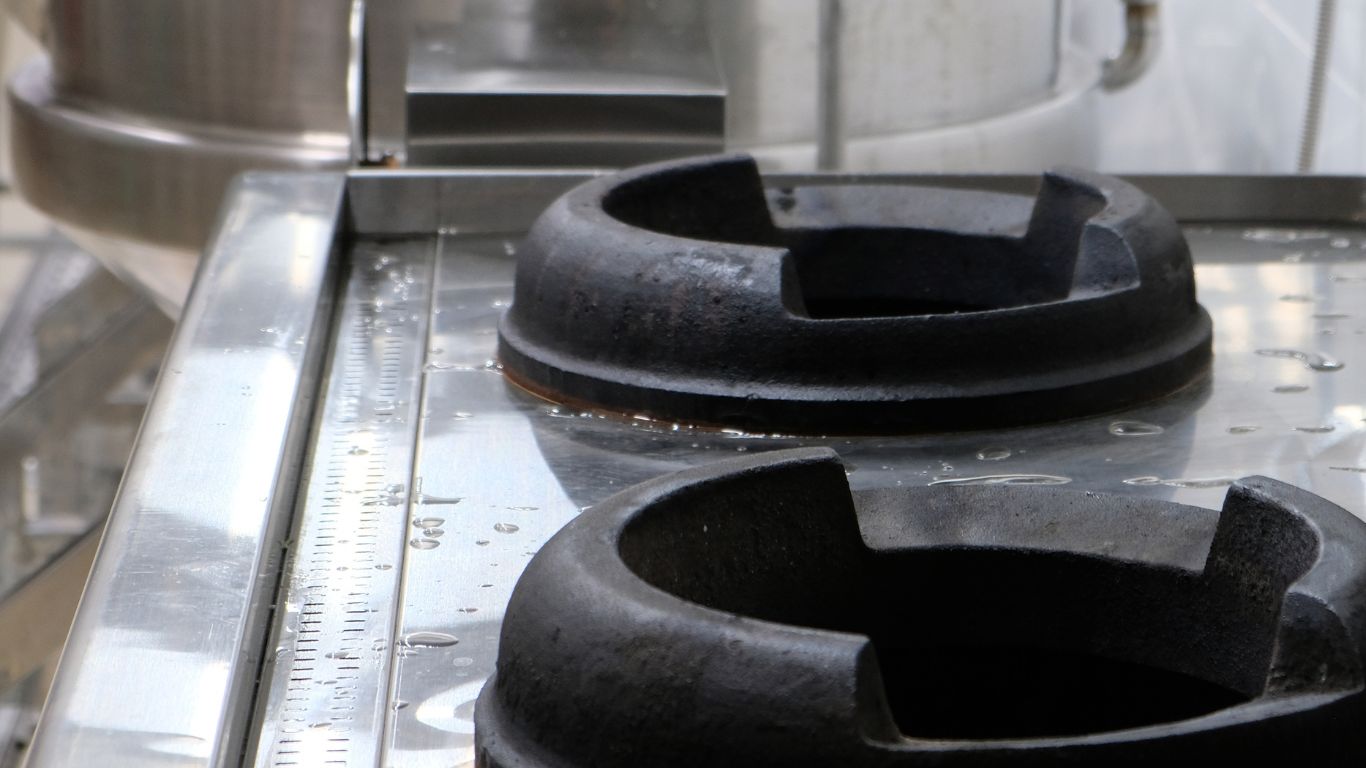
The ideal industrial gas stove flame must burn green evenly. If you see orange-red flames or black soot on the bottom of the pot, it means the gas – oxygen ratio is wrong or the gas supply pipe is dirty. Not only does it waste gas, but it also causes unstable cooking temperatures, easily burning food – the enemy of every chef.
4. The stove turns off suddenly
You’re cooking deliciously but the fire goes out?
It may be because a safety valve or a heat sensor operates to prevent a problem. If the condition recurs, don’t try to turn it back on repeatedly – check gas pressure and ventilation.
Saigon Horeca expert shares: “90% of the gas incidents we handle originate from neglected maintenance. A few minutes of checking at the beginning of a shift can literally prevent a fire.”
How to handle safely according to professional procedures
Identifying the problem is an important step, but how to handle it both safely and effectively is the decisive factor. Saigon Horeca proposes to apply a standard 5-step fire protection process and operate industrial kitchens, helping to prevent the risk of fire and explosion, protecting equipment and people.
Step 1: Lock total gas immediately
As soon as you suspect a leak or an abnormal stove, locking the master valve is the first step.
Expert Tip: Always remember the position of the master valve and instruct shift workers before the shift to operate quickly and avoid panic.
Step 2: Cut off all power sources in the kitchen area
Industrial gas stoves combined with electrical equipment – should turn off all switches, electric stoves, ovens and fans to avoid sparks.
Tip: Do not turn on/off electrical equipment when you suspect a leak, including lights or ventilation fans, because even a small spark can cause a fire.
Step 3: Open the ventilation door
Please open the door, window or air intake system to let the gas escape.
Tip: If the stove has its own exhaust system, turn on the exhaust fan remotely – avoid getting close to the leak area without turning off the gas.
Step 4: Check for leaks with diluted soap solution
Use dilute soap or specialized solution to apply to joints and gas valves. If foam appears – it means there is a leak.
Tip: Absolutely do not use a lighter, because it is extremely dangerous.
Step 5: Contact a professional technician
When a leak or damage is detected, do not repair it yourself if you do not have certification or experience.
Saigon Horeca solution: A highly trained technical team will inspect and replace equipment, ensuring fire safety before the kitchen resumes operation.
Expert advice
- Always maintain regular maintenance every 3–6 months for gas systems and burners.
- Kitchen staff should be instructed in recognizing warning signs before each shift.
- Installing gas warning system in industrial kitchens is a proactive way to prevent and reduce risks.
A safe kitchen not only helps prevent accidents, but also increases productivity and gives chefs peace of mind, allowing them to focus on creating quality dishes.
Mistakes that cause incidents to recur and how to prevent them in the long term
Even after the problem is successfully resolved, many restaurants still encounter the same situation again after just a few weeks. The cause is often not the new equipment or the technician, but incorrect operating and maintenance habits. Below are common mistakes and how to prevent them according to Saigon Horeca standards:
1. Skip cleaning the burner and air duct
- Mistake: Only wipe the surface, do not clean the small slots of the burner or pipes.
- Consequences: Dirt and grease accumulate → clog the air supply slot, reduce performance and easily cause a red flame or sudden shutdown.
- Prevention: Set up a regular cleaning schedule every 1–2 weeks, using specialized brushes and solutions, combined with checking gas pressure.
2. Do not check the safety valve and gas lines
- Mistake: Only care about the stove, ignore valves, wires or pressure regulators.
- Consequences: The valve is stuck, the wire is old, bent → gas leak, stove suddenly turns off, risk of fire and explosion.
- Prevention:Check valves, pressure regulators and gas lines at least every 3–6 months, replace when there are signs of aging.
3. Ignore the smoke extraction and ventilation system
- Mistake: Only care about the stove, not maintaining the exhaust fan and ventilation pipes.
- Consequences: Temperature and gas accumulate in the stove → reduce combustion efficiency, increase the risk of fire and explosion.
- Prevention:Clean and check the exhaust system periodically, ensure stable air flow.
4. Staff have not been trained to identify incidents
- Mistake: Only depend on technicians when problems occur.
- Consequences: Late detection → improper handling → interruption of cooking, risk of fire and explosion.
- Prevention: Organize instruct employees to recognize warning signs before each shift. Checklist to identify incidents helps them react quickly and safely.
5. Not planning regular maintenance
- Mistake: Only repair when broken, do not check periodically.
- Consequences: The problem recurs many times, wastes repair costs, reduces equipment life.
- Prevention:Regular maintenance according to a fixed schedule (3–6 months), combined with checking burners, valves, wires, pressure regulators, smoke extraction systems.
A safe gas stove system not only requires proper troubleshooting, but also depends on operating habits, maintenance and employee training.
By correctly applying the above steps and precautions, you will reduce the risk of fire and explosion, improve operating efficiency, and keep the kitchen ready for busy cooking shifts.
 Facebook
 Zalo
Zalo