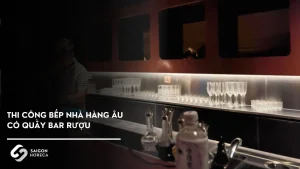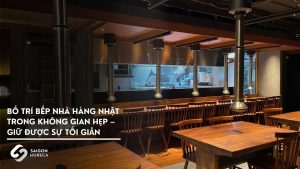
Design – construction of restaurant kitchen High-class Europe: Optimize the process, ensure aesthetics and HACCP standards
In high-end European restaurants – where every detail is decisive, from the taste of the food to the sharpness of the kitchen space – “kitchen design” is no longer a simple technical story. It is an operating strategy, an aesthetic standard, and above all, a silent commitment to quality in every dish served.
So let’s ask:
Are you underestimating the role of kitchen space in your restaurant’s success?
Are you investing heavily in the facade, interior or menu… but accidentally forgetting the “operating heart” that silently determines the customer experience of your restaurant?
In this article, Saigon Horeca will take a comprehensive look with you at how to design and construct high-end European restaurant kitchens in the direction of aesthetics – optimal operation – HACCP standards. Not only does it help the kitchen become scientific and beautiful, but it also brings long-term effectiveness to your culinary business strategy.
Why do European restaurant kitchen designs have more stringent requirements?
It is no coincidence that European restaurant kitchen design is considered a “difficult problem” even for professional design and construction units. Because the kitchen space in a high-end European restaurant is not just a place to cook – it is also the backstage where culinary art is created with almost absolute precision.
Here, every movement – from cutting, cooking, presenting to serving dishes – needs to be calculated according to rigorous operating procedures. Everything must be smooth, without entanglements, without overlap. A small mistake in design can slow down the process, causing chaos during rush hours, directly affecting service quality.
1. European culinary style: Each dish is a strict process
European cuisine is distinguished by the diversity of meal structures – from appetizers, soups, main dishes, to desserts. Each dish requires a different temperature, time and cooking technique. This requires the kitchen to be divided into many clear functional areas such as:
- Import and raw processing area
- Preliminary processing and storage area, Winter Warehouse, Cool Warehouse
- Processing area (Hot stove, Cold stove, Grill/steam stove
- Ra Mon Area
If the design is not standard from the beginning, the kitchen can easily fall into a state of “tangle” during peak hours, causing uneven food quality – a big no-no for gourmets. In addition, personnel issues will also overlap, causing a lack of effective coordination between departments, leading to unreasonable work allocation, causing some employees to be overworked while others are underworked. As a result, dish delivery time will be delayed, directly affecting the customer experience and can reduce satisfaction and reputation of the restaurant.
2. High aesthetics: Not only clean but also beautiful and modern
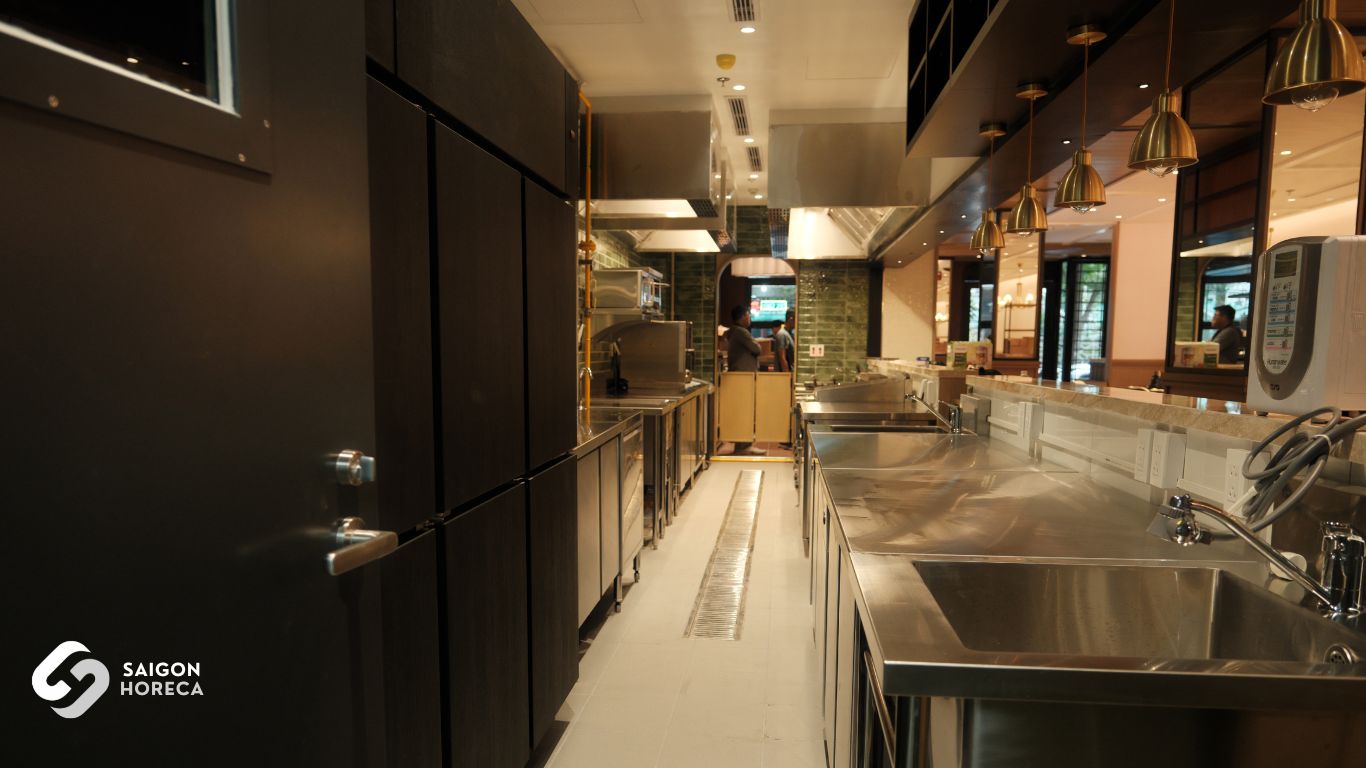
Many European restaurants today choose semi-open kitchen design – allowing customers to observe the cooking process. This requires the kitchen space not only to be absolutely clean but also to have synchronization of equipment, reasonable lighting and high aesthetics in the layout.
The kitchen becomes part of the “dining experience”, no longer a hidden place behind a stainless steel door. Each shelf, each misplaced device can also affect the customer’s perception.
3. Strict compliance with hygiene standards (HACCP)
For restaurants serving international diners or located in a 4-5 star hotel system, achieving food hygiene and safety certification according to HACCP standards is almost mandatory.
That means the kitchen design must:
- One-way material flow
- Avoid cross-infection
- Easy to clean all surfaces
- Use suitable materials such as 304 stainless steel, rounded surfaces, limit gaps
The kitchen space at this time not only serves delicious food, but also absolutely ensures the health of users – something that creates long-term reputation for the restaurant.
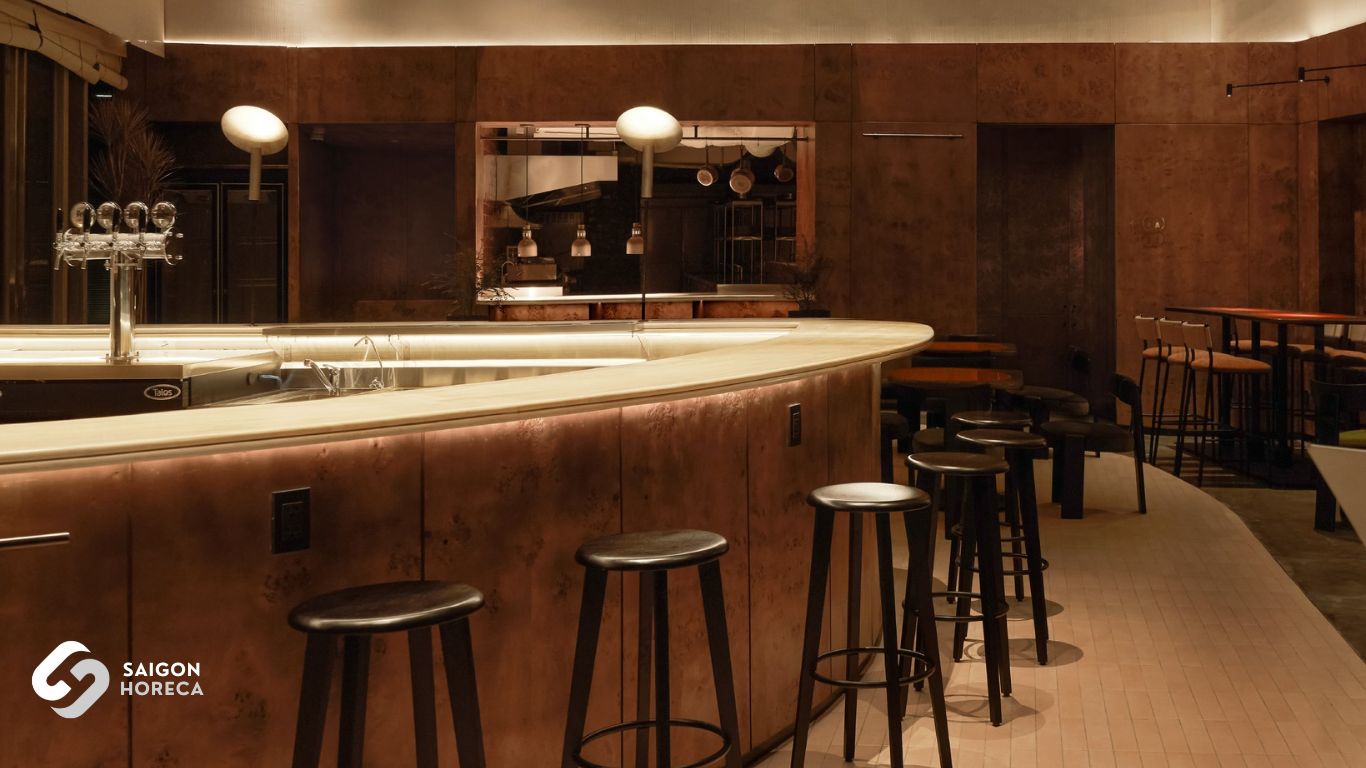
Operating characteristics of high-end European restaurant kitchens
Different from many traditional Asian kitchen models, European restaurant kitchen operations often follow a station-based structure – that is, divided into specialized kitchen stations according to function and dish.
Each station takes on a separate role:
- Grill Station: grill meat and fish
- Sauté Station: stir-fry, sauté
- Sauce Station: prepares sauces and broths
- Garde Manger: prepare cold dishes, salads
- Pastry Station: desserts, cakes
This model helps chefs focus on a specific process, thereby ensuring that food quality is always consistent and meets the highest requirements. However, for it to operate smoothly, the restaurant kitchen area layout must be carefully calculated – so that each station connects coherently without overlapping.
European kitchen space often serves a large number of dishes in a short time, especially during peak hours. Therefore, high operating intensity is a feature that cannot be ignored. Just one blockage – no matter how small – can disrupt the entire chain.
In addition, European restaurants often have a large team of chefs, with clear ranks: from Executive Chef, Sous Chef to Chef de Partie in charge of each station. Therefore, kitchen design needs to prioritize smooth movement, minimize collisions, and avoid obstructions during operation.
What does a European restaurant kitchen need to meet standards?
Behind every dish that conquers the palates of European diners is a standardly designed kitchen space – a place that not only cooks, but also demonstrates operational class. So, what does a high-end European restaurant kitchen need to meet‘s standards?
Designed according to one-way process – safety control from the ground up
The first and most important factor is one-way process design. This is an immutable principle in international standard kitchen models, helping to avoid cross-contamination, optimize operating efficiency and ensure food hygiene.
A standard kitchen system needs clear channeling:
- Receiving and preserving raw materials area
- Preparation area – completely separate from the cooking area
- Main cooking area – where specialized cooking stations
- Distribution and delivery area – quick connection to the service area
- Washing and waste treatment area – located at the end of the chain so as not to affect the clean food flow
are located
This clear division ensures that parts in a European restaurant kitchen do not overlap, minimizing collisions and creating a smooth operating journey.
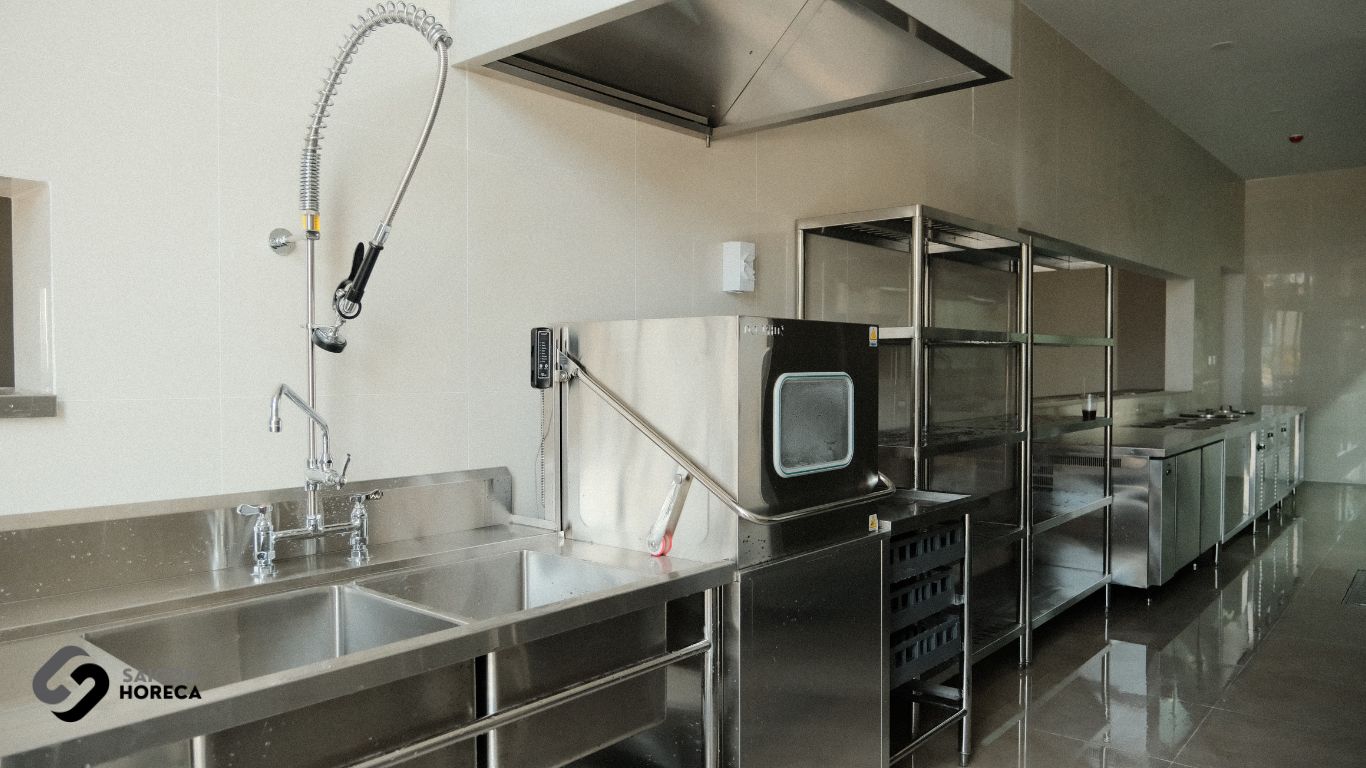
Synchronize modern industrial kitchen equipment
Professional European kitchens cannot lack equipment that meets standards of capacity, performance and durability. Depending on the restaurant model, common equipment includes:
- Industrial induction cooker, grill, multi-function steam oven Combi Oven
- Chiller, salad display cooler, toaster, salamander
- Smoke extraction equipment, heat treatment and CRI standard lighting system help chefs easily control food quality
The synchronization between devices not only helps optimize space but also improves working efficiency for the entire kitchen team.
Material and surface meet HACCP hygiene standards
Finally, to ensure food hygiene and safety, all equipment and surfaces in the kitchen need to comply with HACCP standards. This is clearly shown through the choice of materials:
- Stainless steel 304 – anti-corrosion, good strength, easy to clean
- Flat surface, rounded corners to limit accumulation of dirt and bacteria
- Anti-slip floor, good drainage and specialized grease filtration system
Only when ensuring all three of the above factors – one-way design, modern equipment, hygienic materials – can a European restaurant kitchen truly meet the standards to operate effectively and sustainably in the long term.
Principles of European restaurant kitchen design according to HACCP standards
Especially for European restaurants – where the processing process is complex and multi-ingredient – food safety is an uncompromising factor. Therefore, the kitchen design needs to be built from the beginning based on HACCP standard principles.
HACCP (Hazard Analysis and Critical Control Points) is an international food safety management system that focuses on hazard analysis and control of critical points throughout the entire processing process – from raw materials to finished dishes.
For a restaurant kitchen to meet HACCP standards, the design stage needs to meet a number of important principles:
- Clearly clean and dirty separation: Raw and cooked food streams must not intersect. Pre-processing, processing, and dish-making areas must be arranged in a one-way order to avoid cross-contamination.
- Heat treatment and temperature control: Cold storage areas, hot cooking areas and food storage areas must be arranged separately, accompanied by continuous temperature measuring and monitoring equipment.
- Drainage and ventilation system: Floor design must have a reasonable slope to avoid water stagnation. The exhaust and smoke extraction system must have sufficient capacity, ensuring the kitchen is always well-ventilated, limiting the accumulation of harmful microorganisms.
- Materials and contact surfaces: All tables, shelves, sinks… should be made of 304 stainless steel – easy to clean, stainless, does not accumulate bacteria.
Applying HACCP standards right from the design step not only helps restaurant kitchens operate safely, but also creates a foundation for the restaurant to achieve international certifications, easily expanding or franchising in the future.
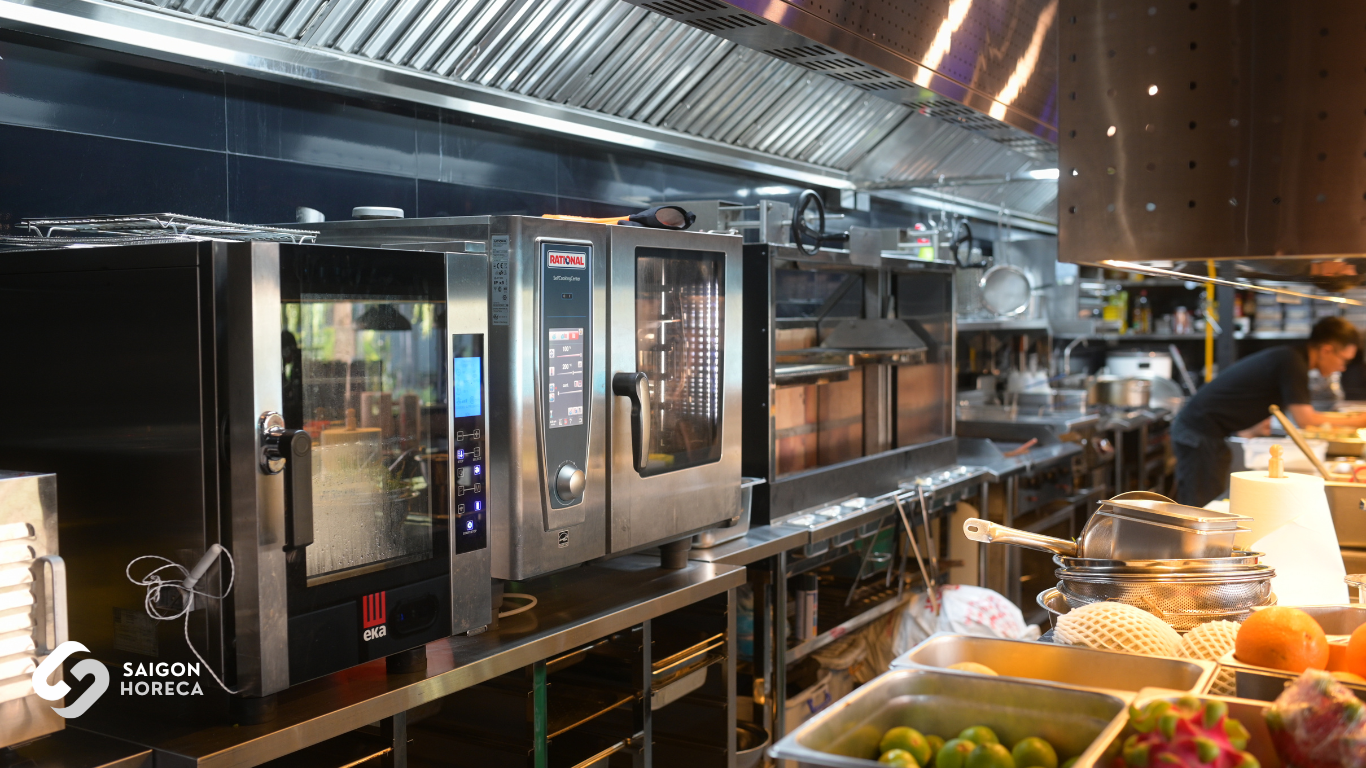
Optimization operating procedures in European kitchen design
Effective operation does not come from a beautiful design, but must be a deliberate calculation from the beginning – where European restaurant kitchen design becomes a strategic tool to help improve productivity and control quality.
Design revolves around menu and service capacity
Each European restaurant has its own menu and operating capabilities. Therefore, “copying” kitchen models from elsewhere often leads to inadequacies in the process and waste of space.
To optimize operations, designing a high-end European restaurant kitchen needs to start with analysis:
- Specific menu: number of dishes, nature of processing, preservation requirements
- Volume of customers served per day – according to peak hours and special occasions
- Personnel in the kitchen: number of chefs, ranks, ability to coordinate by station
From there, it is possible to determine the correct number of kitchen stations, necessary equipment, and arrange the restaurant kitchen area so that it is compact – standard – flexible. Semi-open space: aesthetic and effective connection
Many modern European restaurants choose the open or semi-open kitchen model, creating both an aesthetic highlight and a “stage” for chefs to demonstrate sophisticated cooking techniques.
A standard semi-open kitchen design helps:
- Create creative inspiration for the kitchen team
- Build visual experience and trust with diners
- Ensure cleanliness – synchronization – modernity of every detail in operation
However, this also requires strict kitchen processes and extremely reasonable design to ensure the space is always tidy, without affecting the quality of the food.
Operation technology – upgrading kitchen management
Finally, to solve the productivity problem comprehensively, more and more high-end restaurants are applying kitchen management software and automatic monitoring systems:
- Material tracking – inventory warnings
- Plan preparation and preparation of dishes according to a specific timeline
- Quantitative control, helping to standardize output quality
- Analyze kitchen performance for each shift
When technology becomes a “silent assistant”, operating a European restaurant kitchen is no longer a complicated problem but becomes a true competitive advantage.

Ensuring aesthetics – When the kitchen is an open space
“Open kitchen” – open kitchen – is no longer a strange concept in the modern F&B industry, especially in high-end European restaurants. When diners can directly witness the cooking process, the kitchen is not just a place for processing but becomes a part of the culinary experience.
That’s why, kitchen aesthetic design needs to be paid no less attention than the living room or dining area. In a luxury restaurant kitchen, every detail must be clean, streamlined and in sync with the overall style of the restaurant
Some outstanding design elements in open kitchen space today include:
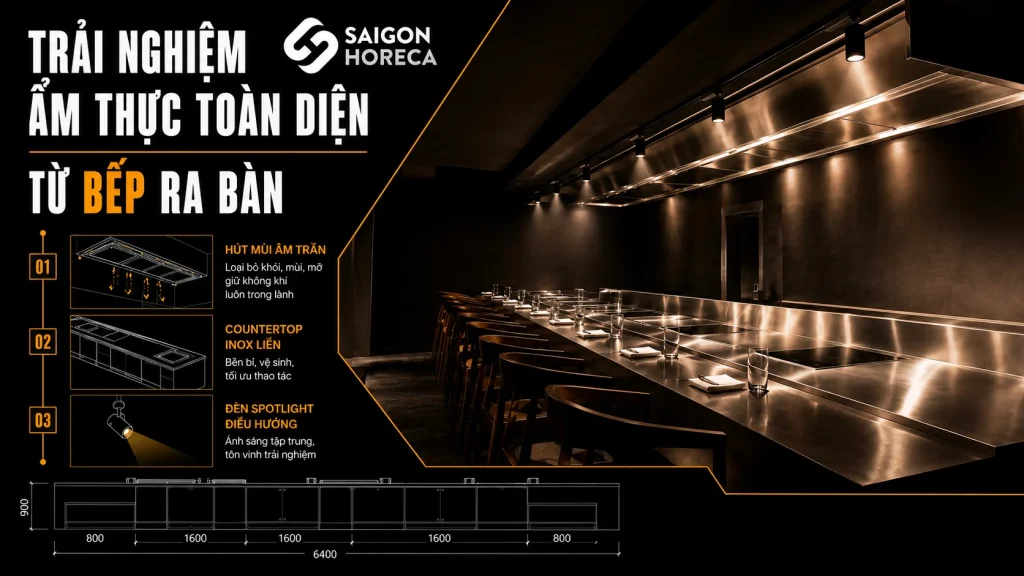
- High quality 304 stainless steel: not only durable, easy to clean but also creates a bright, modern, professional surface. All tables, shelves, built-in refrigerators… are usually finished in stainless steel to ensure shine and cleanliness in every angle.
- Tempered glass or frosted glass: helps guests observe while also providing sound or heat insulation to the necessary level. This maintains the feeling of luxury without losing the required privacy.
- Ceiling and built-in hood system: ensures ventilation without disrupting aesthetics. The air in the kitchen needs to be fresh, without the smell of food.
- White – light yellow combination light: helps the kitchen light evenly, creating a clean feeling but still warm, not too cold like completely white light.
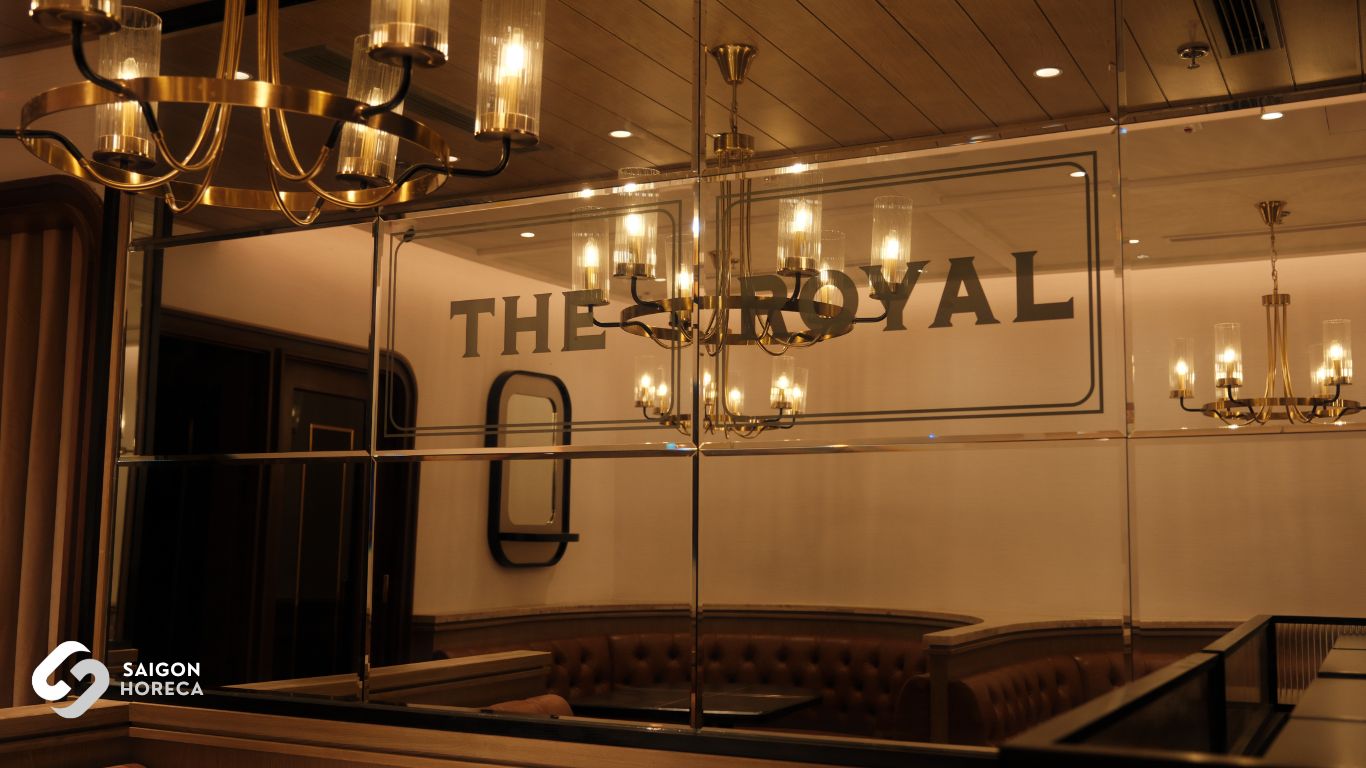
Complete solution from Saigon Horeca
Construction of a European restaurant kitchen is a process that goes beyond simply installing equipment. It is a combination of design thinking, understanding the actual operating model and strict compliance with safety and aesthetic standards. At Saigon Horeca, we provide high-end industrial kitchen solutions in a complete and customized model.
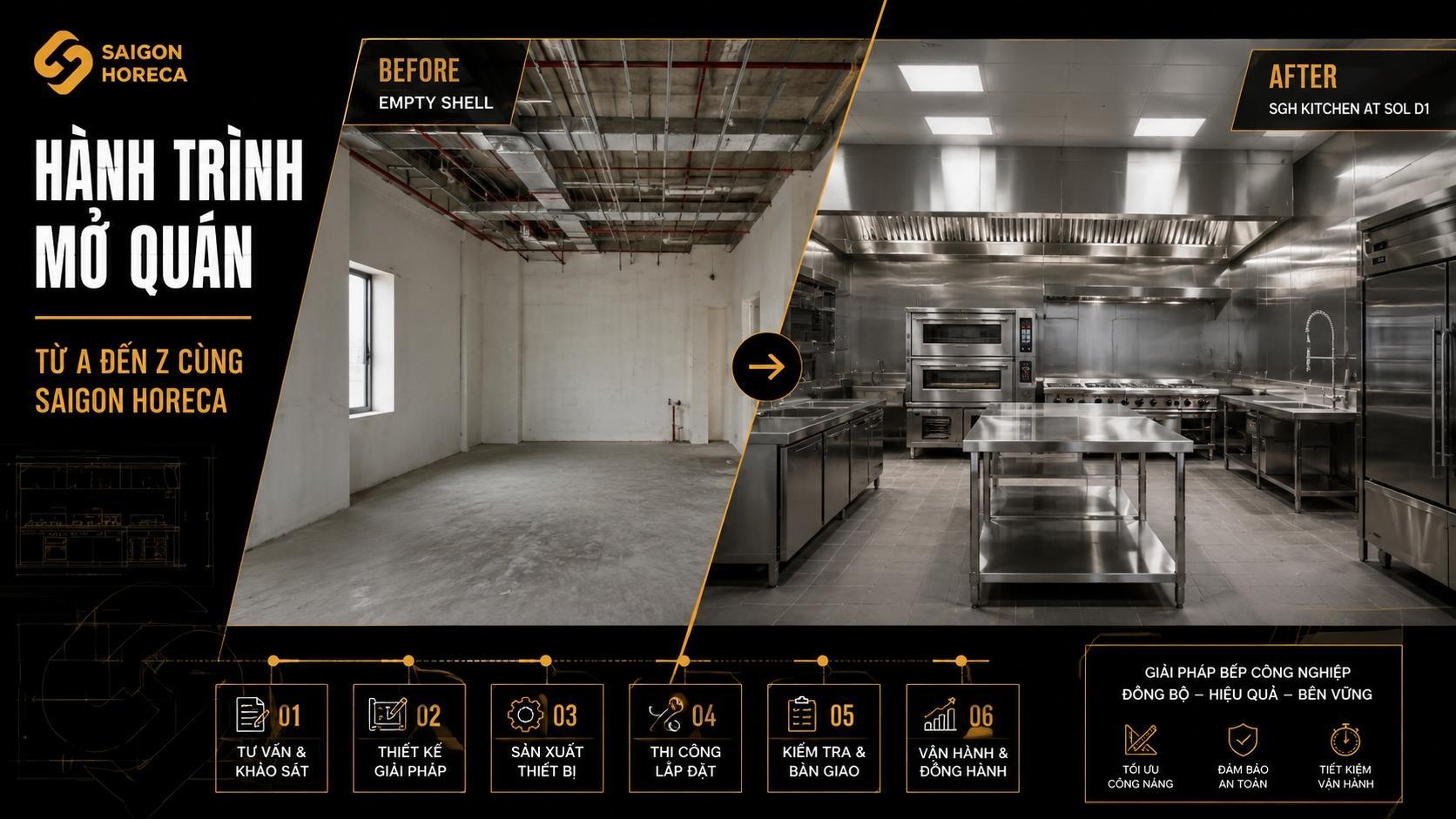
The implementation process includes:
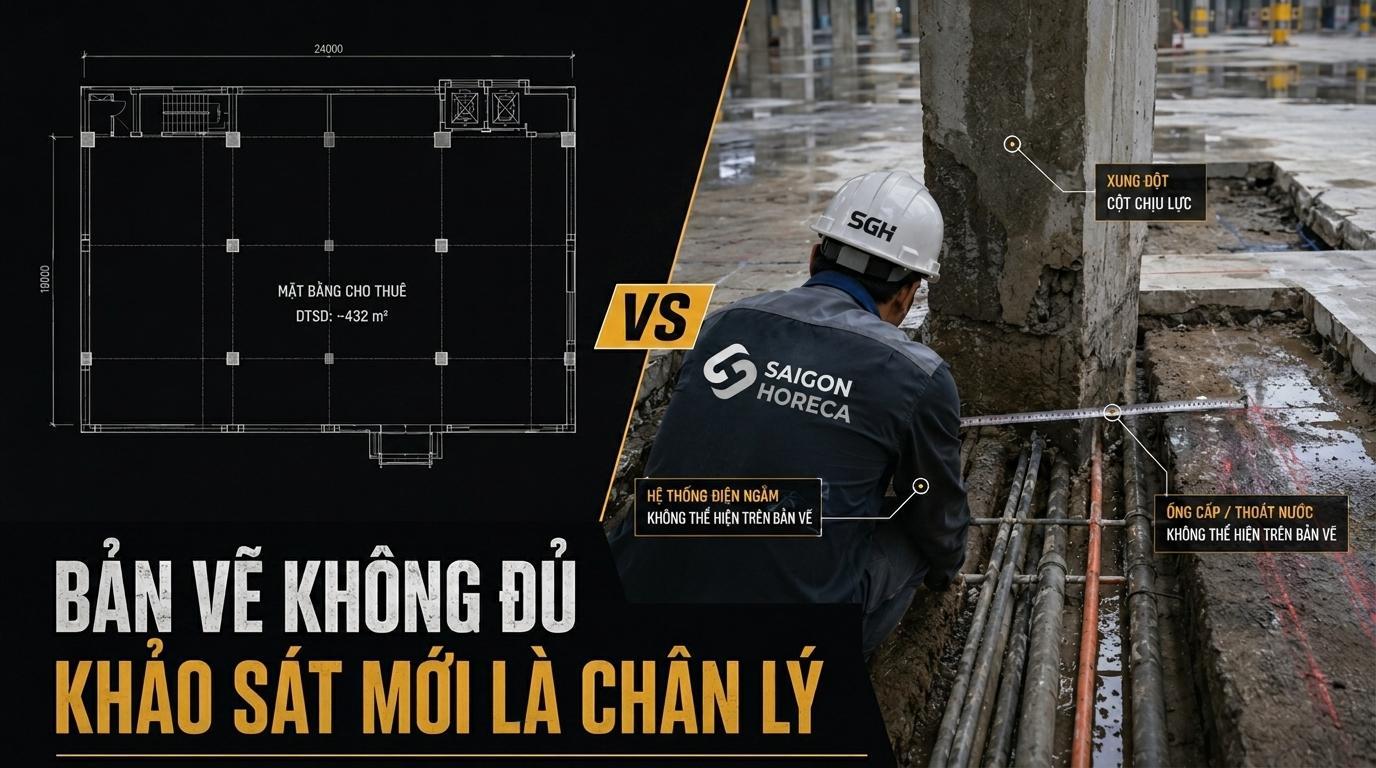
- Consult & survey the premises carefully, closely following the operating concept of each restaurant model.
- Intuitive 2D/3D design, helping customers visualize the entire space before construction.
- Complete construction – on schedule – on budget, with genuine imported equipment, durable 304 stainless steel standard.
- Regular maintenance, 24/7 technical support, helping the stove operate stably for a long time.
Saigon Horeca owns a team of engineers and architects specializing in industrial kitchens with many years of experience in designing – constructing complex projects with 5-star standards.
Some recent typical projects of Saigon Horeca include:
- Sol Kitchen & Bar Restaurant (District 1 & District 7, Ho Chi Minh City) was honored in the Michelin Guide 2023, with a modern kitchen system and impressive open kitchen space.
- Little Bear (Thao Dien, Ho Chi Minh City) by Chef Duy Nguyen, stands out with a culinary style combining Vietnamese tradition and modern creativity, honored in the Michelin Guide 2024.
- Bambino SuperClub Restaurant & Bar (HCMC) stands out with its modern kitchen and bar design, winning the B.A.R. Award 2023.
- GodMother Friendship (District 1, Ho Chi Minh City) – European and American style brunch restaurant, with open kitchen space and luxurious interior design.
 Facebook
 Zalo
Zalo