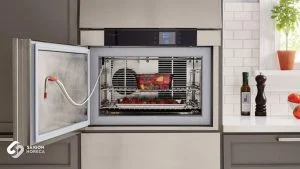

Upgrade your kitchen with Blast Chiller (quick freezing equipment)
Is there a safer and more hygienic way to cool food, rather than just relying on a traditional refrigerator or freezer? In recent times, the need for safety, performance, and hygiene has driven the use of flash freezing equipment to become more widespread. This article will address all the important questions and needs as you consider adopting a blast chiller in your kitchen environment.
What is Blast Chiller (quick freezing device)?
Blast chiller is capable of cooling food from 70°C to 3°C in just 90 minutes or from 70°C to -18°C, or even lower, in 240 minutes. Compared to conventional refrigeration, this method has the ability to prevent the growth of microorganisms and enzymes more effectively, ensuring food safety and hygiene. Compared with traditional slow cooling methods, the main advantage of quick freezing is that it reduces food temperature more quickly, minimizes dehydration and cell rupture, and does not harm the food’s internal structure. The rapid cooling process produces smaller ice crystals than conventional cooling, and these crystals do not affect the quality of the cooked food. This helps preserve the flavor, nutrition and quality of food better.
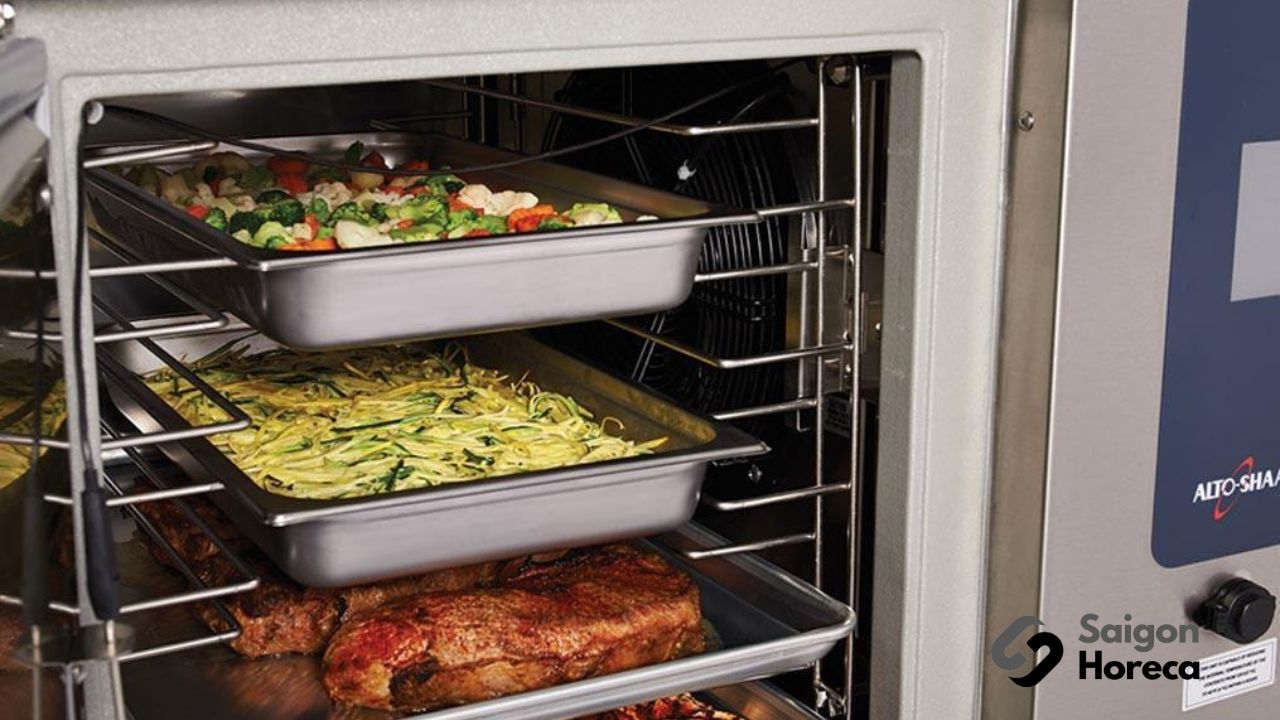
Can Blast chiller (Quick freezing device) kill bacteria?
Most bacteria will be inhibited at low temperatures, although low temperatures cannot kill all bacteria, and only high temperatures and ultraviolet light can eliminate most of them. However, quick freezing equipment has the ability to slow down the growth of bacteria. This is especially important because bacteria usually grow quickly at temperatures between 63°C and 5°C. The time that food stays in this temperature range needs to be shortened to ensure food safety and hygiene.
Normally, conventional industrial refrigerators take several hours to cool or freeze food, during which time bacteria can grow rapidly, potentially spoiling the food. In contrast, flash freezers are capable of quickly cooling food to very low temperatures (usually -18°C or lower), significantly slowing the growth and proliferation of bacteria and other microorganisms compared to conventional refrigerators. This helps maintain food quality and prolong shelf life.
However, it should be noted that when defrosting food, bacteria can still grow in appropriate conditions if not heated or handled properly, so the defrosting process also needs to be done carefully and in accordance with food safety standards before consumption.
Why is a blast chiller better than a regular refrigerator?
Faster cooling speed, inhibits bacterial growth
As mentioned above, the cooling speed of a conventional refrigerator can cause food to stay in a dangerous temperature range, where bacteria grow actively for a long time, which can endanger food safety and hygiene in commercial kitchens. . With powerful cooling capabilities, commercial quick chillers can shorten the time when food is in the danger zone, ensuring safer storage later.
Can be lowered to lower temperatures
The lowest temperature achievable in a blast chiller is lower than in a conventional refrigerator, typically -45°C, compared to -18°C, which means the blast chiller can cool the inside of food faster, reducing processing and waiting time. This type of deep cooling rapid freezer can reach -80℃ (some customized models can be cooled to -90℃), this type of rapid chiller is more suitable for low temperature storage of reagents, drugs and seafood and is used in biomedical, research and scientific facilities, etc.
Hot food can be put into the freezer to cool
Regular refrigerators are not allowed to store hot food, this not only causes the refrigerator’s cooling system to overload but also affects other parts. Food is stored in the refrigerator by increasing its temperature (conventional refrigerators have no way to consume this temperature in a shorter period of time), increasing the risk of spoilage. In addition, adding hot foods can also increase air humidity in the refrigerator, increasing the risk of bacterial growth and reducing the freshness of other foods. These problems can be easily solved with an express freezer because it has more cooling capacity and cools faster, meaning you don’t have to wait for food to cool, especially soups that are harder to cool.
The disadvantage of the quick freezer is that it cannot be used for long-term storage. This is determined by the nature of the quick freezer, which only has the effect of quick cooling and short-term preservation. This feature requires it to be used with a conventional refrigerator, where cooled food can be transferred to a conventional refrigerator for long-term storage. Ingredients processed in this way can be stored for longer periods of time and with less risk of illness than when they are stored directly in a conventional refrigerator.
>>See more: Top 5 benefits of using quick freezing equipment in the kitchen?
 Facebook
 Zalo
Zalo