HACCP Food Safety Standards in Commercial Kitchen Design
HACCP (Hazard Analysis and Critical Control Points) is a globally recognized, preventive food safety management system.
For professional B2B commercial kitchen projects, achieving HACCP certification is not merely a matter of managing staff operational habits; it must be built directly into the physical infrastructure and the engineering hardware specifications of the kitchen equipment.
Many investors and restaurant operators only consider HACCP compliance when the inspection audit team arrives. In reality, the vast majority of non-compliance violations originate from design decisions finalized during the rough construction stage—when rectifications become exponentially more expensive than doing it right from the outset. This article provides a comprehensive analysis of the essential physical infrastructure requirements for HACCP compliance, complete with a practical self-audit checklist for hospitality investors.
1. What Is HACCP and Why Is It Mandatory for Commercial Kitchens?

HACCP originated in the 1960s within NASA’s manned spaceflight program, when the agency needed to ensure absolute food safety for astronauts—as a single case of food poisoning in orbit could yield catastrophic consequences.
The core philosophy of HACCP shifts away from end-product inspection (testing food only after it has been cooked) to proactive hazard prevention at every Critical Control Point (CCP) throughout the entire production cycle—from raw material receiving, storage, prep, and cooking to final plating and service.
In Vietnam, HACCP has been integrated into statutory food safety regulations. An increasing number of restaurant chains, international hotels, and industrial parks now require catering contractors and commercial kitchen operators to hold valid HACCP certification as an indispensable contractual condition.
For mid-scale and upscale F&B brands, failing to meet HACCP standards presents not only substantial legal risks, but also an immediate commercial barrier to franchise expansion, partnerships with major food delivery platforms, and bidding on institutional or corporate catering contracts.
2. Surface Material Engineering: The Key to Preventing Bacterial Biofilm

One of the most dangerous biological hazards in a commercial kitchen is the development of biofilm—a protective microbial slime formed when bacteria adhere to inadequately sanitized surfaces and accumulate over time, creating a natural shield resistant to standard detergents and chemical disinfectants.
To eliminate this hazard, HACCP standards mandate that all food-contact surfaces possess rigorous physical properties: non-porous and free of microscopic cracks or natural crevices, chemically inert with zero leaching into food products, and resistant to aggressive corrosive chemicals used in daily sanitation routines.
Austenitic AISI 304 stainless steel is the premier material meeting these stringent criteria due to its high nickel content. However, fabrication precision plays an equally critical role.
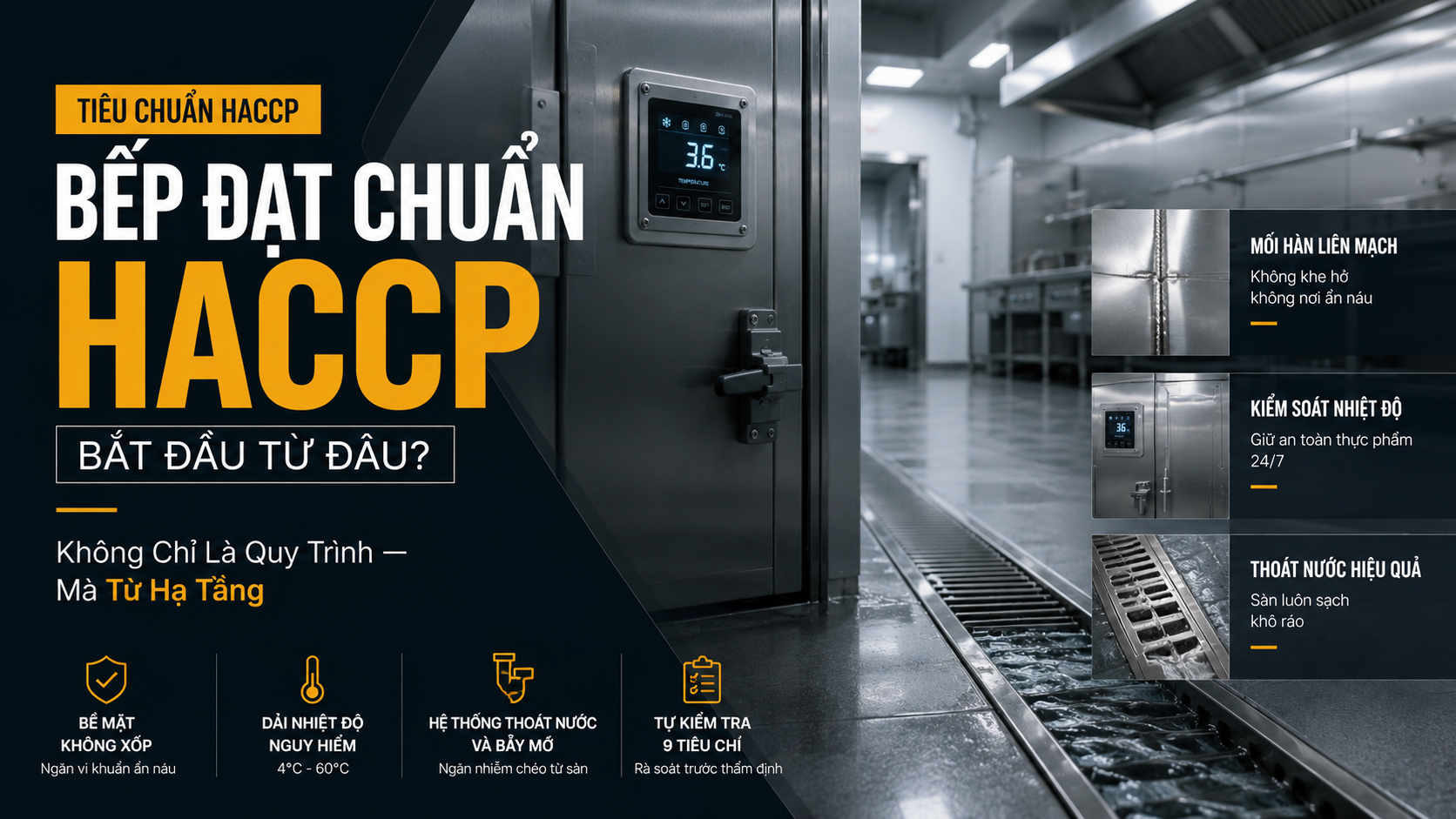
All stainless steel equipment fabricated by Saigon Horeca utilizes seamless CNC press-brake bending techniques to minimize overlapping joints. Seamless TIG welds are ground flush and polished to a surface roughness of Ra < 0.8 micrometers—completely eliminating microscopic crevices where food debris and pathogenic microorganisms can accumulate.
Why Is Surface Roughness (Ra) Crucial?
The Ra (Roughness Average) value quantifies microscopic deviations on a metal surface. A higher Ra value indicates a rougher texture with micro-valleys where bacteria can anchor and proliferate into resilient biofilms.
Once a biofilm is established, standard industrial detergents struggle to penetrate the extracellular polymeric shield to neutralize internal pathogens. This is why international sanitary engineering standards mandate a strict upper limit on Ra values; precision factory surface finishing is vastly superior and far more reliable than vigorous manual scrubbing during operations.
3. Temperature Control: Managing the Temperature Danger Zone
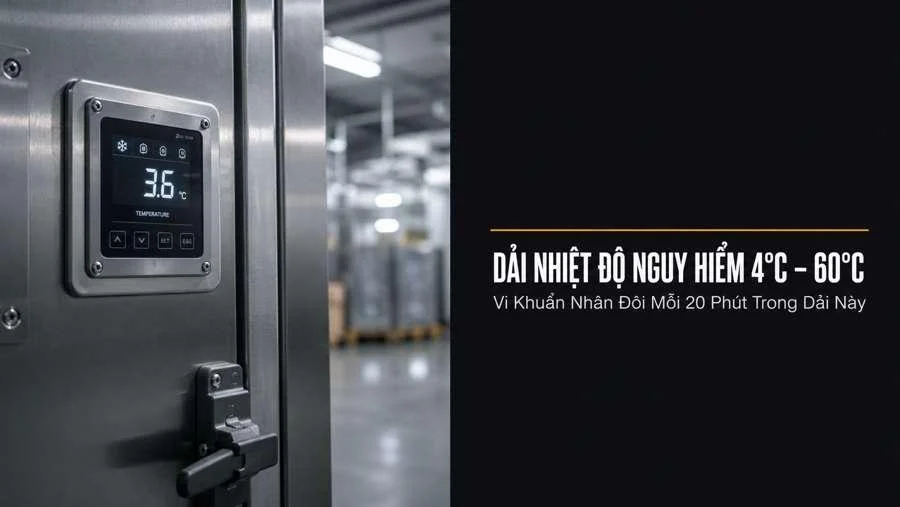
HACCP defines the temperature range between 5°C and 60°C as the Temperature Danger Zone. Within this window, foodborne pathogens can divide and double in population every 20 minutes. Kitchen refrigeration and thermal holding systems must be engineered with sufficient thermodynamic capacity to actively control this boundary:
Deep Cold Storage
Walk-in freezers must continuously maintain temperatures between -18°C and -22°C to completely arrest microbial proliferation. Walk-in chillers for produce and ready-to-eat ingredients must operate reliably within 0°C to 4°C.
Commercial refrigeration units must feature clear digital temperature displays and intelligent thermal probes to trigger instant alarms if internal temperatures breach safe thresholds due to repeated door openings during service peaks.
Rapid Chilling (Blast Chilling)
In institutional catering and high-volume banquet kitchens, allowing batch-cooked food to cool down at ambient room temperatures leaves dishes exposed to the Danger Zone for hours. HACCP guidelines mandate the use of Blast Chillers to pull core temperatures from 70°C down to below 3°C within 90 minutes, decisively disrupting the reproductive cycle of spore-forming bacteria.
Safe Hot Holding
Hot holding cabinets and heated buffet display tables must employ dry electrical heating elements or bain-marie steam systems to ensure the core temperature of cooked food is consistently maintained above 60°C prior to guest service.
Continuous Temperature Monitoring: The Digital Transformation Trend in Commercial Kitchens
Leading commercial kitchen projects increasingly integrate IoT sensor networks that track refrigeration and freezer temperatures in real time, automatically pushing mobile notifications to kitchen managers if readings deviate outside operational hours.
This provides enterprises with indisputable, automated digital data logs for routine HACCP verification audits, eliminating the human error and compliance risks inherent in traditional manual clipboard logging.
4. MEP Drainage Systems: Preventing Cross-Contamination from Ground Level

Kitchen floors naturally accumulate wastewater, emulsified fats, and organic debris. If drainage channels are sub-optimally engineered, standing water pools will create a fertile breeding ground for mold and hazardous pathogens such as Listeria monocytogenes.
HACCP-Compliant Drainage Engineering Specifications
Hydraulic Floor Slope: Kitchen flooring must incorporate a continuous gradient of 1.5% to 2.0% sloping towards drainage trenches, ensuring swift runoff and rapid self-drying following washdowns.
Recessed Stainless Steel Drainage Trenches: Rather than relying on standard enclosed 90mm PVC floor drains, commercial facilities require recessed AISI 304 stainless steel trenches covered with heavy-duty open-grating covers. This structural design allows staff to easily lift the gratings for thorough daily removal of trapped organic solid waste.
Odor Water Seal Traps: Every discharge outlet connecting the trench to the primary drainage riser must be equipped with a Bell Trap featuring a minimum water seal depth of 50mm. This effectively blocks foul sewer methane gas and prevents pests (cockroaches, rodents) from migrating from underground sewer lines into food production areas.
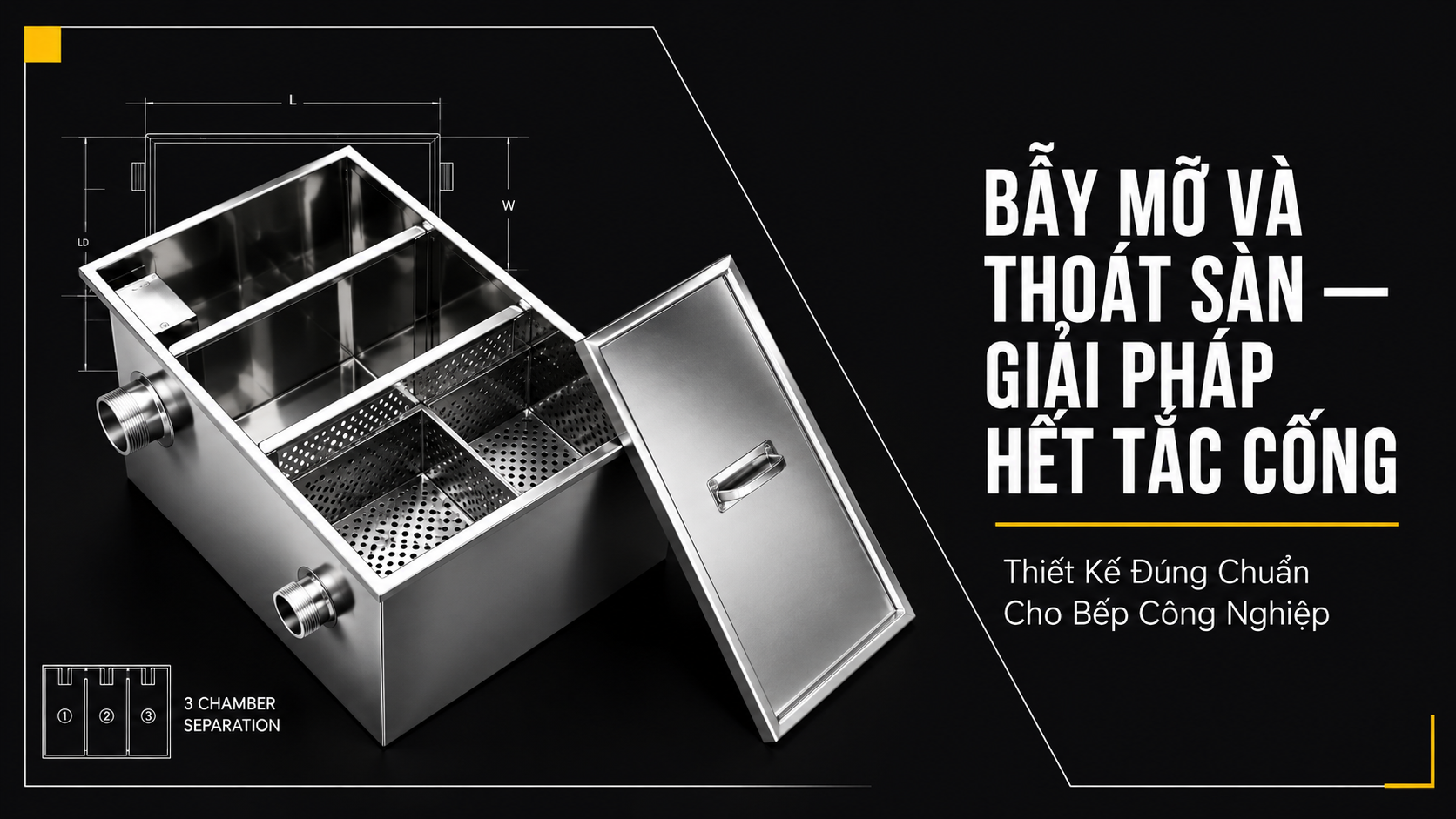
The Role of Grease Traps in Sustaining HACCP Compliance
Beyond trench drains, the Grease Trap system serves as an essential link in the HACCP waste management chain.
If fats, oils, and grease (FOG) from preparation and dishwashing sinks discharge directly into municipal lines without interception, they solidify, clog pipelines, and cause sewage to back up onto kitchen floors—a critical violation of HACCP waste-borne cross-contamination principles. Correctly sizing grease traps based on kitchen capacity is an absolute requirement for food safety approval across municipal authorities.
5. Quick HACCP Readiness Self-Audit Checklist for Restaurant Kitchens

Prior to scheduling an official third-party certification audit, owners and managers can conduct a swift internal inspection using the checklist below. Identifying shortcomings early enables proactive remediation, preventing costly re-audits and operational delays.
All food-contact surfaces (prep counters, sinks, cooktops) are fabricated from AISI 304 stainless steel, free of pitting, rust, and weld seam crevices.
The kitchen layout strictly adheres to the one-way workflow principle, with zero physical crossover between raw and cooked food pathways.
Refrigerated and frozen storage areas feature clear digital temperature indicators continuously reading within safe boundaries (chillers at 0–4°C, freezers below -18°C).
A Blast Chiller is installed for rapid thermal drawdown of large-batch cooked food before long-term storage.
Kitchen floors have adequate drainage slope with no standing water puddles remaining within 15 minutes post-cleaning.
Stainless steel trench drainage systems feature easily removable grating covers for daily routine sanitation.
Grease traps are appropriately dimensioned, routinely serviced according to maintenance schedules, and emit zero sewer odors.
Staff workstations are clearly demarcated using color-coded tools (cutting boards, knives) dedicated to specific food categories.
Periodic temperature monitoring records (manual logbooks or automated IoT sensor telemetry) are archived for at least the preceding 3 months.
If your kitchen falls short on one or more of these criteria, these are the priority areas to address prior to formal certification. In almost every instance, addressing them early yields tremendous cost savings, as retrofitting after civil construction is completed is substantially more expensive than designing correctly from day one.
Saigon Horeca delivers end-to-end turnkey solutions: HACCP-compliant kitchen technological layout consulting, MEP engineering drafting, and direct manufacturing of specialized antibacterial stainless steel equipment for premier F&B brands—spanning initial site surveys and remedial planning to full turnkey installation and certification dossier support.
6. Capital Investment in HACCP Infrastructure: Cut Corners Early, Pay Dearly Later
A common misconception among first-time restaurateurs is treating HACCP infrastructure investments (genuine AISI 304 stainless steel, properly sized thermodynamic refrigeration, drainage trenches, and grease traps) as “unnecessary expenses” that can be skimped on to curb initial startup capital.
In reality, this is one of the highest indirect ROI investments across an entire F&B venture, actively insulating the business from three severe financial hazards:
Risk of temporary administrative shutdown or severe regulatory fines resulting from food hygiene violations during routine or surprise municipal health inspections.
Risk of catastrophic mass foodborne illness outbreaks—where the costs of PR crisis management, legal liabilities, and patron compensation can dwarf initial infrastructure costs many times over.
Risk of forfeited commercial partnerships (corporate delivery aggregators, five-star hotel chains, industrial canteens)—many of whom mandate verified HACCP credentials as an non-negotiable prerequisite.
Comparing a typical 100–150 seat restaurant kitchen, the capital expenditure difference between a fully compliant HACCP setup (AISI 304 fabrication, engineered refrigeration loads, drainage trenches, and grease interception) and a minimalist, non-compliant build represents merely 15% to 25% of total kitchen equipment outlays.
Conversely, the financial exposure from a single food safety infraction can quickly scale to hundreds of millions of VND in direct and indirect damages, not to mention irreparable brand reputational erosion that cannot be quantified in monetary terms.
7. Frequently Asked Questions Regarding HACCP in Commercial Kitchen Design
Is HACCP mandatory for all types of F&B establishments?
Mandatory HACCP enforcement depends on operational scale and business classification under regional and municipal food safety governing authorities.
However, even where not legally compulsory, architecting kitchens around HACCP principles delivers clear operational dividends: drastically mitigating foodborne illness risks, prolonging heavy equipment lifespan, and establishing a powerful competitive advantage when partnering with corporate clients that demand premium quality assurance.
Can a kitchen with completed civil shell construction still be retrofitted for HACCP compliance?
It is entirely feasible, though capital expenditure and engineering complexity will be substantially higher than building right from inception—particularly regarding recessed trench drains and floor gradients, which typically require slab demolition if not planned correctly.
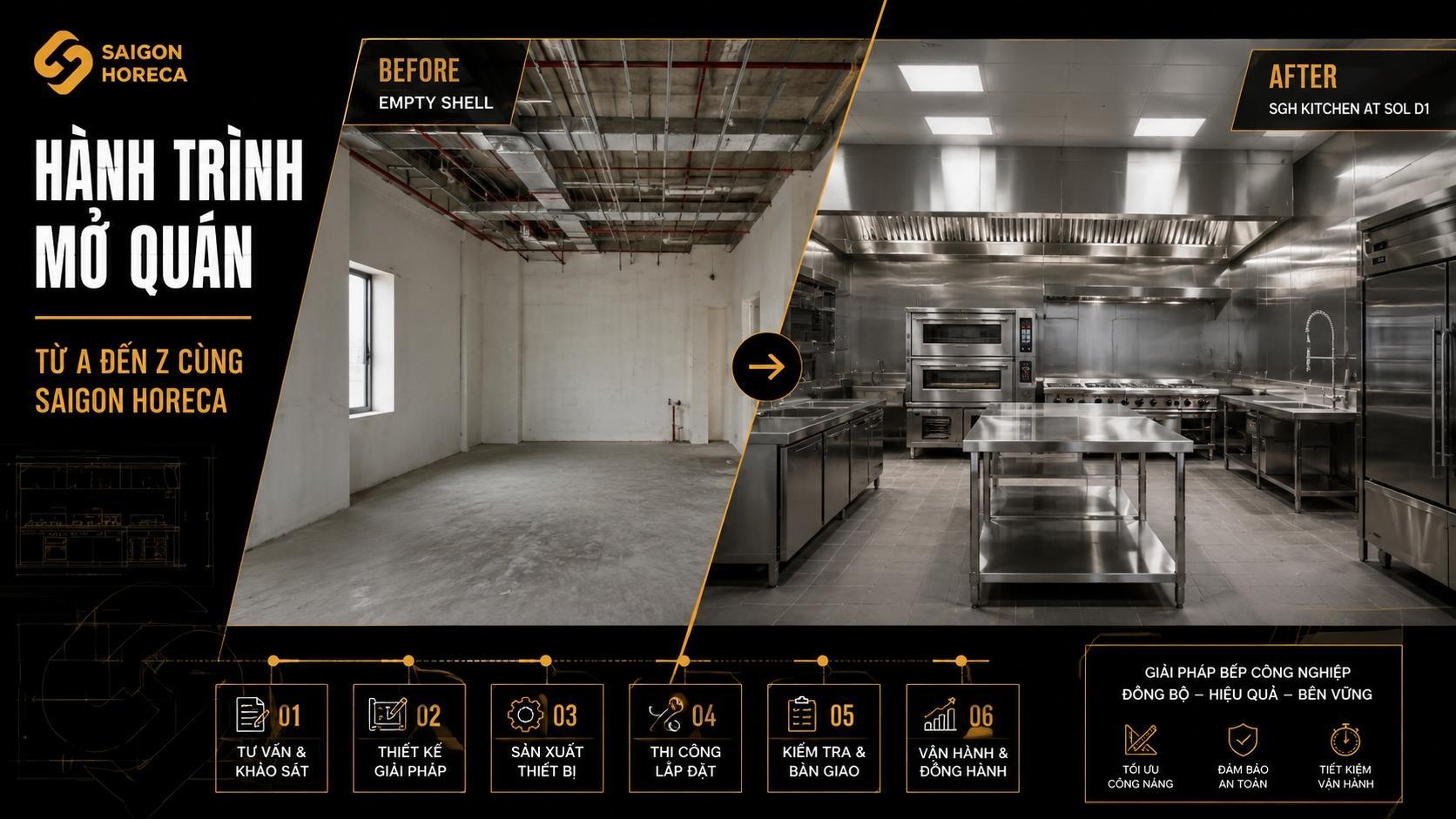
Saigon Horeca has successfully executed numerous live kitchen retrofits, upgrading facilities to HACCP standards with minimal business disruption—limiting downtime to merely 2–3 days through phased, modular sector execution.
Does HACCP certification have an expiration date, and what is required to maintain it?
HACCP certificates carry fixed validity terms requiring recurring recertification audits. Maintaining compliance extends beyond paper documentation; it demands that physical infrastructure (surface integrity, refrigeration performance, MEP drainage) is rigorously maintained over time. This is why self-audit checklists (see Section 5) should be conducted at least quarterly, rather than solely on the eve of official audits.
8. Real-World Track Record: HACCP Execution Across 4 Michelin Guide Restaurants by Saigon Horeca
Saigon Horeca is the turnkey design and fabrication contractor behind the professional kitchens of 4 acclaimed restaurants recognized in the Michelin Guide Vietnam: Sol Kitchen, Yuzu Omakase, Bambino SuperClub, and Little Bear.
In the fine-dining tier, HACCP compliance transcends regulatory obligation to become an intrinsic brand hallmark. Guests investing in elevated gastronomy rightfully expect that the backstage kitchen operates with uncompromised, world-class safety standards.
From frontline delivery across these flagship projects, Saigon Horeca recognized that HACCP compliance is never a one-time milestone, but an ecosystem that must be “designed for effortless maintenance.” Every stainless surface, pipeline, and equipment station must be positioned so that operational staff can execute daily sanitation routines quickly, intuitively, and without friction.
This practical design philosophy is consistently championed by Saigon Horeca’s engineering team across all ventures, regardless of footprint, rather than dictating convoluted protocols that real-world kitchen teams struggle to maintain during peak service hours.
9. The Crucial Role of Staff Training in Everyday HACCP Compliance
Compliant physical infrastructure is merely the necessary foundation; the sufficient condition for sustainable HACCP adherence lies in frontline kitchen personnel thoroughly understanding and respecting standard operating procedures every single day.
Saigon Horeca advises restaurant owners to implement a structured onboarding curriculum comprising: prominent visual cues (posters, floor decals) displayed across prep zones detailing color-coding schemes and one-way workflows; unambiguous cleaning timetables for individual equipment stations (daily, weekly, monthly); and a designated Food Safety Supervisor accountable for auditing daily checklists and maintaining temperature logs.
Extensive field experience confirms that even an impeccably engineered, HACCP-compliant kitchen will fail in practice if unaccompanied by continuous staff training and vigilant supervisory discipline.
Conversely, a well-drilled brigade can uphold commendable sanitary standards even within imperfect facilities. Ultimately, the gold standard of sustainable hospitality excellence remains the synergy of both: precision-engineered infrastructure from the ground up coupled with rigorous, institutionalized team training.
#saigonhoreca #haccp #foodsafety #commercialkitchen #fnboperations
Project Showcase
 Facebook
 Zalo
Zalo