
Why does the stainless steel surface become yellow? How to properly clean and maintain a stainless steel stove
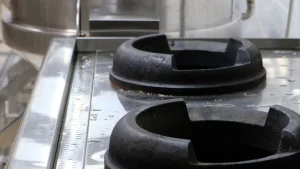
In restaurant kitchen operations, stainless steel surfaces are always considered the most “durable” material: stainless, heat resistant and easy to clean. But in reality, many kitchen owners and F&B managers are surprised to see stainless steel stoves becoming yellow and discolored after a period of use even when the equipment is still standard 304 stainless steel.
This phenomenon not only affects aesthetics but is also a sign that stainless steel is suffering from thermal overload, chemical impact or improper operation. If the cause is not clearly understood, the yellowing will become worse, even reducing equipment life and increasing maintenance costs.
The important thing to know is: stainless steel stoves do not stain because of poor quality – but because stainless steel in industrial kitchens has to work in a much harsher environment than home kitchens: high temperatures, salt vapor, burned grease, harsh cleaning chemicals, and continuous operating cycles. When these factors combine, stainless steel will form a layer of chromium oxide on the surface, creating a characteristic yellow streak that many people often mistake as “scorched”.
In this article, Saigon Horeca helps you understand the correct mechanism that causes stainless steel to become yellow, how to identify each type of stain to find the correct cause, and especially the process of cleaning and maintaining stainless steel according to industrial kitchen standards. Everything is presented in a clear, easy-to-understand way so you can apply it right away in your next kitchen shift.
Stainless steel in industrial kitchens is not the same as household stainless steel
Many people still think stainless steel is a material that “never breaks” – but that is only true under normal usage conditions such as at home. When placed in an industrial kitchen environment, stainless steel must work in a completely different ecosystem: high heat – steam – grease – salt – food acid – cleaning chemicals – continuous operation.
If just one element exceeds the threshold, stainless steel will change color, dull the surface and appear yellow streaks that you see every day.
To understand why stainless steel stoves become yellow, you first need to understand how stainless steel actually works.
1. The “armor” layer protecting stainless steel is thinner than you think
Stainless steel (especially 304 stainless steel) is resistant to rust thanks to an extremely thin chromium oxide film – just a few nanometers – that forms naturally when stainless steel is exposed to air.
This membrane is the “armor” that helps prevent stainless steel from rusting.
But in industrial kitchens, this membrane is constantly damaged:
- Heating
- Sudden cooling
- Rubbing
- Remove with strong chemicals
→ Causes the protective film to thin or be destroyed, leading to discoloration.
2. The temperature in industrial kitchens far exceeds the limits of stainless steel
304 stainless steel begins to change color from 200–300°C, but in the following areas:
- kitchen
- fryer
- oven
- large capacity stir fry area
… temperatures can reach 400–600°C in local hot spots.
When the temperature threshold is exceeded, stainless steel will:
- turns straw yellow (200–300°C)
- yellow brown (300–400°C)
- purple blue (400–500°C)
→ This is thermal oxidation, not rust, but causes the surface to degrade quickly.
3. Salt vapor and food acid are “silent enemies”
In the kitchens:
- seafood
- noodles – pho
- cook the broth
- spicy Asian restaurant
… salt vapor and acid vapor continuously rise and stick to the stainless steel surface.
This makes stainless steel:
- changes color to yellow
- tiny yellow dots appear
- loses shine after a few months
This is the reason that very few articles on the market mention it.
4. Strong cleaning chemicals cause yellowing the fastest
Many restaurants use: Javen, toilet cleaners, chlorine-based disinfectants, or strong abrasives.
Most of these chemicals have the ability to:
- destroys the protective chromium oxide layer
- slightly corrodes the surface → creates a yellow-brown color
- causes 201 stainless steel to degrade many times faster than 304
→ This is why Saigon Horeca always recommends using neutral detergent pH 6–8.
5. Continuous operating cycle – completely different from family kitchen
A restaurant kitchen shift can:
- heat – cool – clean 20–40 times/day
- place the hot pot directly on the stainless steel table
- pour cold water onto a surface that is 200–300°C
- Incorrectly dragging cast iron pots, stainless steel pans, and GN trays
Meanwhile, family kitchens only operate 1–2 times/day.
This continuous causes stainless steel in industrial kitchens to periodically degrade color, which cannot be avoided 100%.
In short, the stainless steel surface becomes yellow not because of poor quality, but because the stainless steel in industrial kitchens has to work in much harsher conditions. When we understand this nature, we will know how to clean and maintain properly, helping to prolong the life of the equipment and keep the kitchen always clean and beautiful.
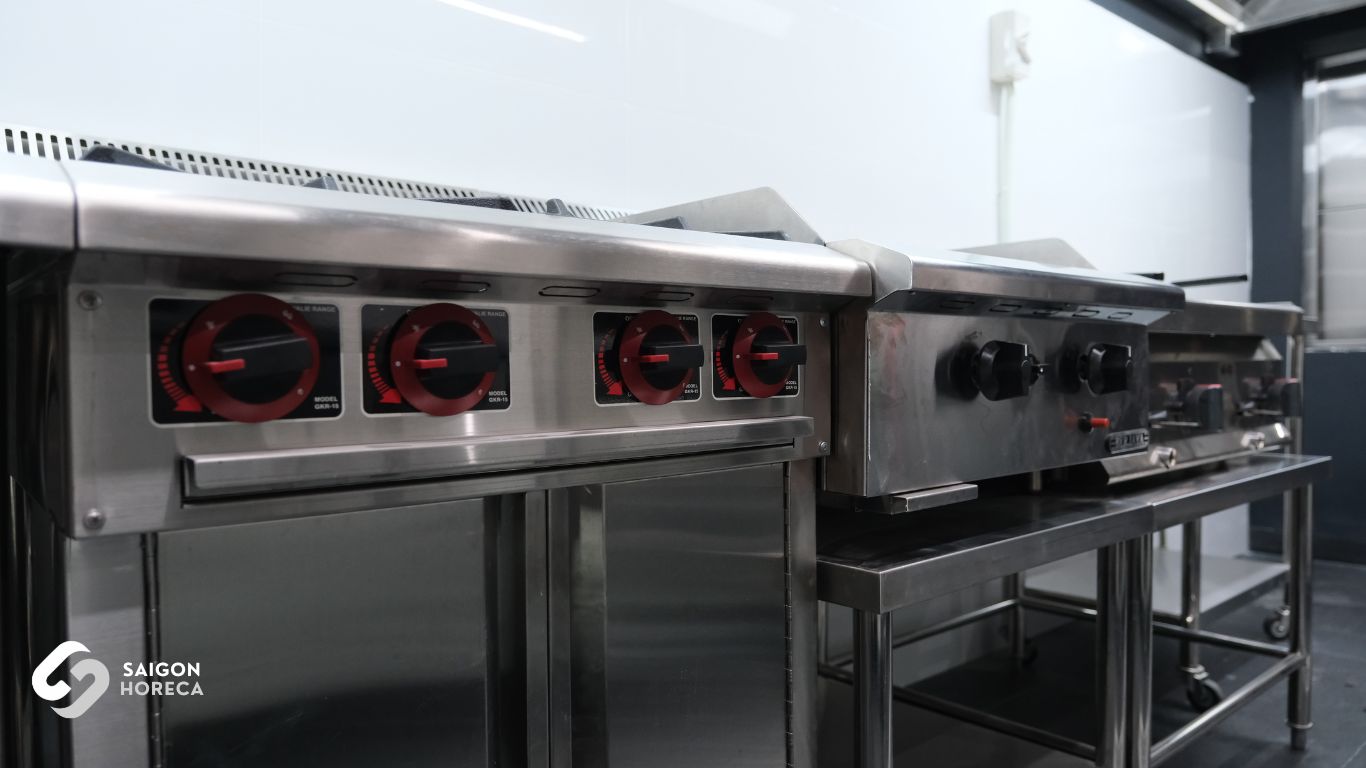
Yellow color diagnosis – each color has a cause
One of the common mistakes when handling a stained stainless steel stove is cleaning based on emotion, not properly determining the cause.
In industrial kitchens, each type of stain, each shade of yellow – brown – purple on stainless steel tells you what problem the stainless steel is having, and from there choose the appropriate cleaning method. Below is the in-depth “color diagnosis” table that Saigon Horeca draws from the maintenance process of hundreds of restaurant, hotel and central kitchen systems.
1. Light yellow like straw color – Sign of slight overheating
Expression:
- Light yellow, appears near the stove, fryer, gas stove.
- The surface is still shiny, not rough.
- Wipe gently with a wet towel, there will still be color marks.
Cause:
- Local hot spot on stainless steel table.
- The pan was heated too long without food.
- The stainless steel surface near the burner is continuously exposed to high heat.
How to handle:
→ Use specialized stainless steel cleaning cream, do not use abrasive substances.
→ Adjust operating habits to avoid overheating tools on the stove.
- Yellow brown, spreading – Grease burned many times
Expression:
- Yellow-brown patches, spreading 5–20 cm wide.
- Often appears in frying areas and high-power stir-frying areas.
- It feels slightly rough when touched.
Cause:
- Grease that stays on for a long time burns to create carbon.
- Do not clean immediately after peak hours.
- Using a towel of the wrong material, rubbing incorrectly.
How to handle:
→ Use a specialized carbon cleaning gel solution (the type used for industrial kitchens).
→ Soak for 3–5 minutes, wipe along the stainless steel circuit, neutralize with warm water.
→ Increase the frequency of end-of-shift cleaning.
3. Blueish yellow or purple – Prolonged overheating
Expression:
- Stainless steel turns dark yellow, greenish or purple.
- Often found on stove tops, oven walls, and dryer tops.
- Durable stains, difficult to wipe off with normal methods.
Cause:
- Prolonged overheating 400–500°C.
- The device is overloaded or operating at the wrong capacity.
- Empty pots and pans left on the surface for too long.
How to handle:
→ Use specialized detergent for discolored stainless steel (do not use household chemicals).
→ Check the stove’s capacity or adjust the layout to avoid concentrated heat.
4. Orange yellow – Sign of chemicals containing chlorine
Expression:
- Appears as light orange → dark orange patches.
- Tiny spots or slight smears.
- Spreads quickly if not treated.
Cause:
- Use Javen or chlorine solution to clean stainless steel tables.
- Wrongly using toilet cleaner or strong disinfectant.
- Chemical exposure over long periods of time.
How to handle:
→ Neutralize immediately with clean water.
→ Use neutral pH detergent and microfiber towel.
→ After cleaning, apply a layer of stainless steel protective oil (passivation oil).
5. Dark yellow, blackish – Stainless steel 201 degrades
Expression:
- Dark yellow-brown, sometimes light black.
- The surface is rough, even pitted.
- Appears a lot in cheap kitchens or outdoor areas.
Cause:
- Stainless steel 201 contains a lot of manganese → is easy to oxidize.
- Contact with salt vapor + water + heat → color fades quickly.
- Pitting corrosion.
How to handle:
→ Can only clean 60–70%, difficult to completely restore.
→ Should consider changing to stainless steel 304 if the area is subject to high heat/salt.
→ Apply protection Neutralize daily to limit spread.
6. Yellow streaks in the form of water rings – Heat shock
Expression:
- Round shape, like a water mark, light yellow.
- Appears after pouring cold water on red-hot stainless steel surface.
- The surface is not scratched but has lost its gloss.
Cause:
- Thermal shock → chromium oxide layer is destroyed.
- The stove operates continuously, with little cooling time.
How to handle:
→ Use stainless steel polishing cream.
→ Avoid pouring cold water directly into the kitchen pot.
The color of yellow stains is a “warning sign” of operating and hygiene conditions in industrial kitchens. When the diagnosis is correct, you will know:
- Do we need to change the way we operate?
- Are the stains caused by overheating or chemicals?
- How to clean without making the surface worse?
This is an important step before going into how to properly clean and maintain stainless steel, which will be presented in the next section.
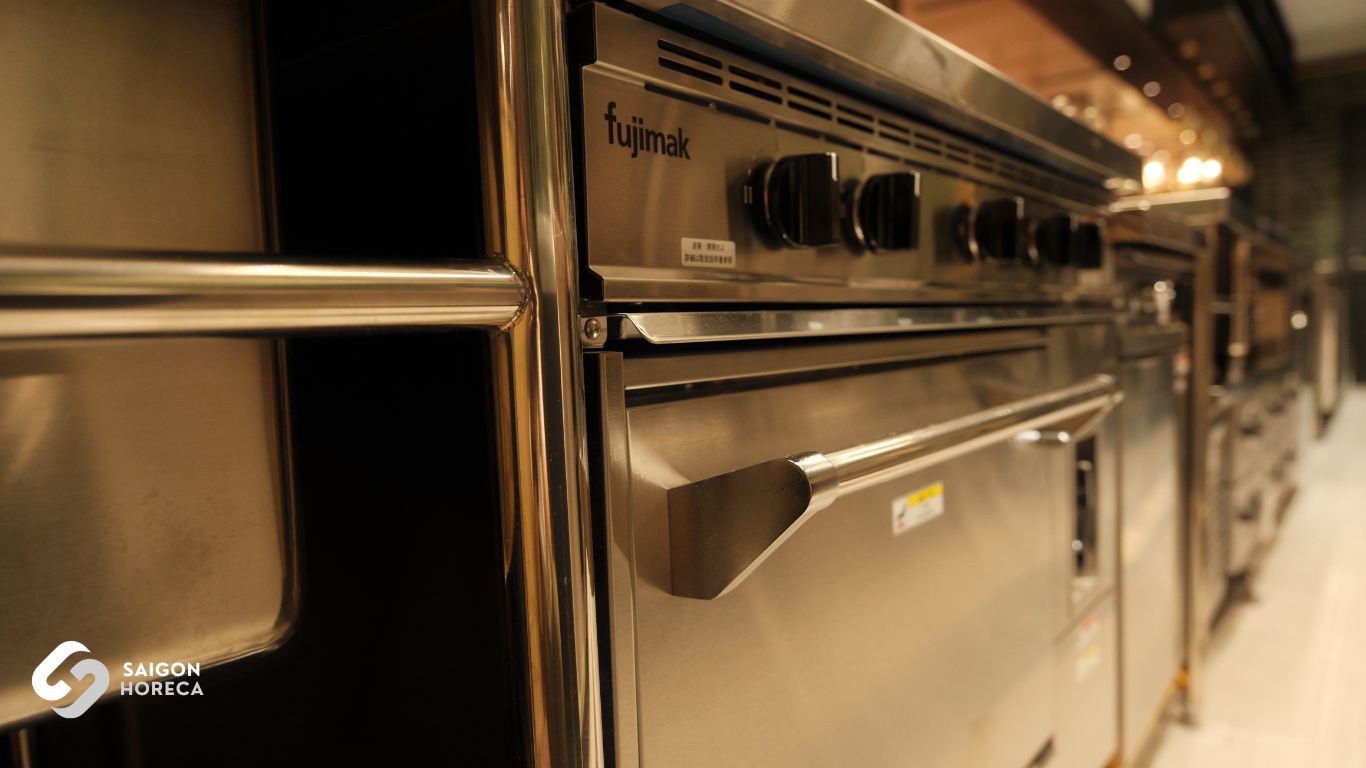
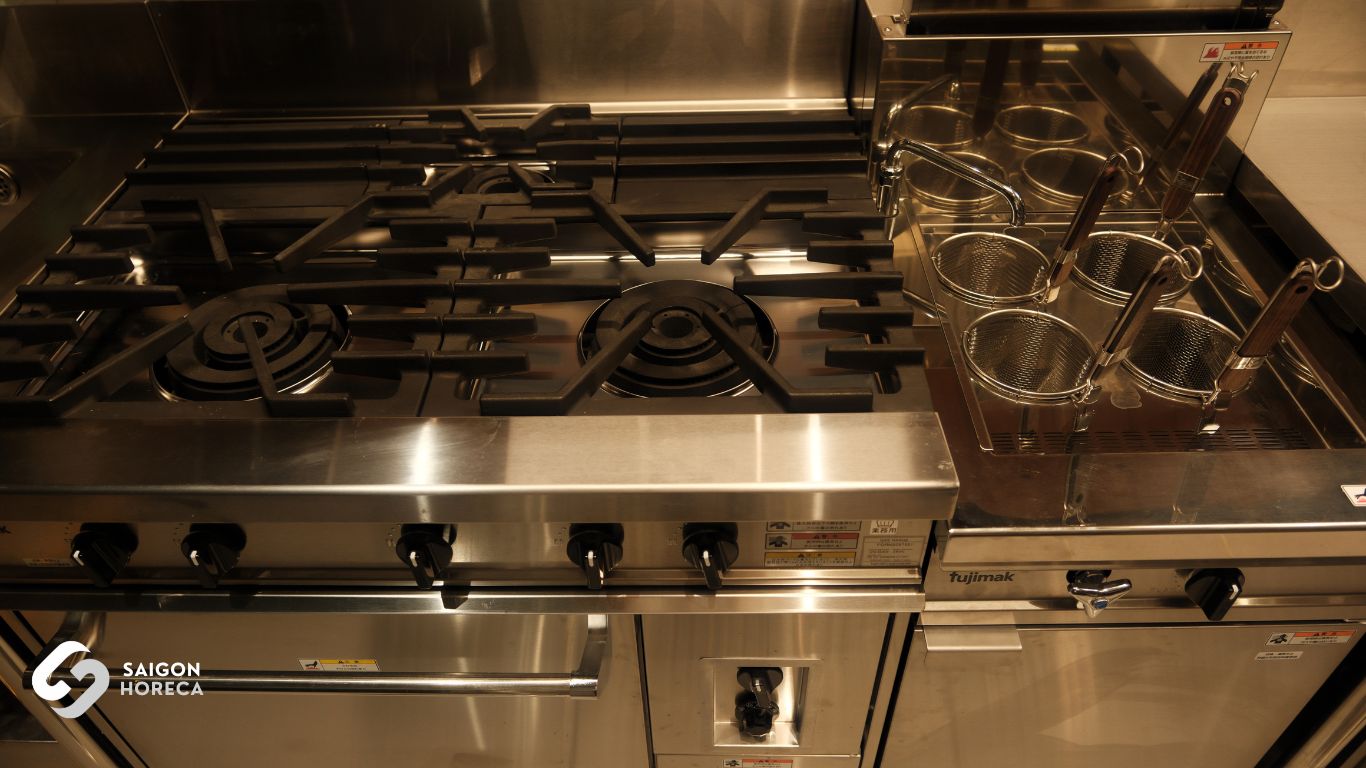
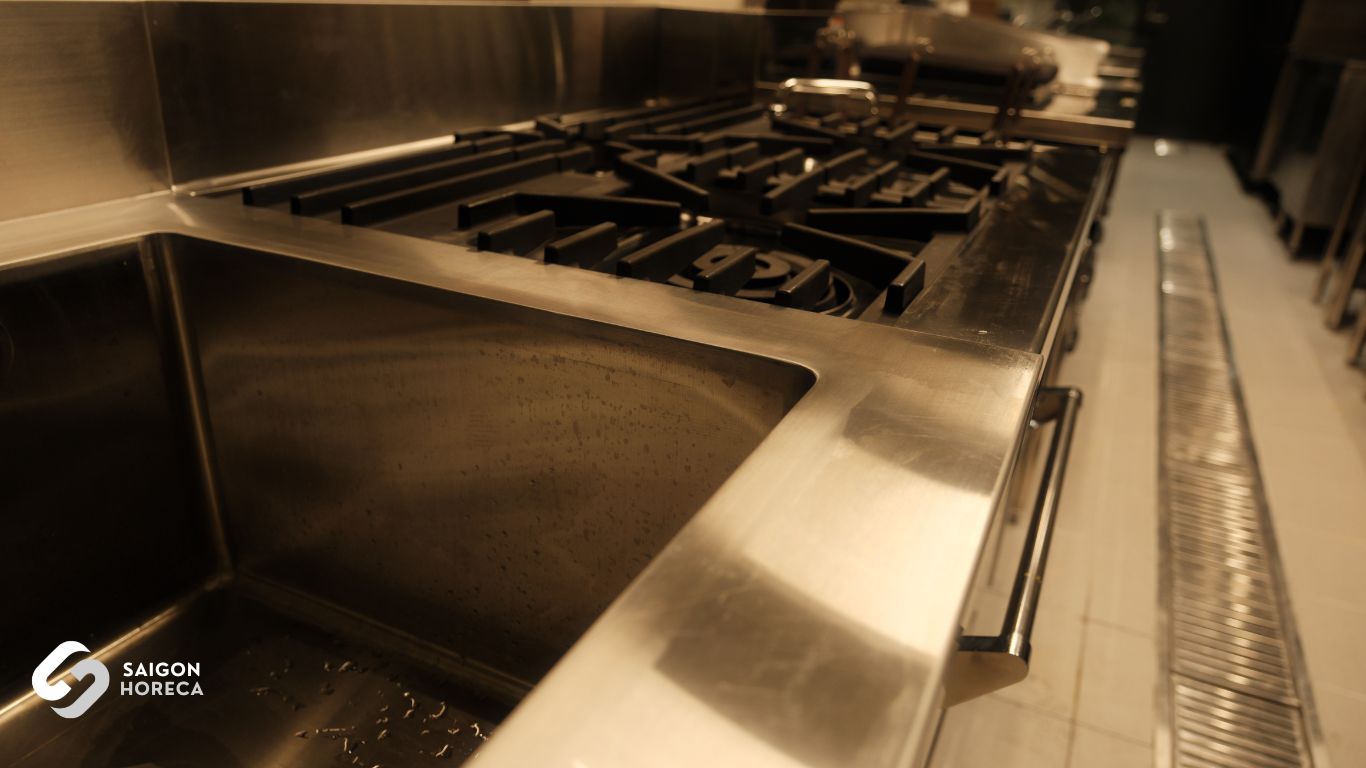
Common problems in industrial gas stoves & how to fix them safely
In an industrial kitchen environment, the gas stove is always the “heart” that bears the heaviest load: continuous cooking, high capacity, high temperature. And because of that, it is the device most likely to have problems – sometimes just from a small detail, but causing a huge safety risk for the entire kitchen.
Below are the 4 most common groups of problems that Saigon Horeca often encounters when repairing at restaurants – with safe & thorough solutions.
1. Red flame – burns unevenly
Signs: Red fire, unusually strong flare, burning smell, food takes too long to cook or burns to the edges.
Root cause:
- The burner throat is clogged with grease, dirt, and food residue.
- Wind – the air entering is not at the right ratio.
- The gas nozzle is misaligned or installed in the wrong position.
Risks:
– Consumes 10–20% of gas per day.
– Creates black soot that sticks to the bottom of the pot.
– Can easily cause damage to the burner or spread to the stove body.
How to handle safely:
- Turn off the gas before checking.
- Remove the nozzle – clean it with a specialized needle (do not use hard objects to expand the nozzle).
- Use a can of compressed air to clean the burner throat.
- Adjust the amount of wind until the flame is green – the tip of the flame is sharp.
Radical solution from Saigon Horeca: Optimize the wind – gas system so that the fire is always green at 100% capacity, without burning or wasting gas.
2. Gas leak – silent but extremely dangerous
Signs:
– Slight gas smell, especially when first opening the stove.
– Old, cracked, dark gas lines.
– Gas valve makes a small “hissing” sound.
Common causes:
- The flexible pipe has expired.
- Stainless steel clamps loosen due to high temperature.
- The gas valve is worn, the rubber gasket is damaged.
Quick check:
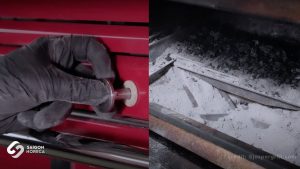
➡ Apply soapy water to the joints – if you see bubbles → gas leak.
How to handle:
- Close the master valve immediately.
- Absolutely do not turn on/off the power, do not turn on the stove.
- Open the ventilation door.
- Replace wire – tighten connection, check with soap a second time.
Saigon Horeca standard solution: using heat-resistant industrial gas pipes + checking the entire gas line with a special pressure meter.
3. The stove’s ignition doesn’t work – it’s difficult to start a fire, you have to turn it on many times
Root cause:
- The ignition head is dirty or damp.
- Ignition wire flickering due to grease.
- Weak or broken ignition IC.
- The distance between the ignition tip and the standard nozzle (usually ≥ 4mm).
Quick fix:
- Dry the ignition head.
- Clean the ground position (mass).
- Adjust the ignition gap with a screwdriver.
- If turned on 3 times without power → stop checking, avoid sparks causing fire.
Saigon Horeca’s solution: replace specialized anti-humidity IC system for hot kitchen environments > 55°C.
4. Backfire – an incident that many stoves do not recognize in time
Identifying signs:
– Fire burns in the burner’s throat instead of outside the mouth.
– Small “popping” explosion sound.
– The stove is unusually hot.
Why is it dangerous?
Backfire causes heat to concentrate in the throat → warps, cracks, and even spreads fire into the stove body.
Root cause:
- Dirty gas nozzle → uneven propellant pressure.
- The throat is distorted.
- Wind coming in is too strong (usually happens with stoves placed near the door).
How to handle:
- Turn off the stove immediately.
- Wait until the throat cools down before checking.
- Clean the nozzle – adjust the wind.
- Move the stove away from strong winds.
Saigon Horeca solution: realign the entire gas-air pressure system according to industrial kitchen standards (completely different from home kitchens).
 Facebook
 Zalo
Zalo