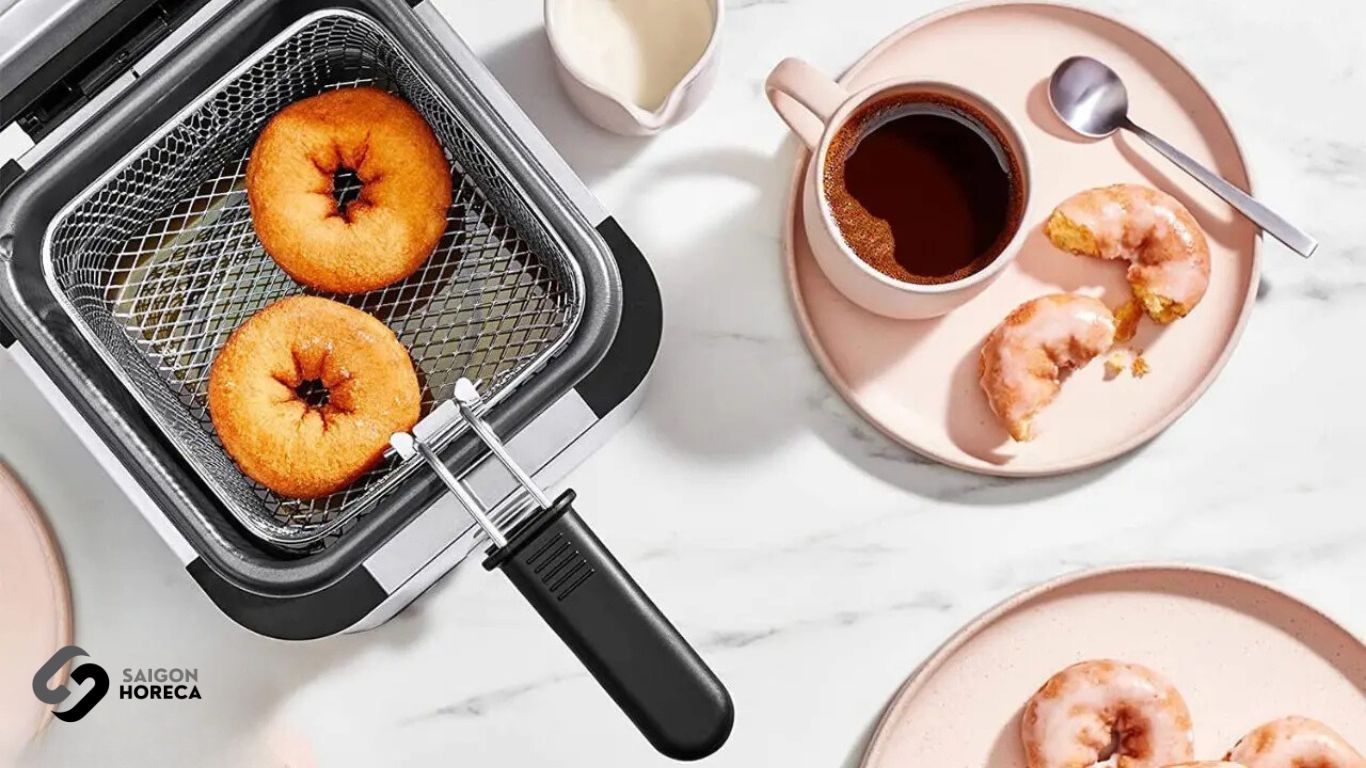
Fryer Embedded: The Perfect Choice for Appetite – Gas or Electric?
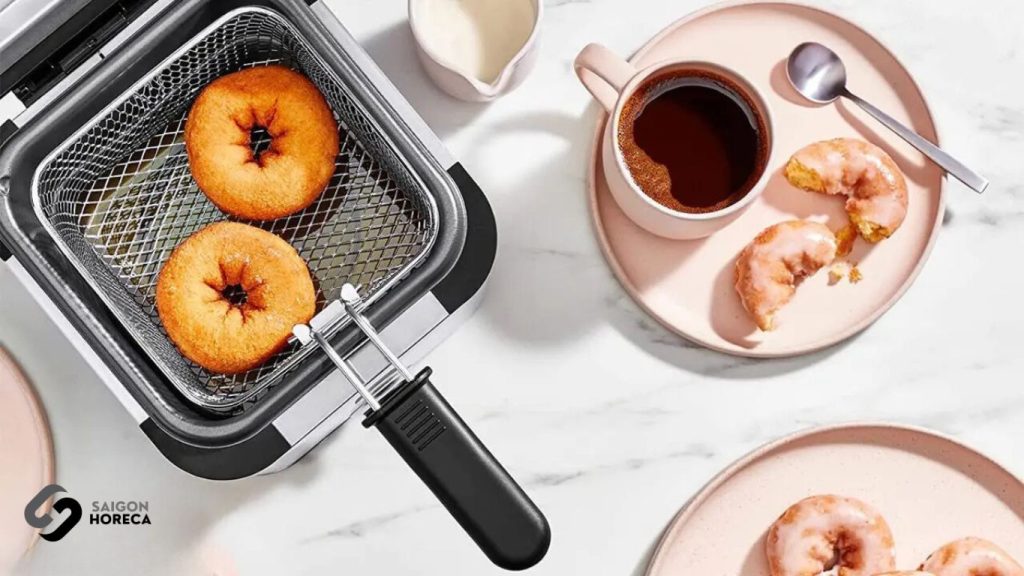
The deep fryer is also known by many different names such as:deep fryer, deep fryer, deep frying pan…, an indispensable device in the kitchens of restaurants, eateries, or even in the home kitchen space. Not only does the fryer make delicious and crispy dishes, the fryer also works quickly and efficiently, ensuring that food is prepared properly without losing flavor and quality.
However, when you are faced with the decision to choose a deep fryer for yourself, you may encounter an important question: should you use a gas or electric deep fryer? Each type of stove has its own advantages and limitations, and the choice depends on your specific needs. Let’s explore and learn more deeply about the difference between gas fryers and electric fryers with Saigon Horeca in this article.
What is a deep fryer?
A deep fryer, also known by many different names such as a deep fryer, fryer, deep fryer, or simply a fryer, is an extremely important and diverse specialized kitchen appliance in food processing. Not only does it have different names, the deep fryer also has the English name “Deep Frying,” creating a unique and attractive culinary processing style.
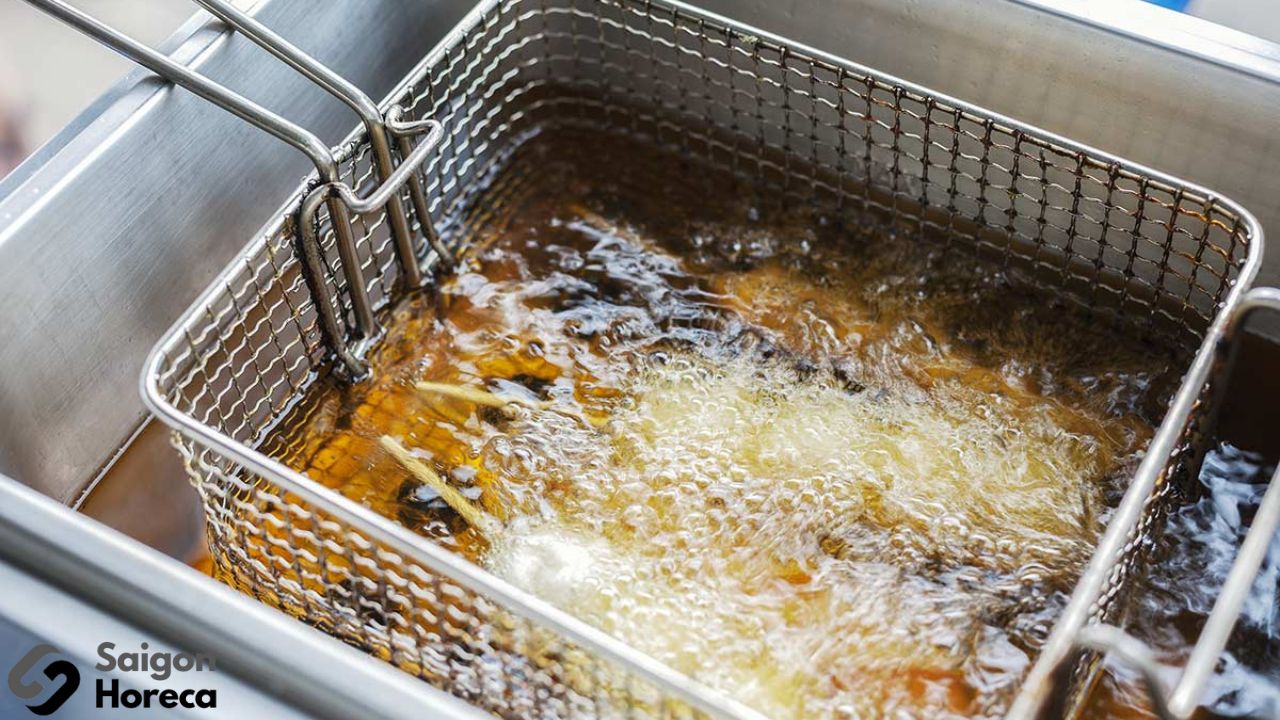
The intensive processing method of soaking food in cooking oil at high temperature has been spread and developed around the world. With temperatures usually ranging from 175-190 degrees Celsius, this method helps food cook quickly, evenly, and creates a characteristic crispy crust, bringing a unique flavor to the dish.
Deep fryers are not only an important part of commercial kitchens and commercial restaurants, but are also a symbol of many delicious dishes around the world. It is the tool that creates delicious and attractive dishes such as fried chicken, fried cheesecake, french fries, and many other dishes, becoming an indispensable part of our diverse cuisine.
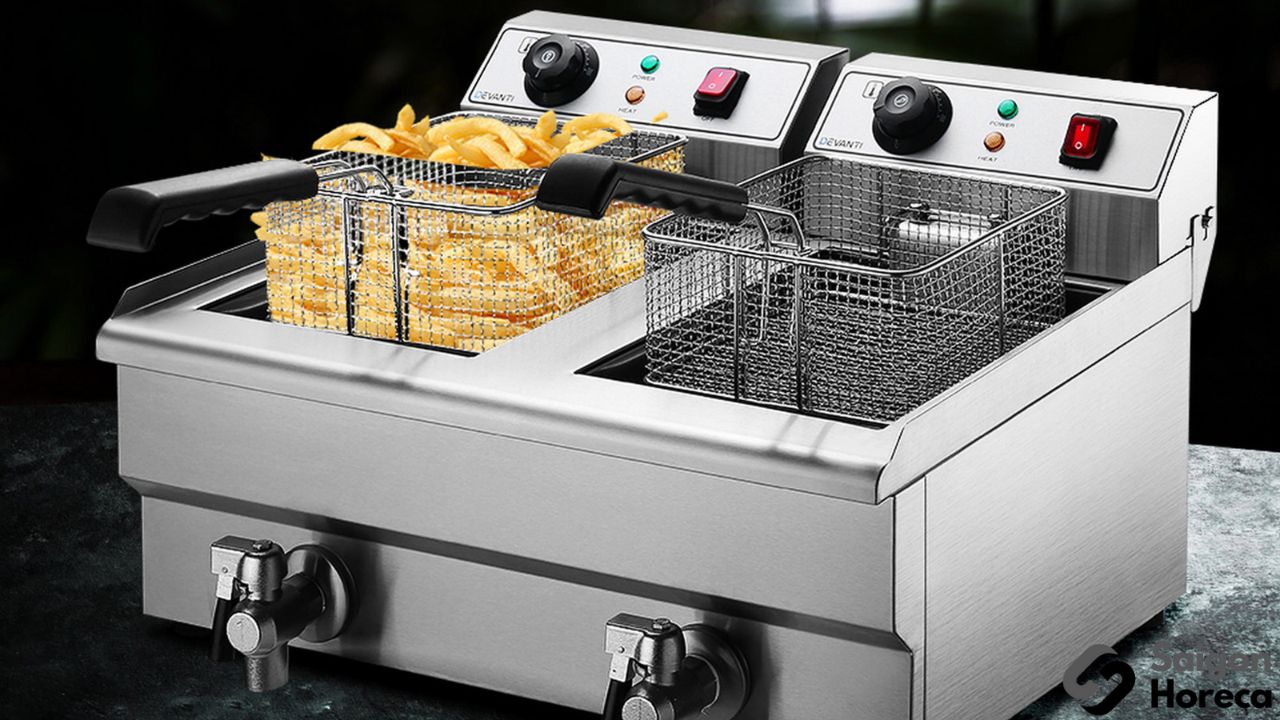
Classification of deep fryers
There are many different types of fryers, and each type has its own advantages, creating diversity in food processing. Let’s look at some popular fryer types and their strengths:
Tube style deep fryer
A tube-style deep fryer is a type of fryer commonly used in the food and restaurant industry, and has a special design with a shape like a long tube, hence the name “tube-style.” The outstanding feature of the tube fryer is that the tube is slightly higher than the bottom of the cooking oil tank. Inside this tube, there is a hot cooking oil system maintained at high temperature, usually ranging from 175-190 degrees Celsius (350-375 degrees Fahrenheit).
The tube-style deep fryer allows a large amount of cooking oil to be placed in the container, and the food will be immersed in this oil for processing. This type of stove is often capable of processing many dishes at the same time and keeps food crispy and delicious. However, due to their large size and complex structure, cleaning and maintaining tube fryers can require a more time-consuming and technical job than with some other types of fryers.
Tube-style fryers are often used to prepare dishes such as French fries, fish balls, fried chicken, or any food that needs to be fried in hot oil to create a characteristic crispy crust.
Fryer open
An open fryer is a specially designed fryer, with a lid or top that can be opened to access cooking oil and food containers. The main purpose of an open fryer is to easily drop and remove food into and out of hot oil without completely removing the lid or cover.
This type of stove is often used in environments such as restaurants, eateries, or anywhere that needs to process food quickly and effectively. Having the ability to open the lid helps chefs and kitchen workers easily monitor and control the frying process without having to lift or remove the lid, helping to reduce the risk of burns or save time.
Open fryers can come in many different sizes and designs, but they all have the common feature of being expandable for easy and convenient operation during food processing in hot oil.
Flat bottom industrial deep fryer
Flat-bottomed industrial deep fryers are a popular type of deep fryer in the food and culinary service industries. The outstanding feature of this type of stove is that the bottom of the cooking oil tank has a flat bottom, helping food to be immersed in oil and quickly cooked without direct contact with the typical oil flow at the bottom.
The mechanism of the flat bottom fryer allows food to float on the oil surface, not in direct contact with the bottom of the pot, this helps prevent burning at the bottom of the pot, keeps the cooking oil cleaner and prolongs the life of the oil.
This type of fryer is often used in environments such as restaurants, hotels, commercial kitchens, or large eateries to process large amounts of food such as french fries, fish balls, fried chicken, and many other dishes that require quick processing and crispiness.
>>> Discover how to effectively save fuel with an Electric Industrial Fryer through 7 methods, read right here.
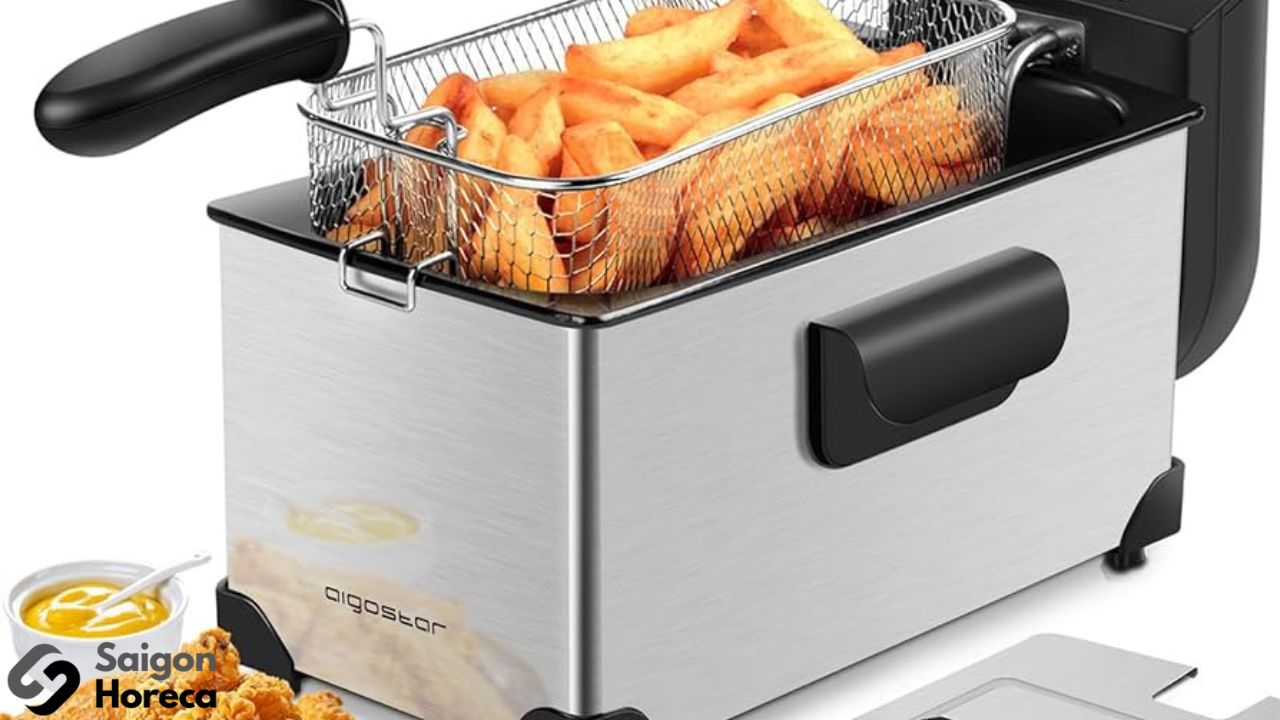
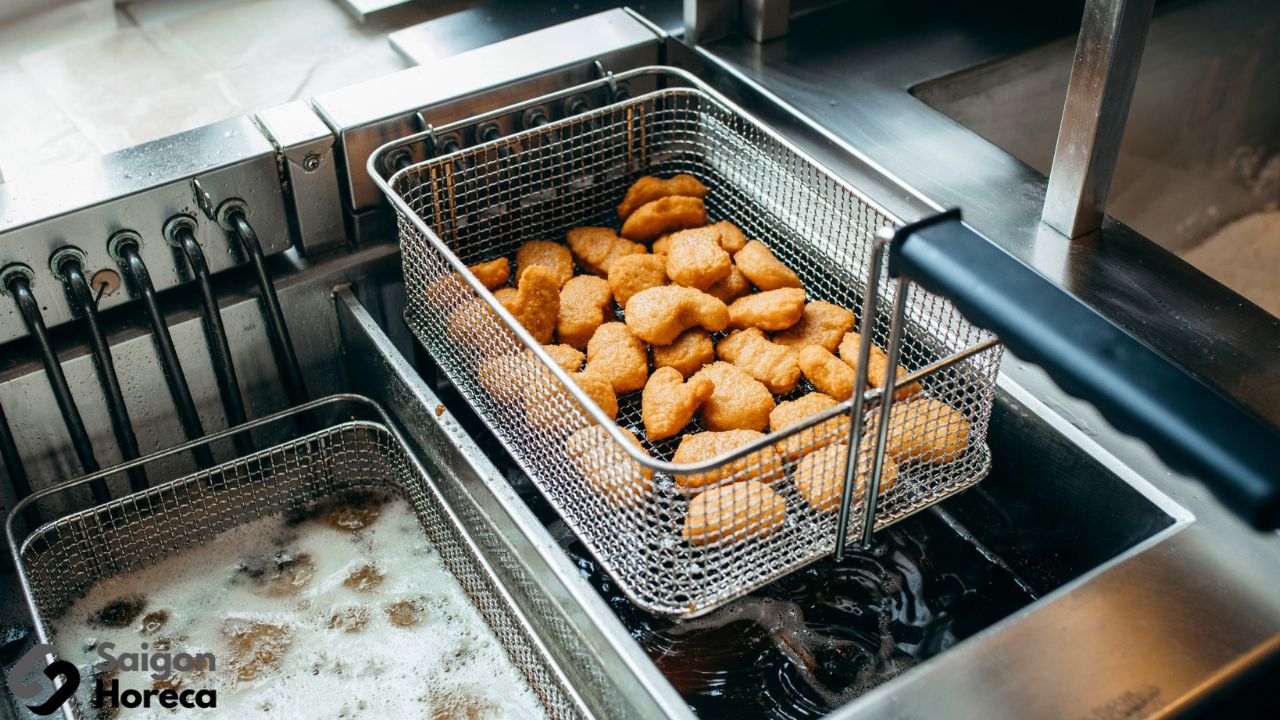
The difference between a gas fryer and an electric fryer
Gas and electric fryers both use fuel that is easy to find and use, and they are widely used in industrial cooking equipment. However, there are some important factors to consider when deciding which stove is best for you:
Fuel used:
- Gas: Generally, oil heats up faster and can serve multiple customers at the same time. This is suitable for restaurants or eateries that have a large workload and need to cook quickly.
- Electric: Uses electricity, which reduces energy costs and is more stable than gas. This is suitable for restaurants that have a stable power source and want to save money on electricity.
How it works:
- Electric: controls the temperature of the oil chamber through a control knob system, helping you easily adjust the temperature according to specific needs.
- Gas: using gas works similarly to a home gas stove. You just need to press and turn the control knob to turn on the stove and adjust the temperature.
Investment costs:
- Electric: costs more than gas fryers. However, operating costs and electricity costs are often lower than gas costs.
Below is a comparison table between gas fryers and electric fryers based on some important factors:
Factor
Energy source
Performance
Flexibility
Cost
Gas fryer
Gas (propane/methane)
It usually takes longer to reach the desired temperature. Performance may be lower.
Easy to move and use in many different places without worrying about power source. Suitable for outdoor events or places without power sources.
Energy costs are often higher. Gas bills can be more expensive than electricity bills.
Electric fryer
Electricity
Fastly reach desired temperature and higher performance.
Requires stable power source.
Usually more cost-effective in terms of energy. Electricity bills are often cheaper and more stable.
The choice between these two types of stoves depends on your specific needs and the energy situation where you use it.
Thus, evaluating which type of deep fryer is best depends on many factors, including available energy source, workload, and your budget. Please consider carefully to choose the type of stove that best suits your business needs.
 Facebook
 Zalo
Zalo