
9 Preparation Steps Opening a Bakery: A Detailed Guide for a Successful Business
Have you ever dreamed about owning a beautiful little bakery, where delicate and delicious cakes are created by your talented hands? Opening a bakery is not only a business plan, but also a journey full of excitement and challenges. To turn your dream into reality, you need to prepare carefully and follow some important steps.
In this article, we will learn about specific steps for you to successfully open a bakery, especially in today’s highly competitive market. We will provide detailed and helpful information on planning, managing, and promoting your bakery to attract customers and maintain prominence in the industry. Let’s start the journey with Saigon Horeca to discover important steps, from idea to reality, so you can conquer not only your customers’ tastes but also their hearts.
Discover the Diverse Types of Bakeries Today
Wholesale Store
Wholesale stores are the “supply source” of the pastry industry. They specialize in providing cakes and baking ingredients to other businesses such as restaurants, hotels, large bakeries and food production facilities.
- Features:
Wholesale bakeries, in the bakery industry, are not simply places that mass produce cakes but are also a reliable supply partner for many different businesses such as convenience stores, restaurants, and cafes. Instead of focusing on selling directly to end customers, wholesale bakeries focus on meeting the needs of wholesale customers, and this requires them to be large in scale to ensure a stable supply.
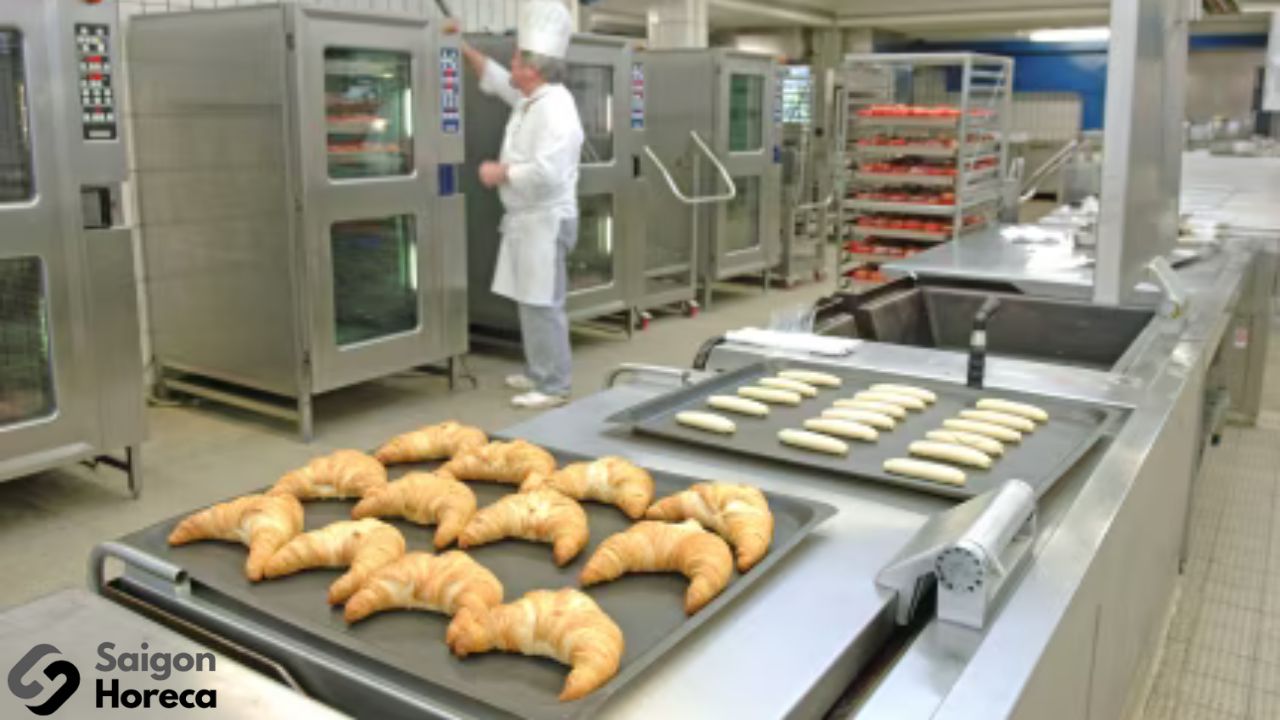
One of the unique characteristics of wholesale bakeries is the large scale of production activities. To meet the needs of wholesale customers, they need to maintain efficient and modern production processes, often investing in spacious space and professional tools. Although they do not directly serve customers, for wholesale customers, the quality and variety of products are the determining factors in satisfaction and level of trust in supply partners.
Unlike retail stores, wholesale bakeries do not need to have a front office (FOH) area and do not need to be located in a prime or crowded location. Instead, they focus on optimizing production and storage space. This helps them save costs and focus on maintaining an efficient production process to meet large demand from wholesale customers.
With high starting capital and professionalism in production, the wholesale bakery is not only a place to create cakes but also a reliable supply partner, bringing stability and diversity in today’s cake industry.
Retail Store
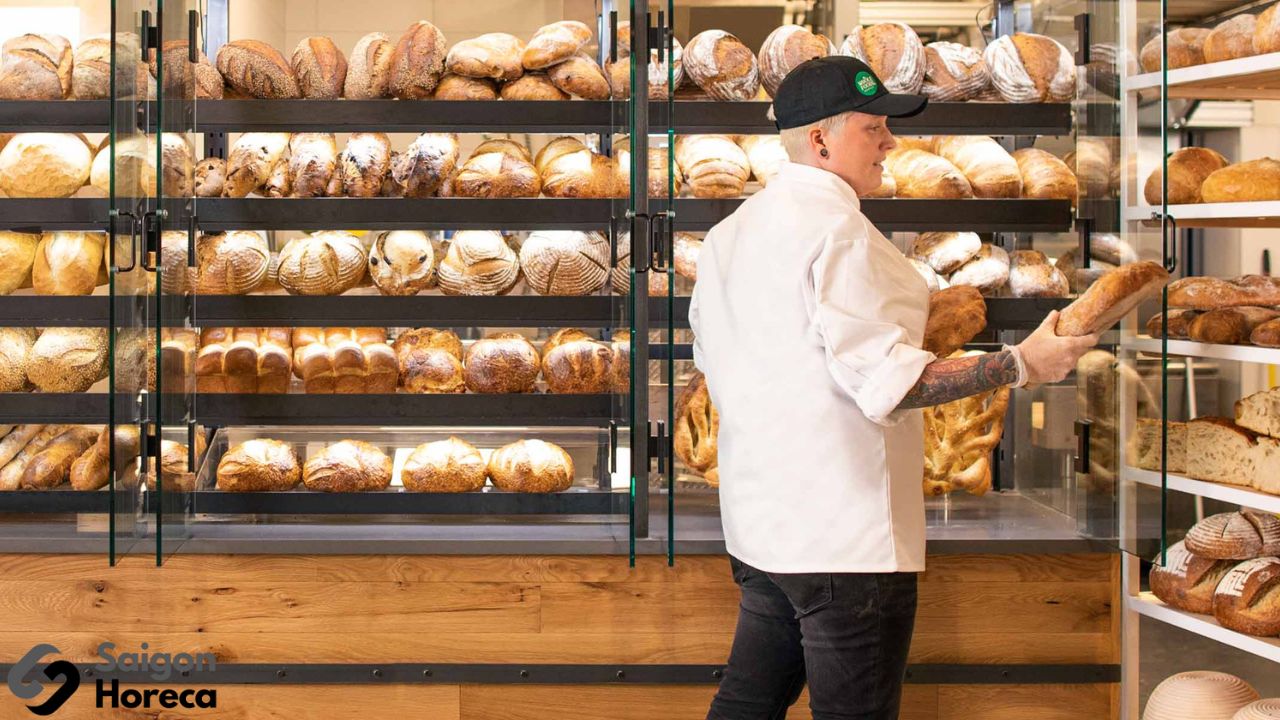
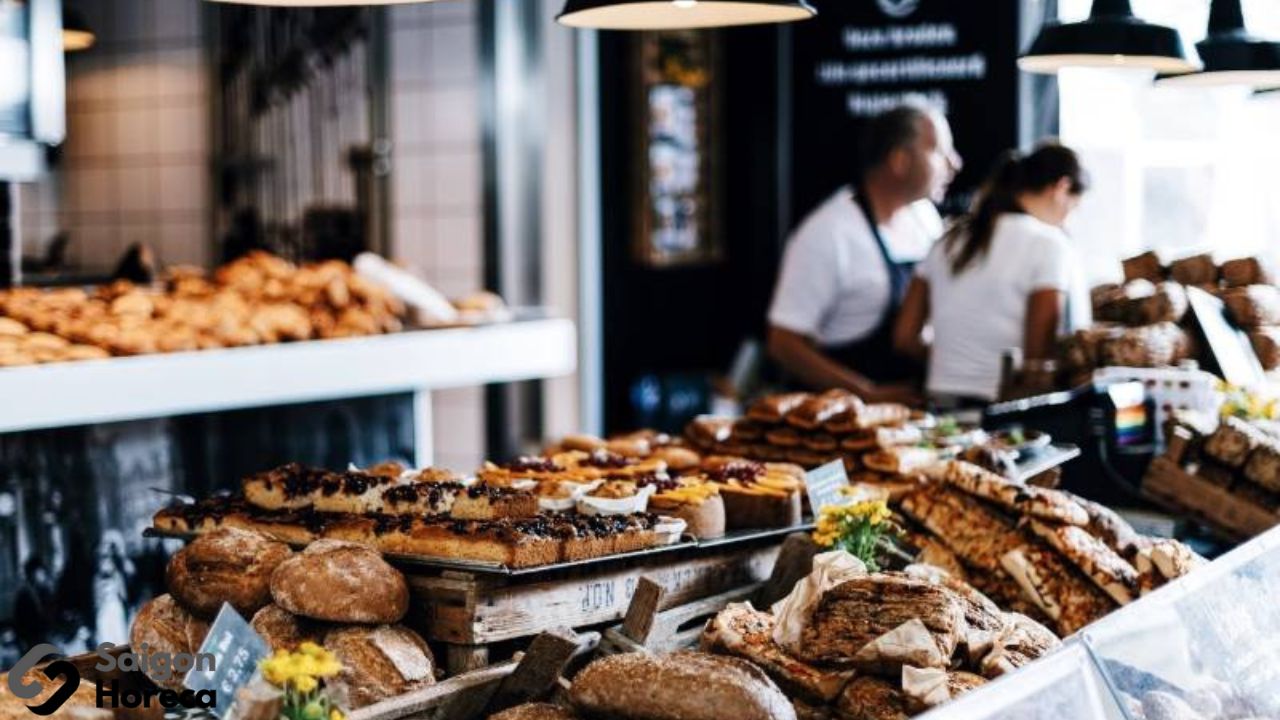
Retail stores focus directly on serving the end consumer. They are often placed in convenient locations to attract customers and create compact and attractive products.
- Features:
- Personal shopping experience and direct communication with customers.
- Focus on creativity in design and processing to attract attention.
- Offer diverse products to meet the needs and preferences of the target audience.
The retail store type is one of the most popular in the bakery industry, mainly focusing on selling directly to the end customer. These shops can be divided into many small branches, specializing in each specific type of cake, bringing diversity and choice to consumers. The special thing is that retail stores need to have both front-of-house (FOH) and back-of-house (BOH) spaces to create a comprehensive shopping experience.
Here are some basic types of retail stores:
- Bakery – Coffee:
A combination of a bakery and a coffee shop, they mainly offer snacks such as bread, cakes, and cookies, along with teas and coffees. Bakeries and coffee shops are often equipped with dining tables to serve customers on the spot, creating a comfortable and cozy atmosphere.
- Service Counter:
With limited lobby space, this salon rarely uses tables for customers to sit. Instead, they equipped a cake counter where diners can buy cakes and take them away quickly. Convenience is the main point of this model.
- Mobile Cake Sales Truck:
Using a mobile truck to sell cakes, this model brings flexibility and access to a variety of customers. Although space is limited, mobile carts often bring unique and attractive cakes.
- Specialty Bakery:
Specializes in a specific type of cake such as wedding cakes, cupcakes, or diet cakes. The expertise helps this shop stand out with unique and quality products.
- Home Bakeries:
An increasingly popular trend, home bakeries often advertise and sell products online, providing convenience to customers and reducing operating costs.
Each type of retail store offers a unique experience, from the warm space of a bakery – coffee shop to the convenience of a service counter and to the uniqueness of a mobile cake vending cart. Exploring this diversity helps customers have more choices, while also creating opportunities for creativity and development for businesses in the pastry field.
9 Steps to Prepare When Opening a Bakery: A Detailed Guide for a Successful Business
Opening a Bakery: Creating a Smart Starting Point – Business Plan
The most important step when preparing to open a food store is building a detailed and strategic business plan. This plan is not only the first step but also the basis of success in the food service industry. To ensure efficiency and transparency, a business plan usually includes 7 main parts:
- Project Overview:
- Introduction and Company Description:
- Market Research:
- Products and Services:
- Management Plan and Ownership Structure:
- Marketing and Advertising Strategy:
- Financial Projection:
A business plan not only helps you attract interest from investors but is also a road map for the business process. It is an important tool to define goals, guide strategic decisions and ensure transparency in all aspects of a project. A solid business plan is not only the key to applying for funding but also a fundamental step to successfully overcoming the next steps of a culinary business.
Financial Sources for a Strong Start – Loan Plan
When starting the journey of opening a shop, managing and paying investment costs is an important part that cannot be ignored. This includes renting business premises, purchasing insurance, purchasing equipment and materials, hiring and training employees, as well as expenses related to electricity and water. Facing these large costs, preparing a sufficient financial source is extremely important.
In case owners and shareholders cannot pay all of these costs with their own capital, considering startup loan methods is the next important step. There are three main methods considered by many businesses:
- Traditional Commercial Loan:
- This method involves borrowing funds from any central or local bank. Although interest rates are low and offer large amounts of capital, high credit scores are required and there is often a waiting period.
- Credit Loan:
- Similar to using a credit card, this method allows you to own a loan at a set limit. Spending is deducted as you use it and there is the opportunity to extend the loan as you pay it off. However, credit has limits and requires compliance with more standards than other methods.
- Small Business Loans:
- Organized by the Small Business Association, these loans provide start-up capital while minimizing risk. Although the interest rate is low and suitable for those with limited credit, loan approval procedures and time may take longer than other methods.
Remember, smart financial management and a reasonable loan strategy will help the bakery overcome the difficult initial period and lay the foundation for sustainable development in the future.
Rent Business Premises
After ensuring you have enough capital, the next step is to find a suitable business premises. Choosing the type of premises depends on the specific form of the bakery you intend to open. For example, if you decide to open a mobile bakery, you will need a truck and hire a contract kitchen to source cakes. In contrast, retail bakeries will look for space that is close to potential customers and has a suitable space available as a lobby.
For wholesale stores, which mainly supply other businesses, the location may be in the suburbs and does not need to be close to city centers. In the process of choosing a business premises, important factors to consider include:
- Area Community: Assess the vibrancy and consumption needs of the community in the surrounding area.
- Extent of Trade: Determine the level of trade activity in the region, especially the presence of competitors.
- Distance to Raw Material Suppliers: Ensure that access to raw materials for bakery production is convenient.
- Competitiveness: Research the competition in your area and determine how you can stand out and attract customers.
- Area and Condition of Business Premises: Consider the available space and current condition of the premises, to ensure it fits your business plan.
- Zoning and Health Codes: Comply with zoning district health codes and regulations.
- Security and Crime: Assess the level of security and crime in the area to protect both businesses and customers.
After identifying a suitable area, negotiating and signing a lease contract is the next important step. During this process, having the assistance of an attorney can help you ask the right questions, negotiate favorable rates and terms, and avoid difficult problems in the future. Clearly defining the terms of land area, responsibility for repair costs, and associated utilities is important to ensure the rental relationship goes smoothly and without unwanted problems.
Steps to Take to Obtain Licenses and Permits to Operate Effectively
In the food business, strong regulation at the federal, state and regional levels plays an important role. To open a bakery, you need to integrate these legal elements by ensuring you obtain important licenses and permits before starting your business.
Monitoring and complying with local laws and regulations is an important step in determining the specific licenses you need to apply for. This not only ensures legal compliance but also helps you build credibility and trust from customers. Here are some important aspects you need to consider:
- Business Licensing: Determine the type of business licensing needed for your bakery. These licenses may include food licenses, retail licenses, and other documents depending on the specific location of the business.
- Food Safety: Make sure you comply with federal and local food safety standards. Food production facilities often have to pass safety inspections and comply with hygiene regulations.
- Hygiene and Safety: Check and ensure that all hygiene and safety elements in your salon comply with health and safety regulator regulations.
- Food and Drink Acceptance: For businesses providing food and drink, you need to ensure that you are registered and compliant with food and drink acceptance regulations from regulatory agencies.
- Promotion and Advertising: Define regulations on food promotion and advertising, especially for products that contain special or allergenic ingredients.
By clearly defining and fully implementing legal requirements, you not only ensure the legitimacy of your business but also build customer trust and increase your chances of success in the food business.
Making a General Plan: Effective Design Plan for Backroom and Front Hall
After choosing a location for your shop, you start planning the types of tools you need and how to organize the kitchen. Besides, if the bakery has a lobby area, you need to design this part.
Backroom design (BOH)
There is plenty to organize the kitchen and tools. But usually divided into 4 areas: cleaning area, storage area, preparation area, and main kitchen area. This type of bakery – coffee shop often has an additional lobby including a counter that serves food directly to customers.
Usually you kitchen layout depends on the flow of food. Starting with the food storage area, moving to the preparation and baking area. Finally, serve customers or pack to take away. All dirty dishes, pots and pans will be gathered in the dish storage area.
The kitchen layout depends largely on the rented area and where the water source and gas pipes are located. Before completing the design, you should measure again to make sure there is enough space for the necessary tools.
Lobby design (FOH)
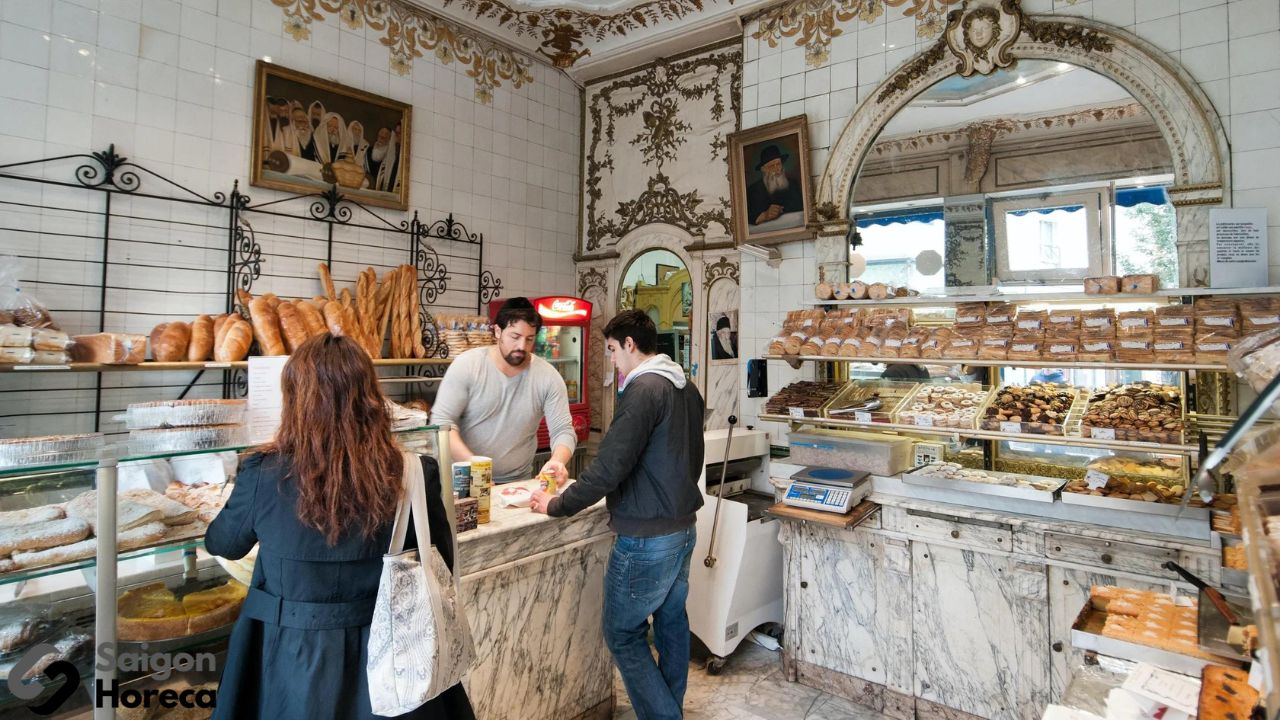
Some bakeries will have a lobby area where customers choose to buy cakes. Creating a suitable lobby space helps customers feel comfortable and choose to buy faster. There are 4 types of layout, each with its own advantages:
- Flat layout: The cake display counter is arranged in a straight line for customers to easily choose.
- Corner layout: This layout uses curved shelves to create a premium presentation.
- Diagonal layout: Diagonal layout allows customers to move easily within the bakery
- Combined layout: You can combine all styles to take advantage of space.
Shopping for Tools and Supplies
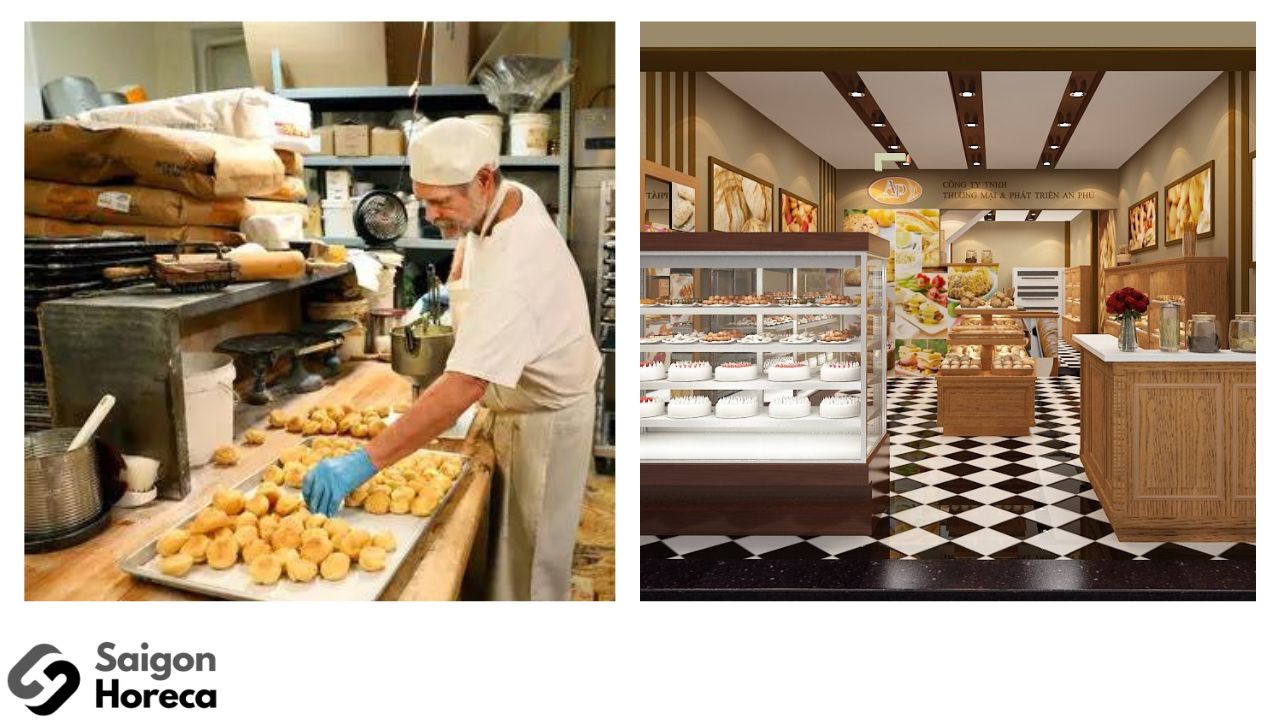
The tools a bakery will need depends on the type of cake you will sell. For example, you may need equipment to make ganache and jam for cakes, but if you only focus on selling fresh bread, you may not need this equipment. Depending on the size and type of bakery, different tools may be needed, some basic tools are listed below:
Dough dough tool:
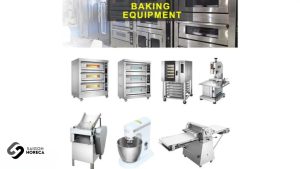
Includes tools such as a regular dough mixer, shaping table, dough divider, dough rolling machine, and dough weigher. Additional shelves, dough proofing cabinets, combined dough proofing and braking cabinets may be needed. And a refrigerator to store the finished dough.
Storage tools:
Storage is necessary to keep your kitchen organized, often using shelves and racks. If you’re working with a lot of bags of flour and sugar, you should invest in trucks, lift platforms, and carts.
Baking tools:
Convection ovens are multi-media ovens that provide hot, even heat. If you often bake Asian-style bread, you may want to choose a bunk oven, which is used to crisp the outside. Wholesale shops need high-capacity furnaces such as coil or rotary furnaces.
Display and sales:
Choosing the right cake display shelf can contribute to boosting sales. You can choose served or self-serve, refrigerated display or not, depending on your personal needs. Additionally, choose additional boxes and packaging for your cakes.
Clean and prepare equipment cleaning area:
In the center of any cleaning area should be a three-basin sink. But remember to order hand sanitizer, disposable gloves, cleaning chemicals, sponges, floor scrubbers and other essential tools.
Small baking tools
Besides the large tools, you will need to equip other small tools such as dough bins, containers, spatulas, bread knives, aprons, and other tools.
>>> Read more:Top 9 devices The most necessary baking equipment today: “The secret weapon” in the baking world
Building a Quality Team for a Bakery
The number of employees needed to hire depends on the size of the bakery and the type of store. For example, a retail bakery will need to hire and train wait staff/cashiers to take orders and collect payments. Most baking staff will work in the kitchen area, preparing dough, fillings and baking cakes.
Your bakery should have at least one or two experienced employees to observe and manage the overall working process. In addition, unskilled workers are needed for jobs such as washing dishes, mixing ingredients, packaging products, and other simple jobs
Some bakeries will need professional pastry chefs and staff who specialize in delicate and specialized work. For example, a wedding cake shop needs someone who specializes in decorating cakes. An Asian-style bread shop needs to hire a skilled bread maker.
Marketing Strategy and Brand Promotion: Making the Bakery Stand Out
Before opening your bakery, you need to market and run an advertising campaign to attract attention. Marketing strategy can be divided into the following 5 basic steps:
- Market Research:
The first step in a marketing campaign is market research and determining goals. The market research sheet typically describes the population in the area and surrounding areas, competitors if any, and the appropriate market. After clearly identifying your target customers, you can begin to create a suitable strategy.
- Outline the marketing plan:
The plan summarizes the market research table
link to add business plan. Often accompanied by information about the average income and spending habits of potential customers. And the prices of competitors.
- Determine goals for your marketing campaign:
You should create specific goals. For example, how many followers on media channels and sales in a month.
- Determine appropriate advertising methods:
There are advertising methods with their own advantages. In the city, billboards can be made at a moderate cost, but also highly effective. You can also consider traditional methods such as newspapers and brochures.
- Create media influence:
Social media advertising is a great way to reach new customers. Helps attract attention. Customers may go through the website, Facebook, Instagram… before deciding to experience the service. Therefore, we should pay attention to these means.
There are many methods that can be used for retail stores but cannot be used for wholesale stores. Often wholesale bakeries focus on evaluating competitors and finding potential customers. These could be restaurants and convenience stores. Then, approach customers and find ways to close sales.
Opening a Store: Steps to Welcome Success
The final step is to hold an opening ceremony and welcome the first customers of the bakery. A successful opening ceremony creates a springboard for business and close customer connections. Promote and attract attention to ensure customers arrive on time for the store’s opening.
You can offer discounts and promotions to attract customers for the opening ceremony. For example, give a discount to the first 100 customers or give away 1 cupcake to customers who buy 12 or more cakes. You can also give away free samples to persuade customers to buy cakes.
 Facebook
 Zalo
Zalo