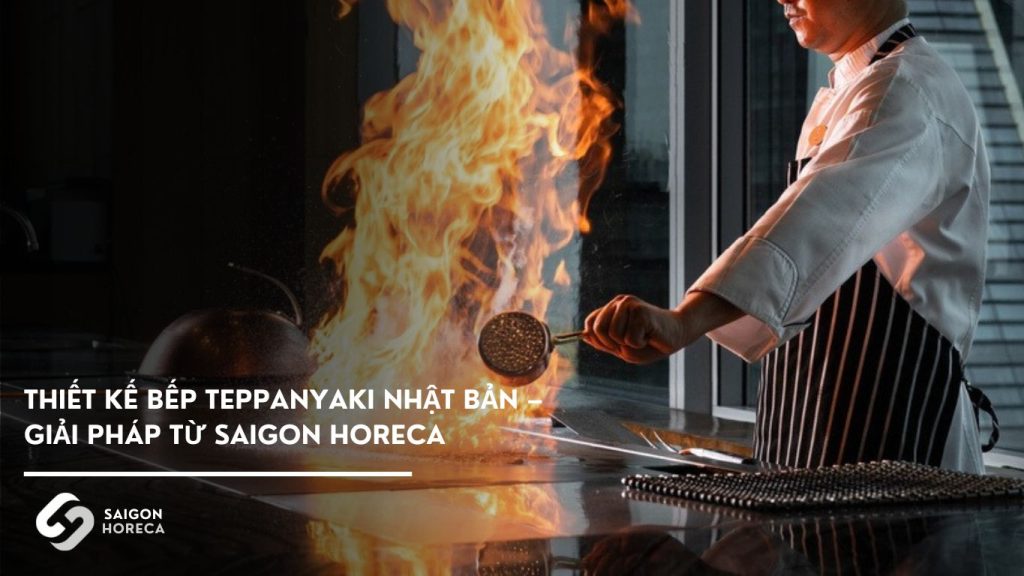
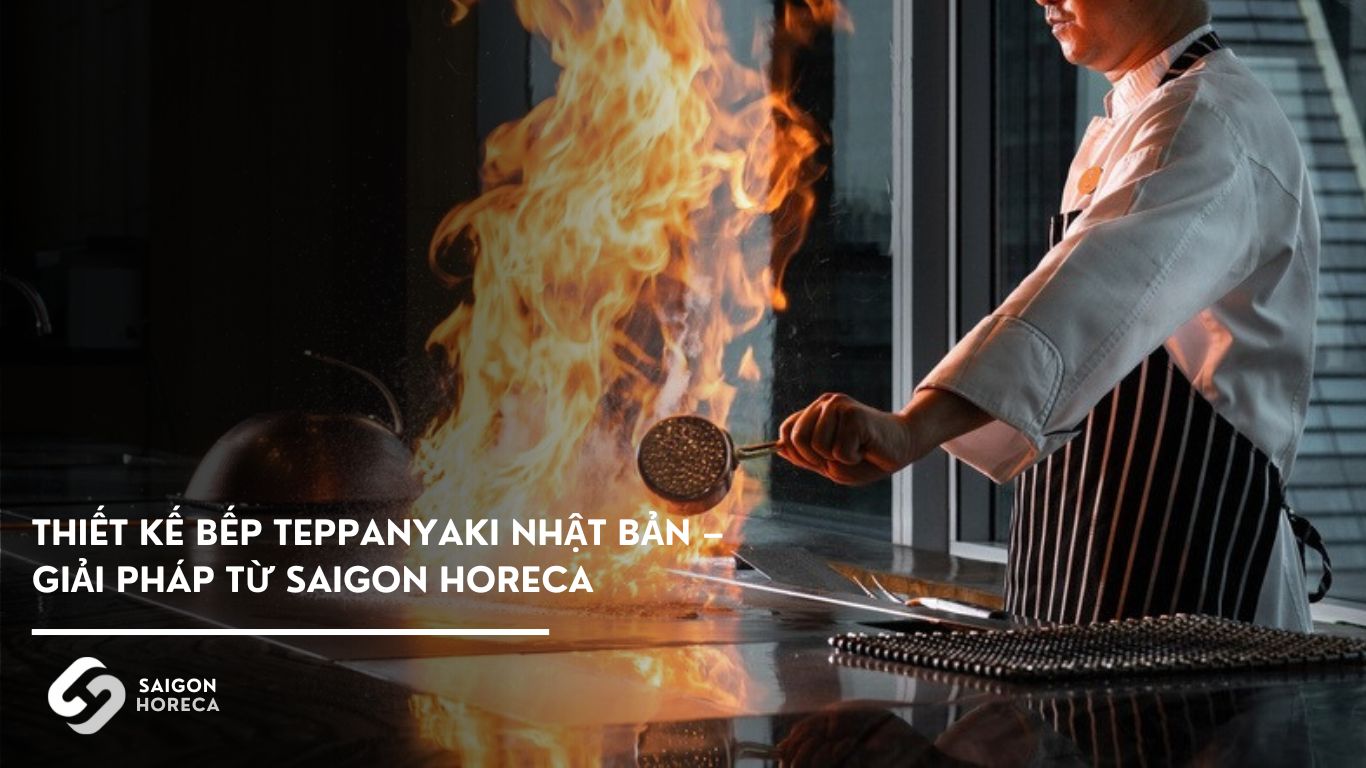
Japanese Teppanyaki kitchen design – Saigon Horeca accompanies raising the level of restaurant level
Teppanyaki is a famous show kitchen model from Japan, where chefs not only prepare dishes but also demonstrate cooking techniques directly in front of diners. The combination of exquisite cuisine and performing arts has helped Teppanyaki become a featured highlight in many high-end restaurants around the world.
In Vietnam, the demand for investment in Teppanyaki models is increasing, leading to stricter requirements for equipment quality, technical standards and aesthetics in design. Realizing the potential and strict requirements of this kitchen line, Saigon Horeca has pioneered strategic cooperation with Fujimak Japan – the world’s leading industrial kitchen equipment brand with more than 70 years of experience.
The combination of SGH and Fujimak is a commitment to bring to the Vietnamese market Teppanyaki kitchen solutions of Japanese standard quality, fully meeting international standards in terms of technique, durability and operational safety.
So, let’s explore with Saigon Horeca the Japanese standard Teppanyaki kitchen counter design standards
In order for the Teppanyaki kitchen counter to not be just a regular processing equipment but truly become an artistic highlight, while ensuring operational performance and absolute safety, the design and installation process needs to strictly comply with the following standards:
1. Standards for materials and structures
- The kitchen surface uses high quality stainless steel, is heat resistant, corrosion resistant and easy to clean.
- The steel plate on the stove top is machined flat and monolithic, with integrated grease-proof grooves around it, ensuring cleanliness and food safety.
- The frame parts and kitchen structure are firmly machined, have good load bearing, and are suitable for the high operating intensity of professional restaurants.
2. Technical standards for operation and safety
- Teppanyaki stoves designed by Fujimak Japan allow customization of stove top thickness (standard 19mm), helping to optimize heat storage and keep temperature stable throughout the cooking process.
- Optional modern, accurate analog or digital temperature control system.
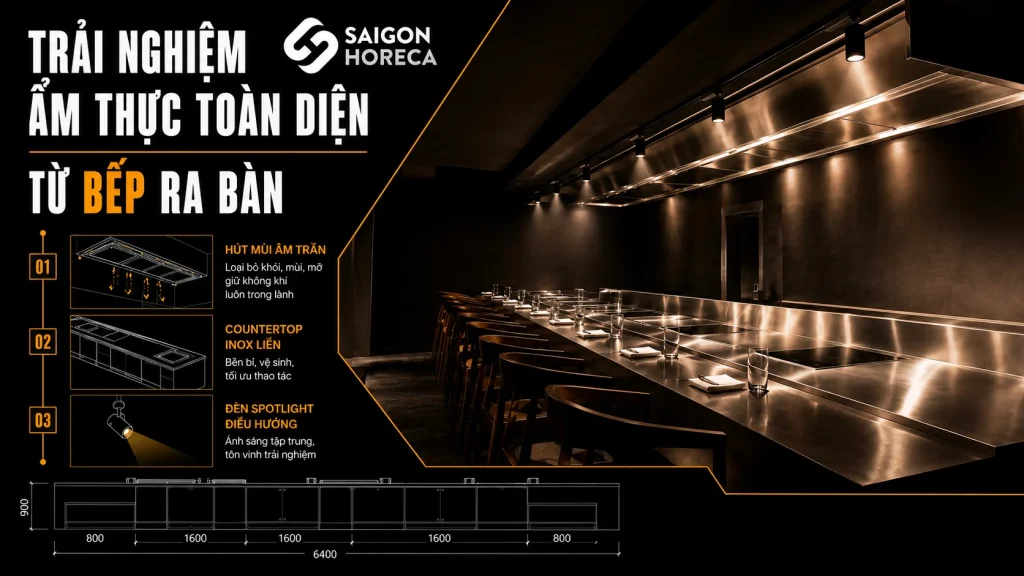
- Stoves with built-in ventilation fans or built-in hood systems in the stove body help prevent smoke, heat, odors and grease from spreading to the service area, ensuring the space is always well-ventilated.
- The automatic fire protection system is integrated inside the kitchen (in high-end product lines), meeting the most stringent safety standards.
3. Overall design standards for Teppanyaki kitchen counters
- Scientific layout ensures a reasonable distance between the cooking area and diners’ seats, both safe and optimal for the culinary performance experience.
- Calculate the flow of movement of chefs and service staff, limit collisions and interruptions during operations.
- The kitchen counter needs to be designed in harmony with the overall interior space of the restaurant, combining aesthetic elements and functionality.
4. Saigon Horeca’s role in each project
- Saigon Horeca is not simply an equipment supplier, but an in-depth consulting partner on overall solutions for Teppanyaki kitchens.
- All Teppanyaki kitchen equipment distributed and deployed by Saigon Horeca comes from Fujimak – Japan’s leading kitchen equipment brand, with more than 70 years of experience and a global distribution network.
Saigon Horeca is not only an equipment distributor, but also directly undertakes to deploy, install and complete Teppanyaki kitchen counters according to technical procedures under strict supervision from Fujimak experts. Thanks to that, the projects carried out by SGH always achieve optimal operating efficiency, while raising the level of culinary space.

Outstanding Teppanyaki kitchen lines deployed by Saigon Horeca
All Teppanyaki stove lines supplied and installed by Saigon Horeca (SGH) are manufactured directly in Japan by Fujimak, a prestigious global brand in the field of high-end industrial kitchen equipment.
Based on the operating characteristics of each restaurant model, Saigon Horeca cooperates with Fujimak Japan to develop many specialized Teppanyaki kitchen lines, meeting strict technical, safety and aesthetic requirements.
Below are 3 typical solutions that have been and are being implemented by Saigon Horeca in the Vietnamese market:
Teppanyaki stove has an integrated exhaust system in the stove body
Ideal solution for spaces where ceiling suction systems cannot be installed – for example, restaurants in shopping malls, high floors or open spaces.
- The duct system and exhaust fan are integrated inside the stove body, connected to the exhaust fan located far away to reduce noise.
- Using sound reduction motor helps the equipment operate smoothly, without affecting the diner experience.
- The closed design helps protect technical components, is easy to maintain and safe for long-term use.
Teppanyaki stove with built-in Airflow Fan
One of the most advanced product lines today, this design creates an air barrier right at the boundary between the kitchen counter and the living area.
- Effectively prevents smoke, heat and grease from splashing out, helping to keep the service space clean.
- Increase safety and comfort for diners during the meal.
- Contributes to preserving the open kitchen aesthetic, limiting odors, especially suitable for fine dining style restaurants.
Teppanyaki stove located on built-in refrigerator/cabinet or stainless steel counter
Flexible solution to help utilize space, optimize operating efficiency in kitchens with limited space or need to integrate many functions.
- The stove is designed to place directly on the refrigerator/cabinet, cooler table or existing stainless steel counter, saving space and construction costs.
- Increase working efficiency when ingredients are stored right below, helping chefs work quickly, shortening serving time.
- Suitable for the Teppanyaki model combined with sushi bar, izakaya or restaurants that continuously serve many meals.
Depending on the premises and operating orientation, the Saigon Horeca team will advise on the most suitable kitchen type, and support the overall design of the space, ensuring harmony between features, safety and diner experience.


Principles for designing professional Teppanyaki kitchen counters to keep in mind
Therefore, the design and installation process needs to strictly comply with technical principles to ensure safety, functionality and aesthetics. Saigon Horeca, with experience in implementing high-end demonstration kitchen projects, always strictly adheres to the following principles:
1. Ensure fire safety standards
Teppanyaki kitchens often use high heat, and even have live fire performances, so fire prevention is a must.
The kitchen system needs to be equipped with specialized fire prevention equipment such as automatic gas shut-off valves, heat sensor systems, and fire sprinklers integrated inside the stove body (applicable to high-end stoves from Fujimak).
All equipment and materials used must meet fireproof and high temperature resistance standards.
2. Accurately calculate the flow of chefs and diners
The arrangement of the chef’s working space must ensure convenience, safety, and minimize collisions during peak hours.
The area for diners needs to be properly separated, ensuring privacy and safety during the direct cooking process.
3. Choose specialized materials for industrial kitchens
The kitchen surface, service counter, and surrounding areas must use high-quality stainless steel (stainless steel), good heat resistance, anti-corrosion, and easy to clean.
For Teppanyaki stove tops, Fujimak’s standards apply monolithic steel plates 19mm or more thick, helping to maintain stable heat and prolong service life.
4. Ensure a reasonable distance between the kitchen and diners
‘s seats
According to international standards, the distance from the edge of the kitchen to the guest’s seating position must be scientifically calculated, both to ensure safety during processing and to help diners observe and fully enjoy the performance process.
Especially with Fujimak’s stove lines that have integrated windscreen fans or built-in hood systems, the surrounding space is always guaranteed to be clean, free of smoke or grease.
With practical experience in many high-end projects and close companionship from Japanese experts, Saigon Horeca is always committed to providing international standard Teppanyaki kitchen counter design and implementation solutions, optimizing functionality and ensuring absolute safety for each project.

The process of implementing Saigon Horeca’s Teppanyaki kitchen
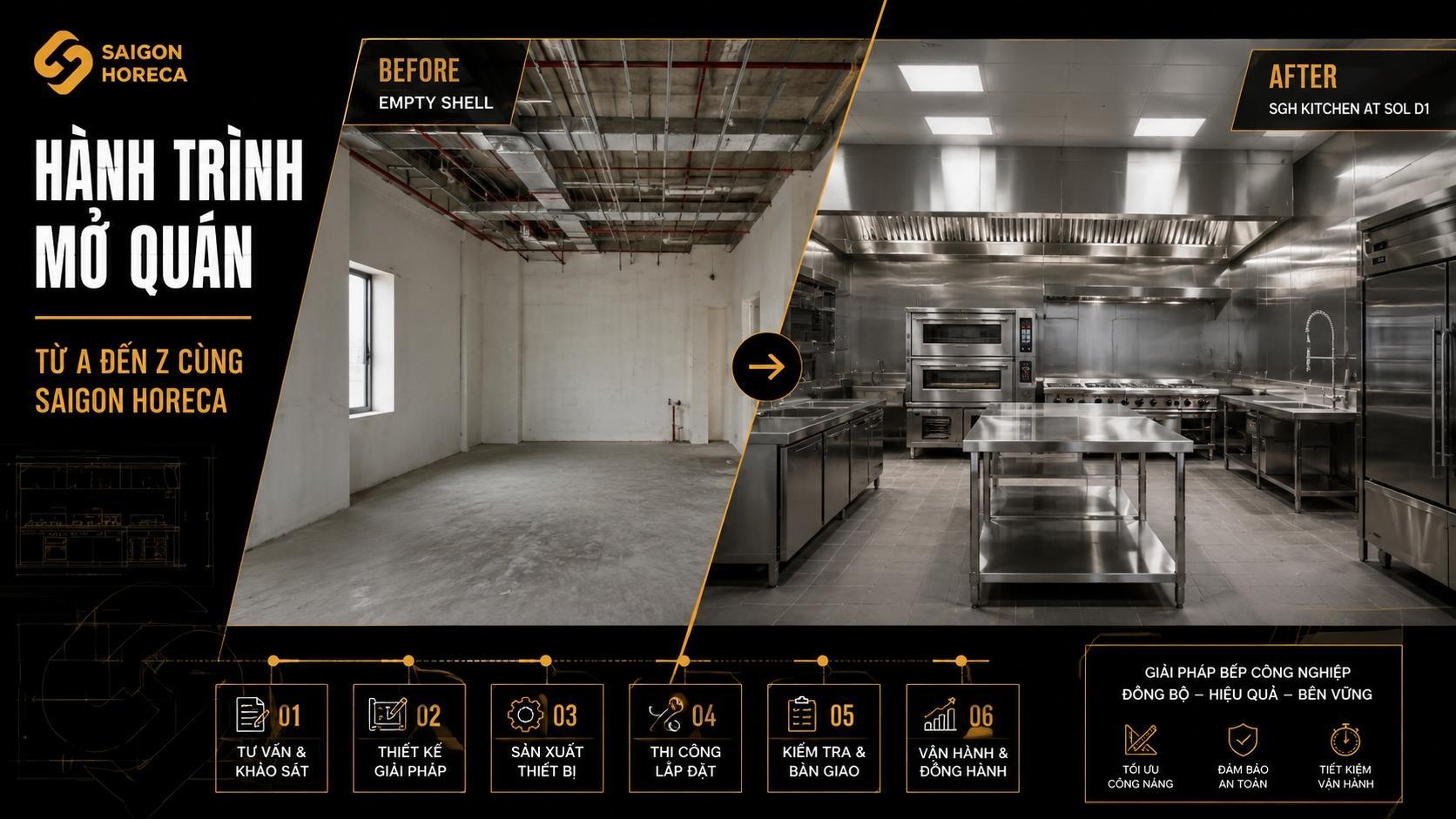
To ensure that the Teppanyaki kitchen system not only achieves optimal operating performance but also fully meets strict Japanese and international technical standards, Saigon Horeca (SGH) applies a methodical, professional, standardized implementation process according to the strategic cooperation model with the Japanese brand Fujimak. Specifically:
Step 1: Receive needs and survey the current state of the premises
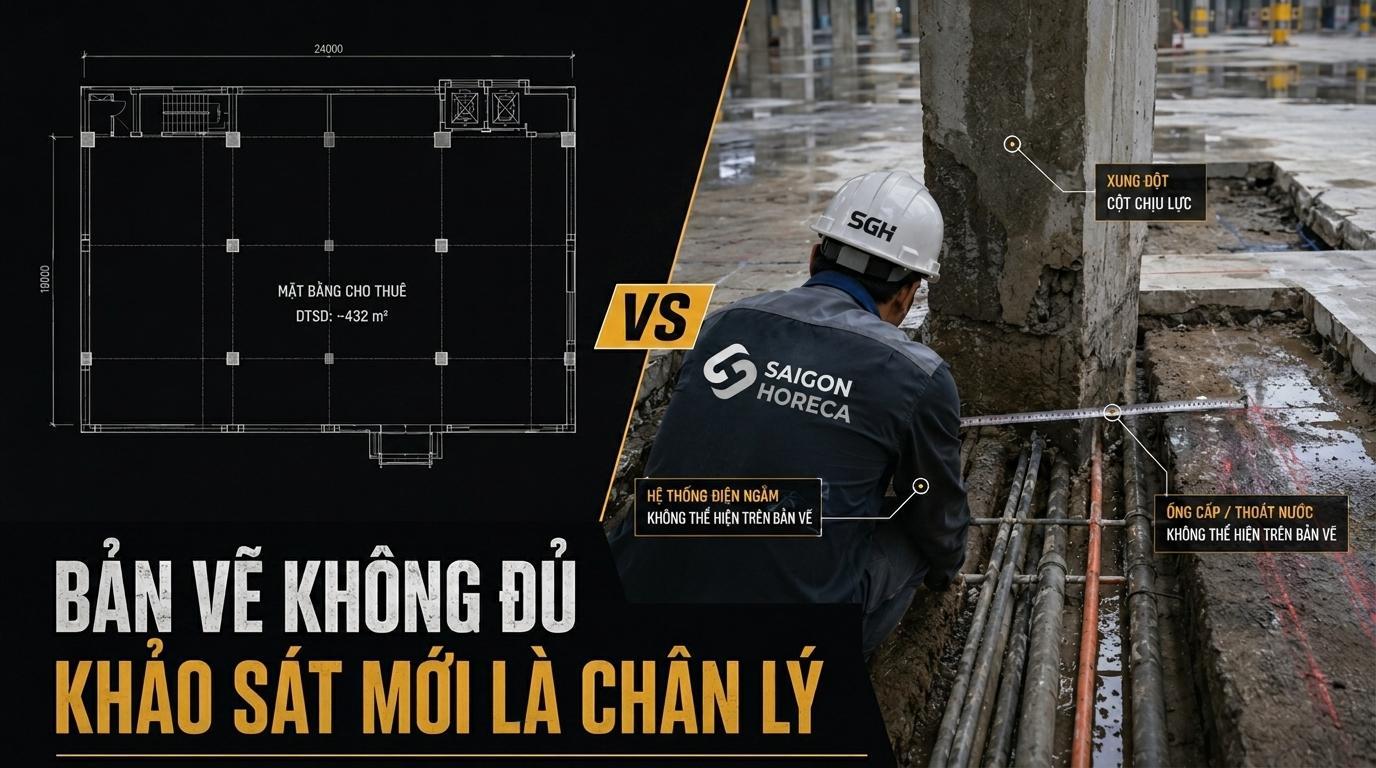
- Saigon Horeca’s technical team will work directly with the investor to fully grasp the usage needs, overall design style of the restaurant as well as the specific requirements of the open kitchen space.
- Conduct a detailed survey of the actual site to measure and evaluate existing technical infrastructure such as electricity, water, ventilation systems, floor and ceiling structures…
Step 2: Consulting on optimal solutions based on practical experience
Based on survey results and specific characteristics of each project, Saigon Horeca will advise on overall solutions, including:
- Choose the appropriate type of Teppanyaki stove (integrated hood in the stove body, has a fan, stove placed on the refrigerator/stainless steel counter…)
- Detailed analysis of floor layout options to optimize space and movement flow
Step 3: Coordinate with Fujimak experts to create detailed design drawings
- The entire design plan is closely coordinated and censored with technical experts from Fujimak Japan.
- Detailed 2D drawings, 3D perspectives and system technical drawings are completed, ensuring absolute accuracy in terms of technique, functionality and aesthetics.
Step 4: Processing and manufacturing equipment directly at Fujimak Japan factory
- All Teppanyaki kitchen equipment is processed and manufactured at the Fujimak factory according to agreed specifications.
- Manufacturing processes strictly comply with international standards for quality, durability and safety.
Step 5: Transportation and installation by Saigon Horeca technical team under Fujimak expert supervision
- After completing production, the equipment is transported to Vietnam according to the correct schedule, ensuring safety during transportation.
- Saigon Horeca’s highly skilled technical team directly performs installation at the construction site.
- Technical experts from Fujimak Japan supervise the entire installation process, ensuring every detail is constructed accurately and according to Japanese technical standards.
With a methodical and synchronous implementation process and close coordination with international partners, Saigon Horeca is committed to providing customers with Teppanyaki kitchen projects of the highest quality, operating stably and durably over time and contributing to raising the level of culinary space.
Choose Saigon Horeca – Choosing long-term value
With more than 10 years of experience and close cooperation with Fujimak Japan, Saigon Horeca is proud to be a reputable partner in Vietnam providing and deploying Japanese standard Teppanyaki kitchen systems. Ensuring all projects are implemented technically, aesthetically and with optimal efficiency. With a team of experienced engineers and deep understanding of industrial kitchen equipment, Saigon Horeca is committed to providing customers with optimal kitchen solutions, suitable for each space and project requirements.
 Facebook
 Zalo
Zalo