Bi Decision to Preserve and Clean Industrial Refrigerator
When a refrigerator has been in use for a period of time, signs of fatigue often appear: the energy is no longer as strong as before, performance declines, and sometimes, some unpleasant odors appear. In this guide, Saigon Horeca will share tips to help you overcome these problems.
To maintain the refrigerator and solve the above challenges, regular cleaning of the refrigerator is important. Make sure the cabinet is always clean and strictly control the amount of food inside, avoiding overload.
The secret to cleaning industrial refrigerators in professional kitchens
During use, industrial refrigerators often encounter problems such as reduced productivity, poor performance, and unpleasant odors. Below are detailed instructions from Saigon Horeca to help you solve these problems and preserve your refrigerator effectively.
1. Disconnect Power and Remove Food
First and foremost, make sure that the refrigerator has no power left before starting the cleaning process. Then, clean out all food from inside the cabinet. This helps keep the space inside the cabinet clean and avoids overload.
2. Use Appropriate Cleaning Chemicals
Choose a cleaning chemical that is not harmful to stainless steel, aluminum, and rubber gaskets. Avoid using detergents with strong fragrances. Some common chemicals such as Jantex Sanitiser are good choices, especially in kitchen and industrial refrigerator environments.
3. Cleaning Doors and Door Rubber Ron
Pay attention to the rubber seals on the door because they can retain moisture and create favorable conditions for bacteria to grow. Carefully clean the door and rubber seals to ensure food hygiene and safety.
4. Remove All Partitions and Clean the Cabinet
Remove the partitions and shelves in the cabinet and clean them. Restore and dry them before placing them back in the cabinet.
5. Refrigeration Equipment Condenser Maintenance
- Condenser maintenance includes cleaning heat exchange surfaces, draining accumulated oil, and checking pump and cooling fan alignment.
- Clean the water tank and remove sediment, check and replace accessories such as sprinklers and water shields.
Discover More about Industrial Freezers
Characteristics of Industrial Freezers
Industrial freezer or stainless steel freezer is a special refrigeration device designed to preserve food at low temperatures, creating an ideal environment for preservation. This environment includes not only temperature and humidity but also pressure and air composition. Industrial freezers are often used in food production processes.
>>> Read more about: Industrial freezer
Compare Industrial Freezers and Residential Freezers
Industrial freezers are mainly different from residential freezers in the level of use. Residential freezers usually hold much less food than industrial freezers, which are designed to provide large supplies of food for business purposes.
In addition, the difference also lies in:
- Size and Structure
The product industrial freezer is designed to be larger than cabinets for home use because it requires more space to store large amounts of food.
- Cooling Capacity
Industrial freezers are often more powerful and have powerful air compressors that keep the temperature stable even when the freezer is opened frequently.
- Appearance
Industrial freezers usually have a stainless steel exterior, they do not need too much decoration because they are often used in industrial environments.
- Maintenance and Maintenance
Maintenance and maintenance of industrial freezers should be performed by technical experts to ensure the performance and longevity of the equipment.
The above article provides an overview of industrial freezers and the differences between them and residential freezers. Hopefully this information will help you make creative decisions for your business.
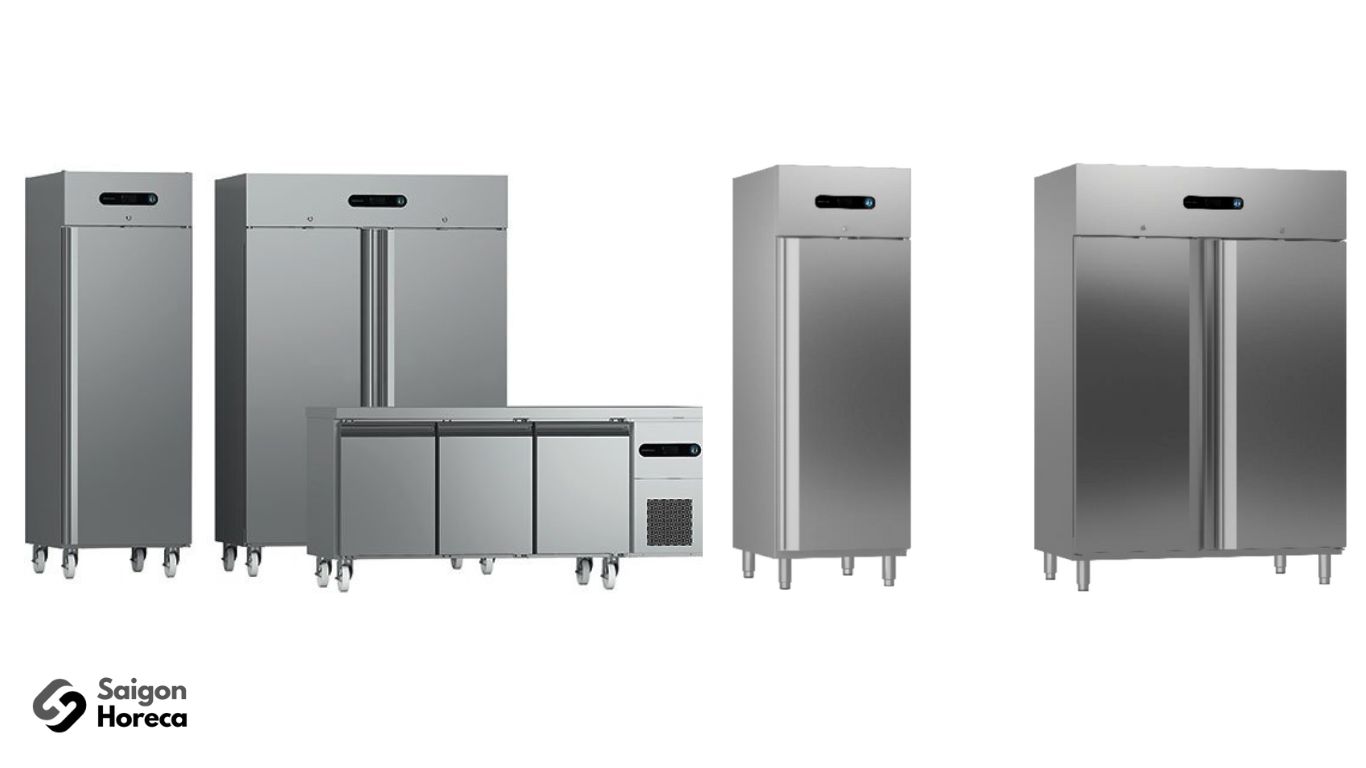
Industrial freezer arrangement tips
Reasonable arrangement
Arrange food properly
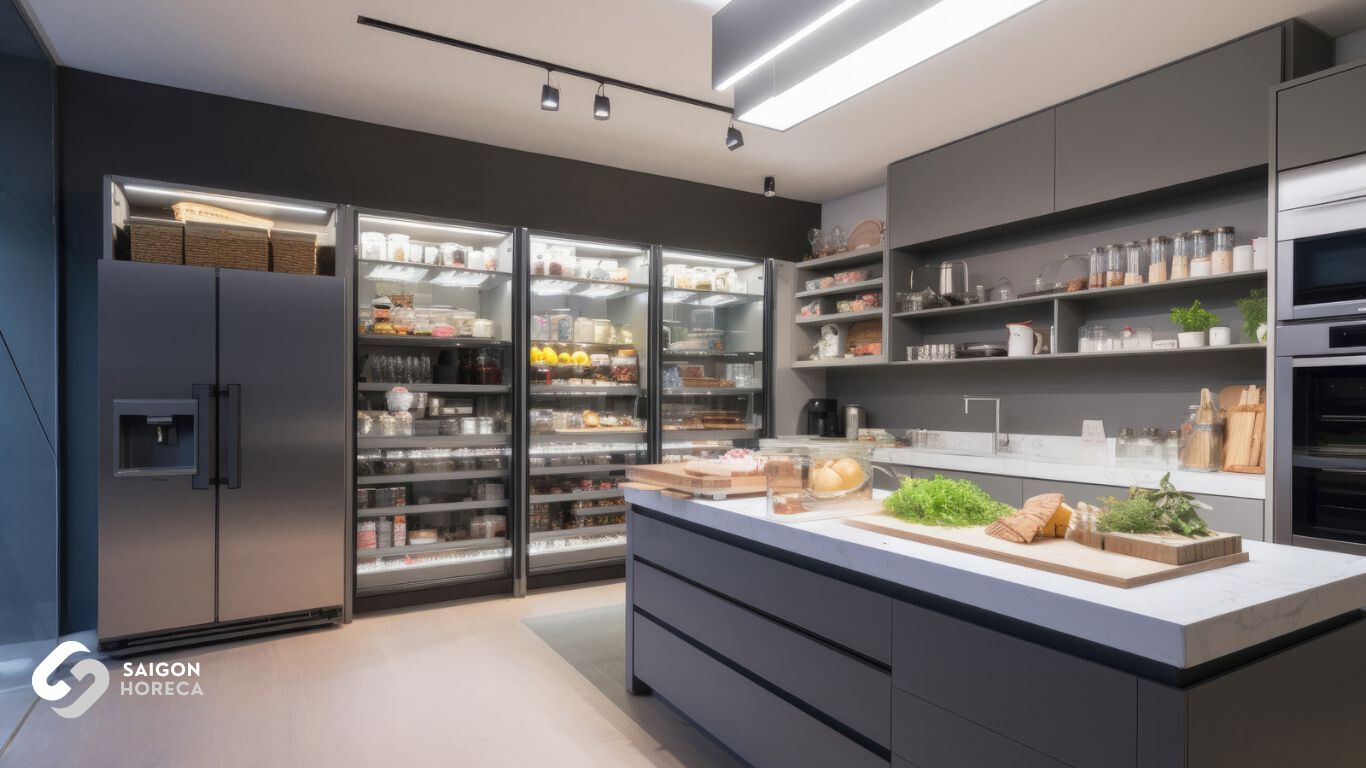
After cleaning the industrial freezer, the next thing to do is to arrange everything so that it is reasonable and stable. Once the refrigeration elements are completely clean, it’s time to plug them back in and place the food on the shelf. When placing food back into commercial cabinets, make sure you are using proper food placement procedures for commercial kitchen equipment.
This is how you should stock your industrial freezer:
- Top shelf: Ready-to-eat foods, produce, butter, spices, pre-cooked foods
- Second shelf: Seafood
- Third shelf: All raw pork and beef
- Fourth shelf: Ground meat and fish
- Bottom shelf: Poultry
By placing raw meat and poultry on lower shelves, you will prevent water and bacteria from dripping and contaminating the food below in your freezer.
Useful tips
There are also some helpful things you can do to organize your refrigerator and freezer and make it easier for you to find what you’re looking for:
- Add labels to any opened products. Adding labels helps track food freshness. Therefore, food can be thrown away when it expires.
- Use color-coded bins. Use colored bins for different products. Makes it easy to distinguish them. Help employees quickly find the products they are looking for.
- Implement the “First In, First Out” method. It is also understood that the food added first will be used first to ensure shelf life and freshness. An inventory management method that ensures that the freshest food is used first and prevents food from remaining in the refrigerator for too long.
 Facebook
 Zalo
Zalo